 By
How to decorate a living room for different seasons doesn’t mean replacing your furniture four times a year. A neutral sofa, rug, and wall color can carry you through all twelve months without change. The seasonal shift comes from smaller, affordable pieces instead — throw pillows, blankets, lighting, greenery, and table styling.
In this guide, you’ll see exactly what to change for spring, summer, fall, and winter, what to leave alone year-round, and how to store seasonal pieces without turning your closet into a mess.
1. The Foundation: Build a Neutral Base First
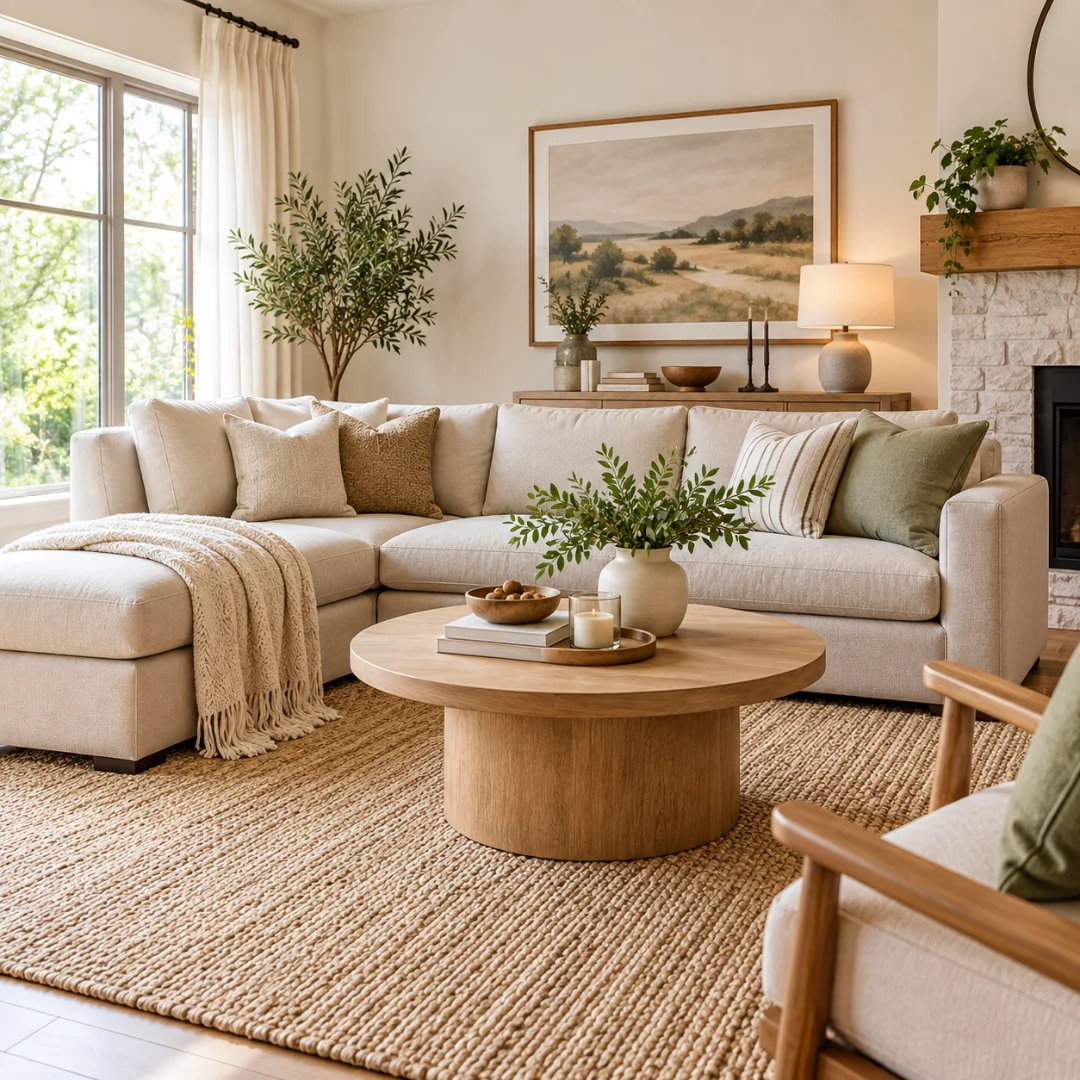
Before touching any seasonal accent, your living room needs a base layer that can carry any palette you put on top of it. This is what makes every seasonal refresh fast and cheap instead of a full redecoration.
Start with these three anchors:
- The sofa. A neutral upholstery — oatmeal, greige, soft white, or warm gray — is the single best investment for seasonal flexibility. If you’re shopping for a new one, this guide on how to pick the right sofa for your space covers scale, fabric, and shape.
- The rug. A neutral, textured rug (jute, wool, or a subtle geometric) grounds the room without competing with your seasonal accents. If you’re unsure what size to buy, see how to pick the right rug size.
- The walls. Soft whites, warm greiges, or muted sage flatter nearly every seasonal palette. For color direction, browse living room painting color ideas.
Once these big-ticket pieces are neutral, everything else — pillows, art, candles, greenery — becomes an easy, low-cost swap. If your room currently feels flat or hard to style around, it helps to fix what to do if your room has no focal point first, since seasonal styling reads much better once there’s a strong anchor to build around.
2. Spring Refresh: Pastels, Florals & Lightweight Fabrics
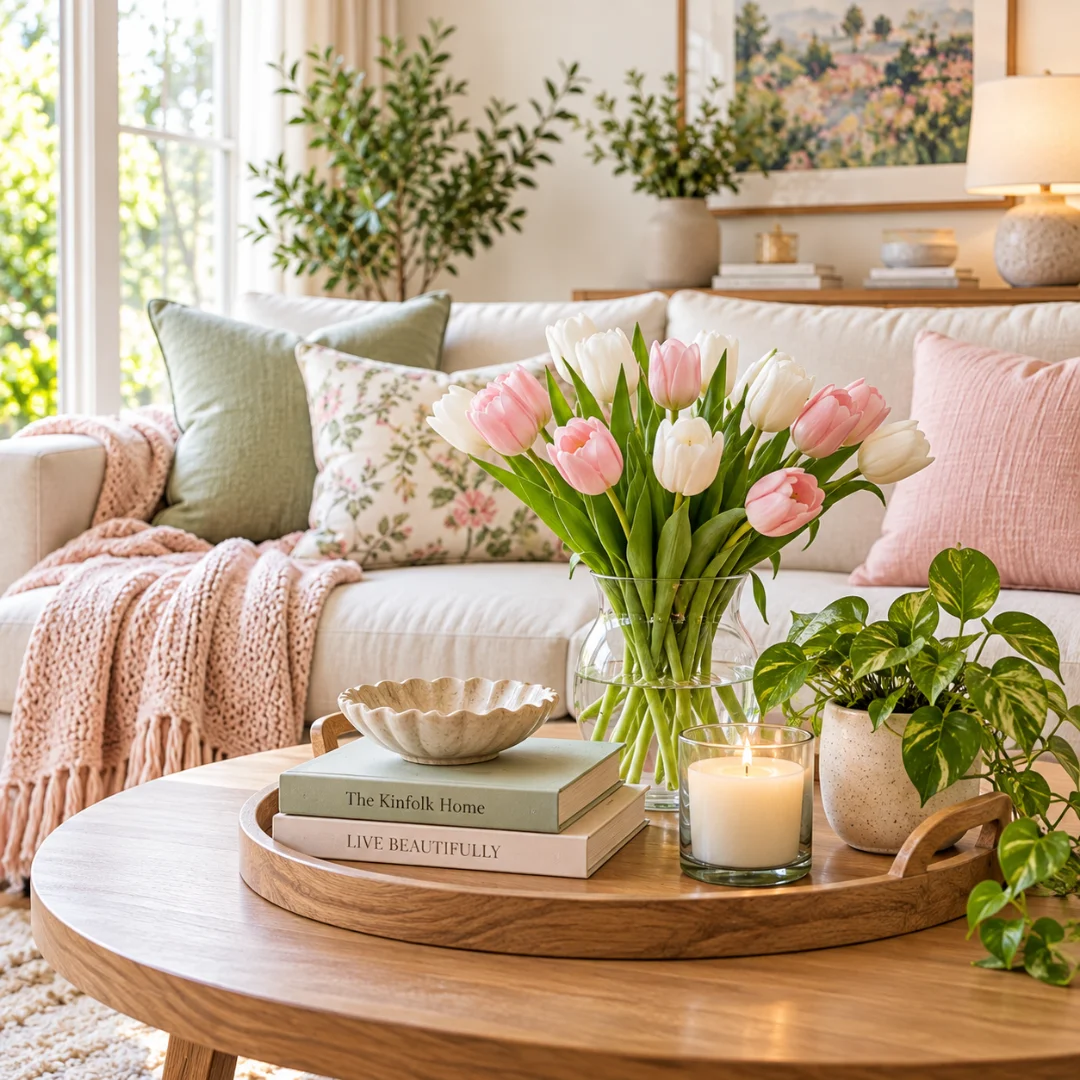
Spring swaps heavy winter textures for lighter fabrics and softer colors. The goal isn’t to add more decor — it’s to make the existing room feel less weighted down.
Key moves for spring:
- Swap heavy throws for lightweight cotton or linen in blush, sage, buttery yellow, or soft blue.
- Bring in fresh florals. One good vase of tulips or ranunculus does more visual work than several small accessories scattered around. For more direction, see these flower decor ideas for the living room.
- Add greenery suited to your space. A trailing pothos works well in low light and small apartments; a fiddle leaf fig needs more room and brighter light; snake plants are a good pet-safe alternative if pets chew on leaves.
- Lighten your coffee table styling. Swap dark ceramics for pale stoneware or glass, and add a small bowl of citrus or fresh blooms — see how to style a coffee table for pairing ideas.
- Layer a lighter rug topper over your neutral base rug instead of buying a whole new rug — the technique is explained in how to layer rugs in a living room.
If your space leans minimalist, spring is also a good time to try a Japandi-inspired palette — natural wood, soft neutrals, and a few considered accents. These Japandi living room design ideas are a useful reference.
3. Summer Bright & Airy: Coastal, Linen & Cool Tones
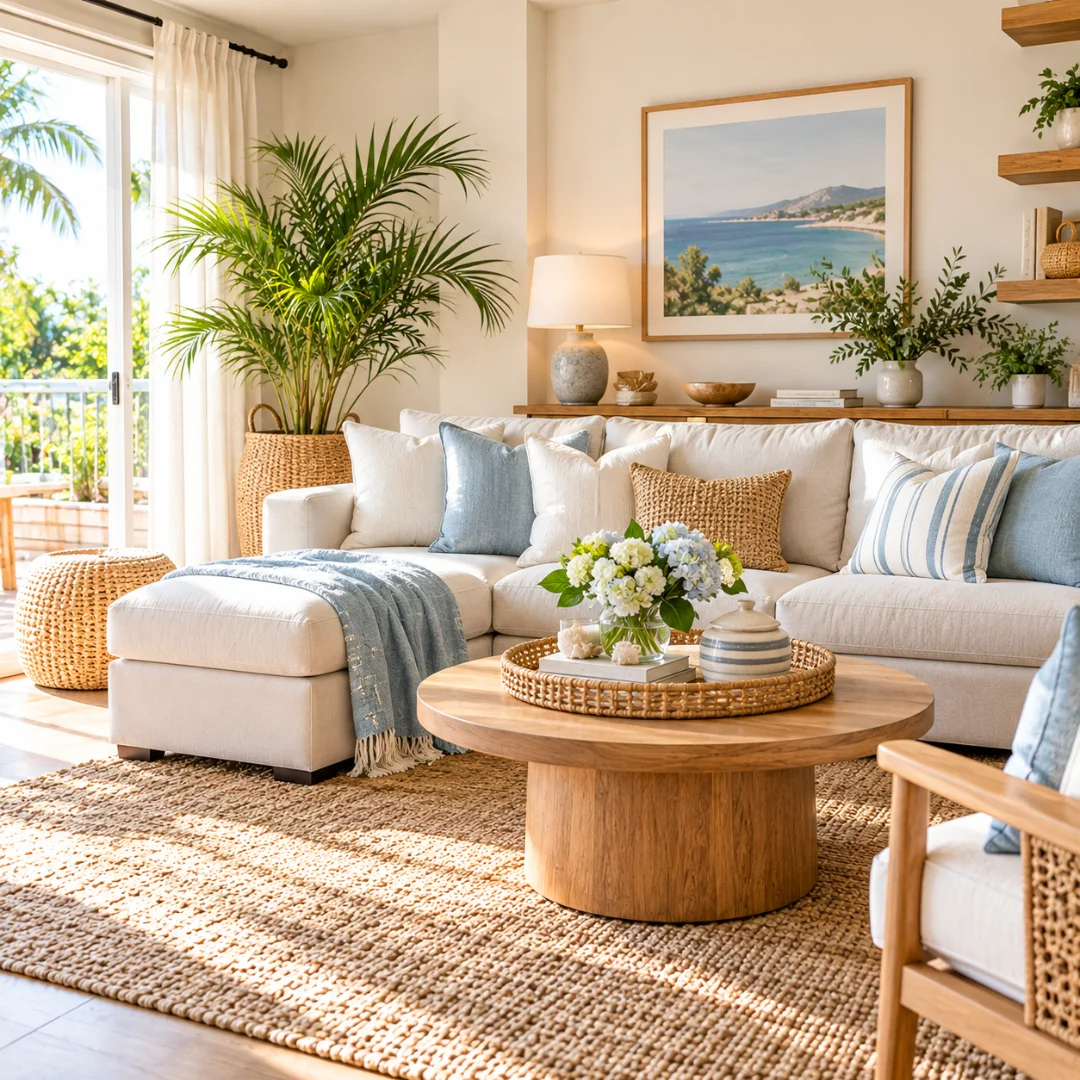
Summer works best when the room is edited down rather than added to. More negative space, not more objects, is what reads as summer.
What to prioritize:
- Breathable linen slipcovers or pillow covers in white, sandy beige, or soft ocean blue.
- Cool, coastal-inspired texture — rattan, driftwood, or woven baskets. If this palette appeals to you, these modern coastal living room ideas give a full styling framework.
- A cleared coffee table and shelves. Two or three objects max — anything more starts to look cluttered rather than curated.
- Cooler-toned lighting. Pull curtains back to let in natural light, and if you’re changing bulbs seasonally, a slightly cooler white (around 3500–4000K) reads brighter and crisper than winter’s warm amber tones.
- A touch of green. A palm or monstera pairs well with a coastal summer scheme — more direction in these green living room ideas.
In a small apartment, summer’s pared-back look is especially forgiving — these small apartment living room ideas show how a lighter palette can make a compact room feel larger.
4. Fall Warmth & Texture: Earthy Tones & Ambient Lighting
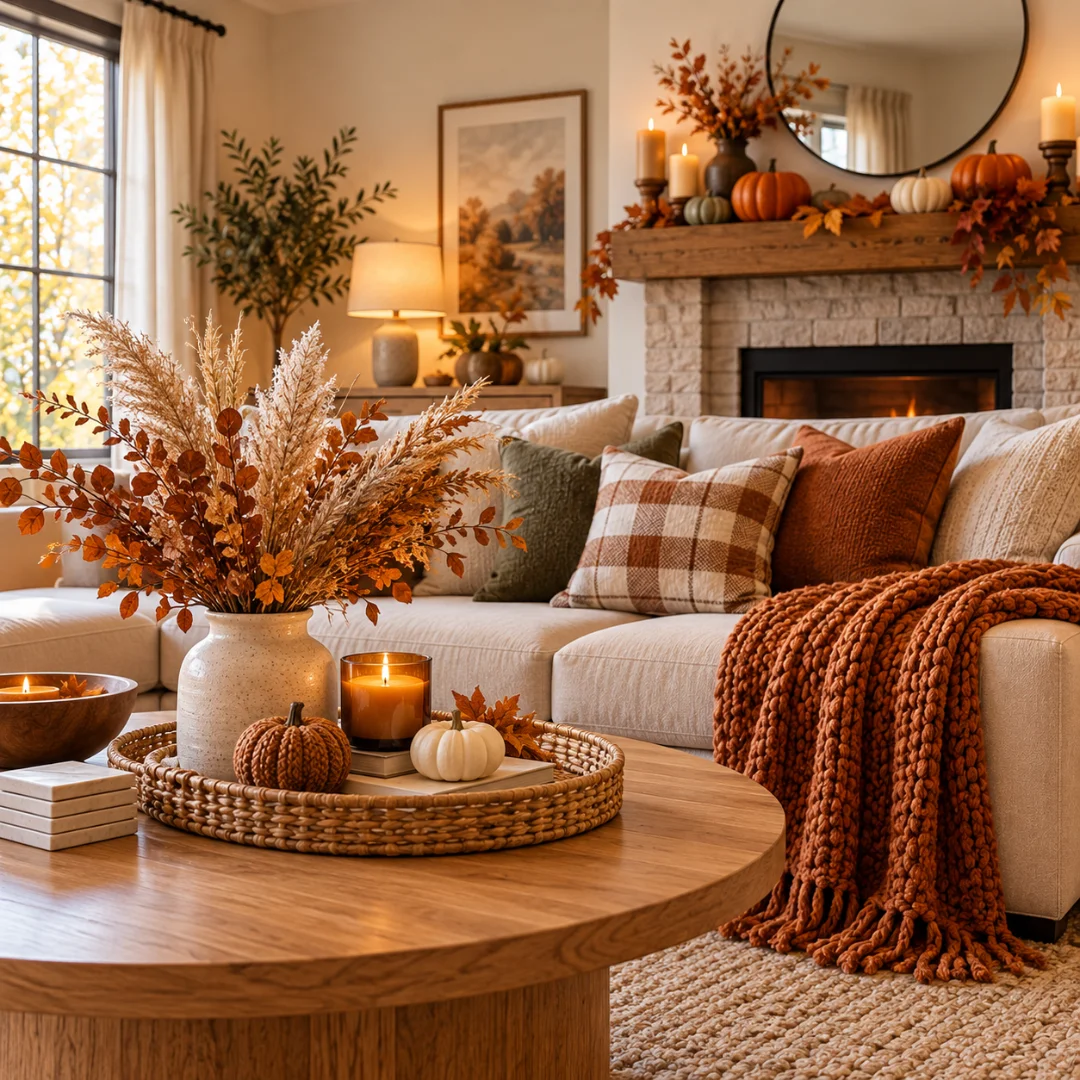
Fall relies on texture more than color changes alone. It’s usually the easiest seasonal shift to notice, because knit throws and warm lighting change the feel of a room, not just the look.
Layer in:
- Earthy tones — rust, terracotta, olive, and warm mustard — through throw pillows and a fresh throw blanket.
- Chunky-knit or boucle texture. A cable-knit throw or a textured accent pillow warms up a neutral sofa instantly.
- Dried botanicals. Pampas grass, dried eucalyptus, or wheat stems in a ceramic vase are low-maintenance and last for weeks without wilting.
- Small gourds or mini pumpkins, clustered on a tray rather than scattered individually — this keeps it looking styled instead of seasonal clutter.
- Warmer, lower lighting. Swap overhead light for lamp light and candles where you can, and aim for a warm white bulb (around 2700K) for a cozier glow. A well-lit mantel does a lot of the seasonal work here — see fireplace mantel decorating ideas for everyday styling for a look that carries through the holidays too.
5. Winter Cozy & Layered: Velvet, Faux Fur & Moody Color

Winter is a good time to introduce deeper colors such as emerald, burgundy, navy, and charcoal, especially when you balance them with warm lighting and lighter neutral pieces so the room still feels open rather than heavy.
Build the winter layer with:
- Velvet and faux fur pillows in deep emerald, burgundy, navy, or charcoal.
- Heavy knit throws, layered two or three deep across the back of the sofa.
- Layered rugs — a flatweave rug topped with a smaller, plush accent rug adds warmth underfoot. For proportions, revisit how to layer rugs in a living room.
- Candlelight and warm-toned bulbs, ideally under 2700K for the coziest effect.
- Festive touches that don’t read as “holiday.” Pinecones, a bundle of eucalyptus, or brass accents feel wintry without needing to be packed away right after New Year’s.
If your winter palette leans dark, that doesn’t have to mean a dim room. This piece on how to brighten a living room with dark furniture is especially useful here — it shows how to balance moody tones with enough light that the room still feels inviting. For a deeper dive into the full seasonal layering approach, these cozy living room ideas for winter go further into texture and lighting.
6. What to Keep Year-Round vs. What to Change Seasonally
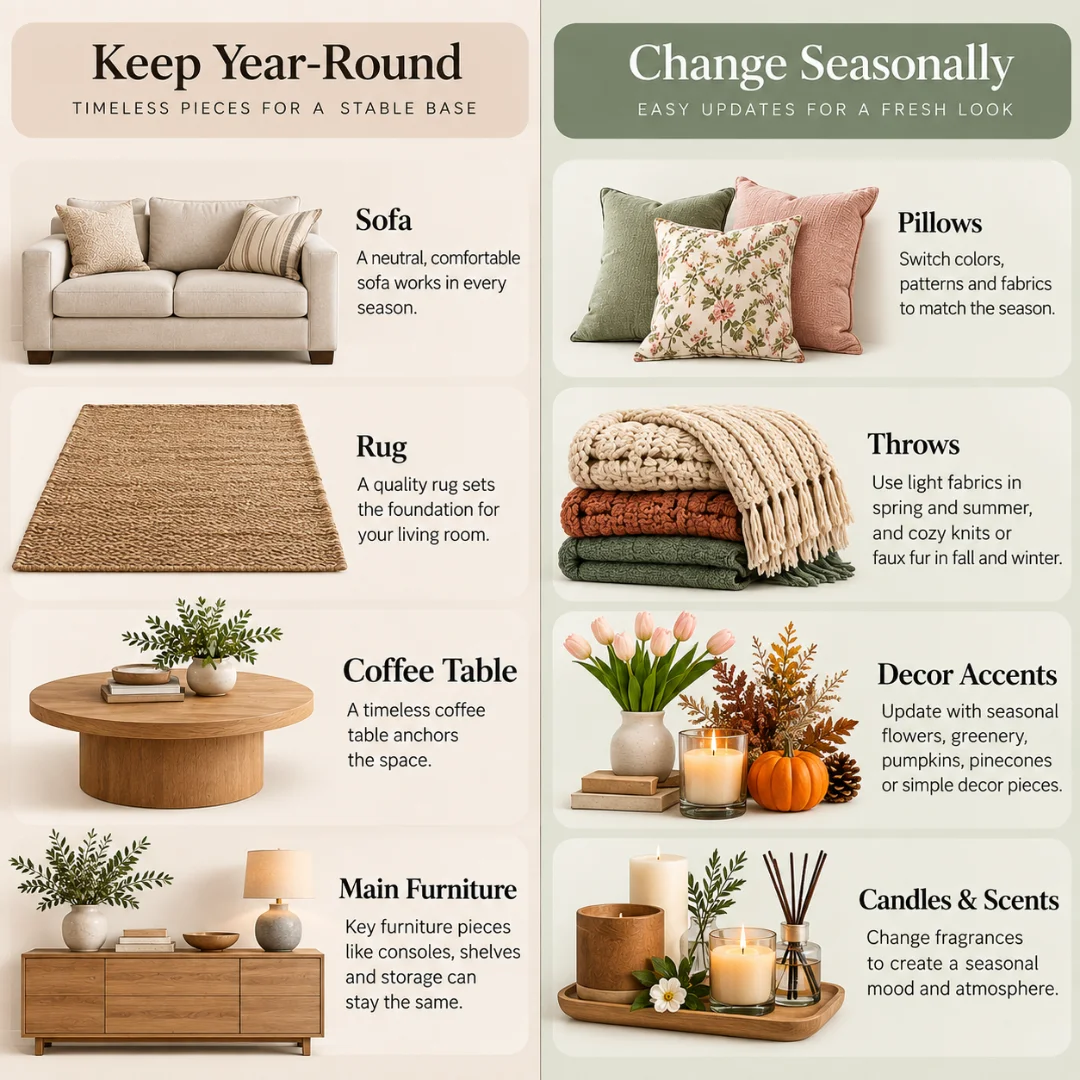
This is the part that actually makes seasonal decorating manageable — knowing what not to touch is just as important as knowing what to swap.
| Keep Year-Round | Change Seasonally |
| Sofa | Throw pillow covers |
| Main neutral rug | Accent/topper rug |
| Coffee table | Table styling (vases, trays, books) |
| Curtains | Throw blankets |
| Wall color | Artwork or mirror styling |
| Main furniture layout | Small accessories (candles, bowls, greenery) |
| Lamps and fixtures | Bulb warmth and candle use |
The easiest approach is to keep your main furniture consistent and change the smaller decorative pieces with each season.
7. Smart Storage & Budget Tips for Seasonal Transitions
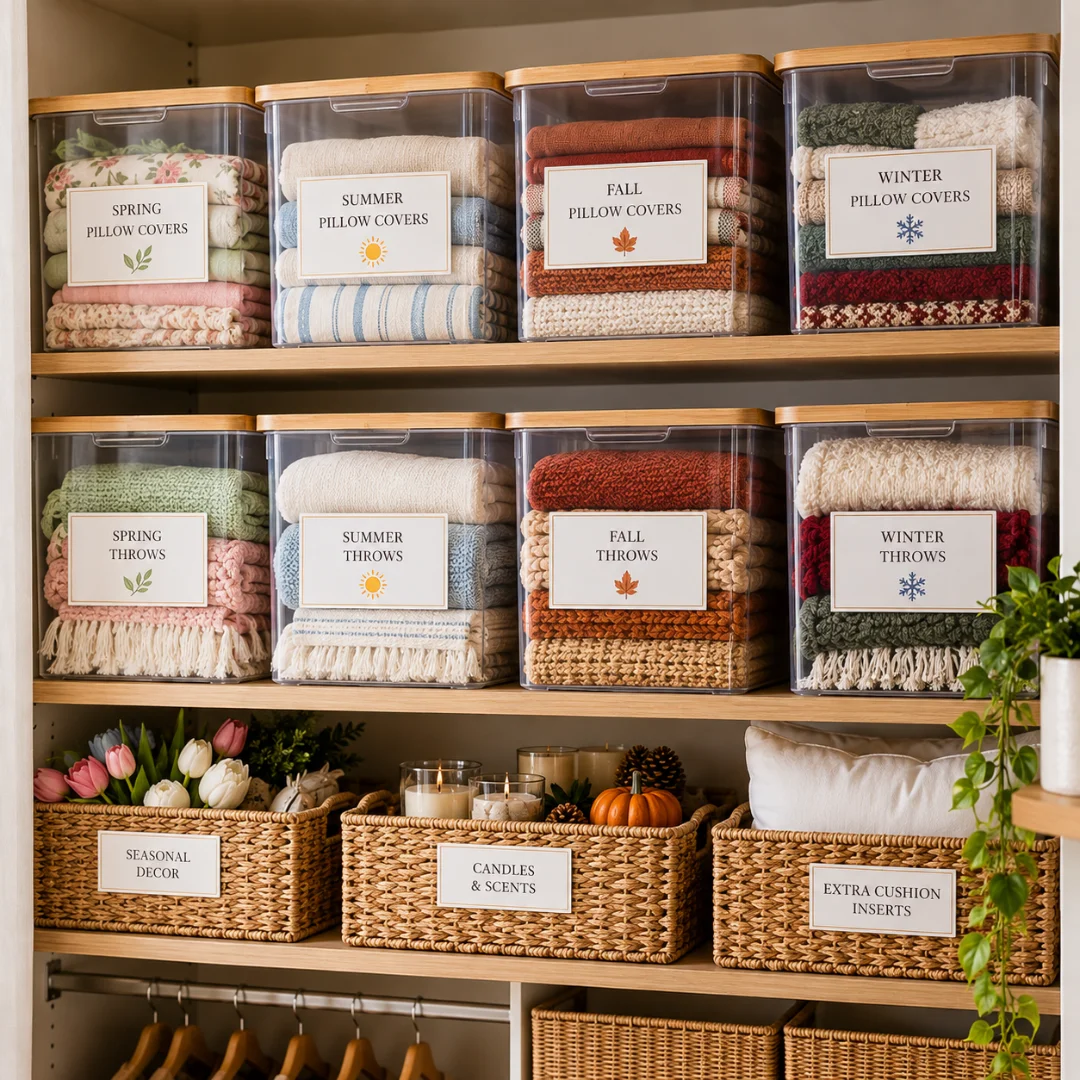
The biggest reason people give up on seasonal decorating isn’t taste — it’s clutter. Four seasons’ worth of pillows, vases, and blankets can quickly take over a closet without a system.
A few practices that make transitions easier:
- Store off-season items in labeled, flat storage bins. Under-bed storage or a closet shelf works well for pillow covers and folded throws. If storage space is tight, how to store seasonal items in a small home has space-saving systems worth trying.
- Buy pillow covers, not new pillow inserts, each season. This cuts seasonal decor costs significantly, since the insert is usually the more expensive part.
- Limit yourself to one “hero” seasonal item per room — a rug, a throw, or a statement vase — rather than changing everything at once.
- Shop end-of-season sales for the next season’s colors; fall clearance in late November often has winter-toned pieces at a steep discount.
- Reuse neutral accessories across seasons. A ceramic tray, for example, can hold citrus in summer and mini pumpkins in fall — only what’s on it changes.
8. Seasonal Living Room Decor Ideas: Quick Comparison Table
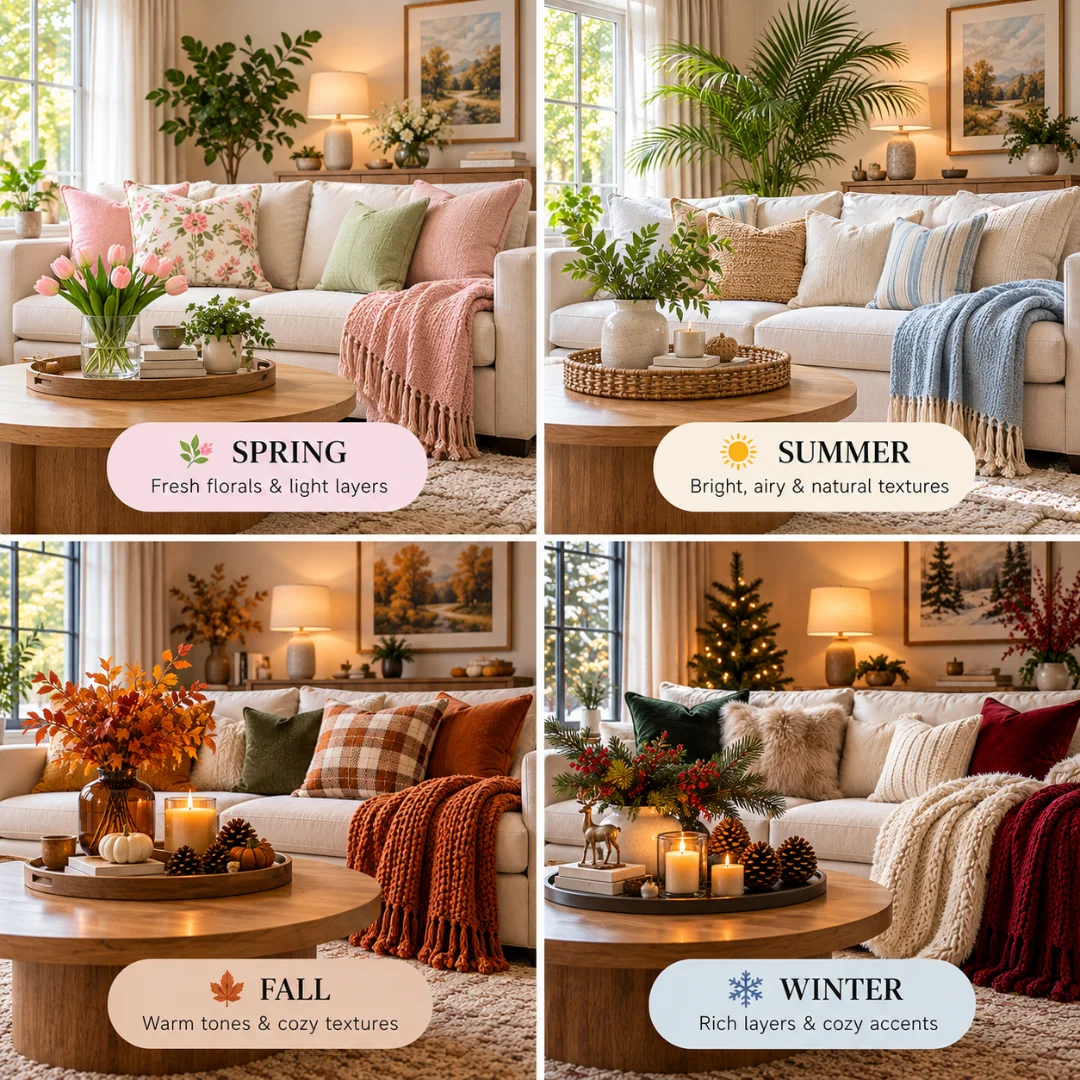
| Season | Color Palette | Key Textures | Signature Pieces | Lighting Mood |
| Spring | Blush, sage, buttery yellow, soft blue | Lightweight cotton, linen | Fresh florals, potted greenery, light rug topper | Bright, natural |
| Summer | White, sandy beige, ocean blue | Rattan, woven, linen | Coastal accents, minimal styling, palms | Airy, cooler white (3500–4000K) |
| Fall | Rust, terracotta, olive, mustard | Chunky knit, boucle | Dried botanicals, mini pumpkins, mantel styling | Warm amber (2700K), candlelit |
| Winter | Emerald, burgundy, navy, charcoal | Velvet, faux fur, layered wool | Heavy throws, layered rugs, brass accents | Soft, under 2700K, candlelit |
Final Thoughts
Decorating a living room for different seasons comes down to one habit: build your foundation once, then restyle around it as often as you like. A neutral sofa, a versatile rug, and calm walls will carry you through every season — your pillows, throws, greenery, and lighting are what tell the seasonal story.
Start small. Pick one season, build out three or four accent pieces, and see how much of a difference it makes before investing further. If your living room needs more foundational work before any of this styling will show up well — furniture placement, focal points, or scale — it’s worth revisiting how to arrange furniture in a small living room first.
FAQ
How often should I update my living room decor for the seasons?
- There’s no fixed rule. Some people refresh four times a year; others do two larger updates — a “warm half” (fall/winter) and a “cool half” (spring/summer) — which is often enough to keep the room feeling current.
What’s the cheapest way to decorate a living room seasonally?
- Swapping pillow covers, one throw blanket, and a single statement accessory (a vase, art print, or seasonal centerpiece) creates a noticeable change without replacing furniture.
Do I need different rugs for every season?
- Not necessarily. A neutral base rug works year-round; layering a smaller seasonal accent rug on top is a lower-cost way to shift the mood without replacing the whole thing.
How do I keep my living room from feeling cluttered with seasonal decor?
- Limit yourself to one “hero” seasonal item per room and store the rest out of sight in labeled bins between seasons — this keeps the space intentional rather than crowded.
What living room decor can stay up all year?
- Your sofa, main rug, coffee table, curtains, and wall color are the pieces worth keeping neutral and constant — build your seasonal changes around them rather than replacing them.
Can I decorate my living room seasonally without buying new furniture?
- Yes — nearly everything in this guide is accessory-level: pillow covers, throws, lighting, greenery, and small table styling. Furniture only needs to change if you’re doing a larger renovation.
What colors work best for seasonal living room decor?
- Pastels (blush, sage, soft blue) for spring, cooler neutrals (white, sandy beige, ocean blue) for summer, earthy tones (rust, olive, mustard) for fall, and deeper jewel tones (emerald, burgundy, navy) for winter tend to read most clearly as seasonal without clashing with a neutral base.