 By
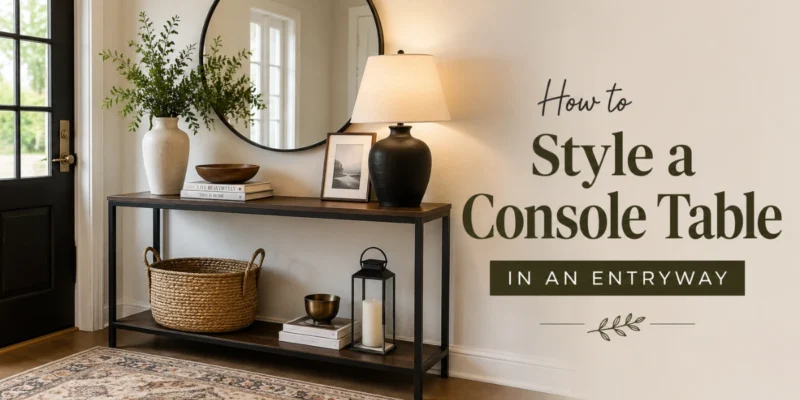
By A well-styled console table can make an entryway feel more organized, welcoming, and intentional. The easiest approach to how to style a console table in an entryway is to start with one strong vertical piece, add a few items at different heights, and keep everyday essentials contained rather than scattered across the surface.
Quick Answer
To style an entryway console table, start with one tall vertical piece — usually a mirror or artwork — centered above the surface. Add a mid-height layer like a lamp and a small floral or greenery arrangement, then ground the look with a low, functional layer such as a tray or basket. There isn’t a fixed number of items to use — start with three to five pieces and adjust based on the size of the console and how much surface space you still need for everyday use.
The Foundation: Scale, Proportion, and Placement
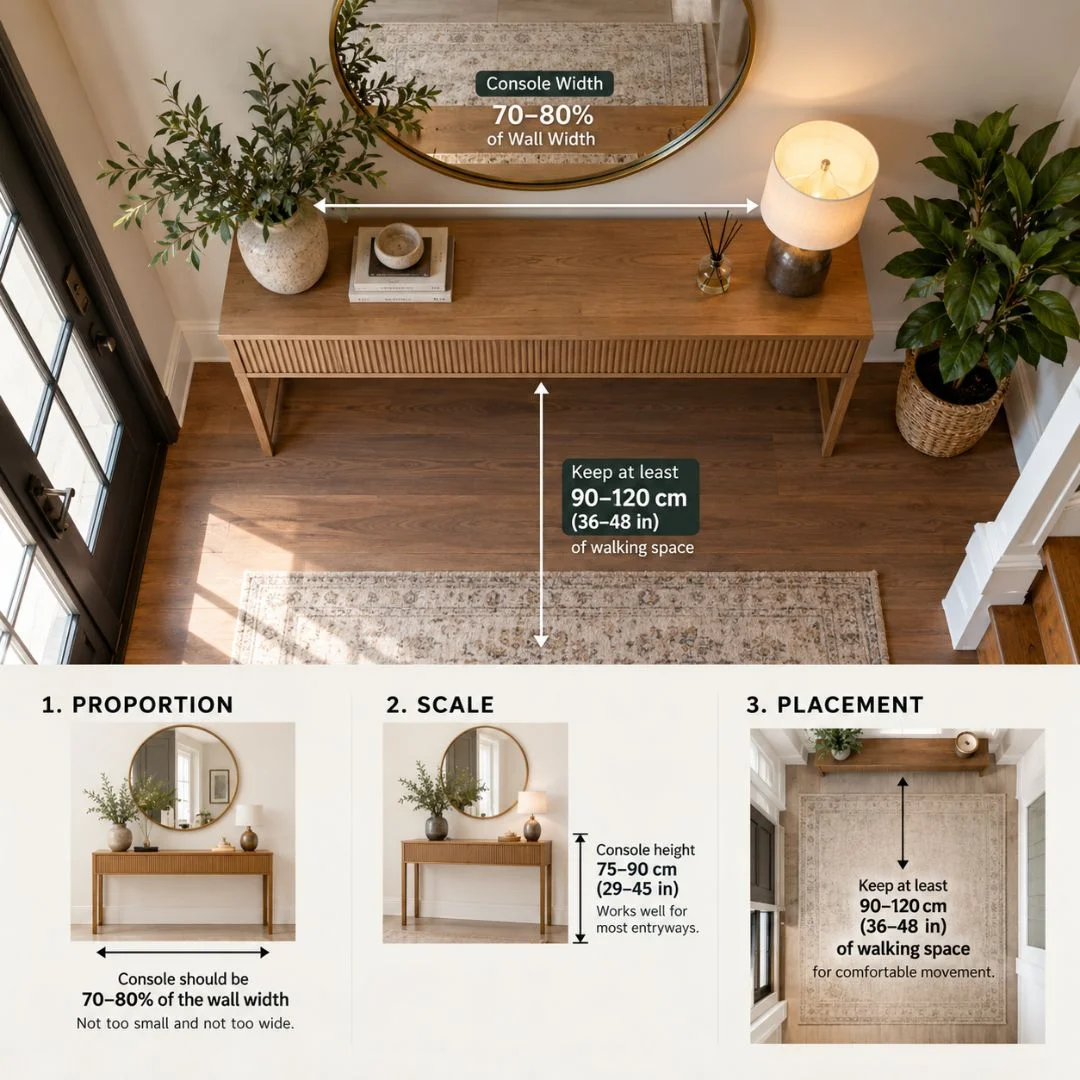
Before any decor goes on top, the table itself needs to fit its space. Getting the proportions right is what makes everything you add afterward feel intentional rather than arbitrary.
As a general starting point, these ratios work well in most entryways:
- Width: Aim for roughly two-thirds to three-quarters of the wall it sits against, rather than the full length.
- Depth: In tighter hallways, 10–14 inches deep is usually enough to leave walking room.
- Height: A standard console (30–34 inches) gives you room to layer decor without blocking sightlines.
- Clearance: Where your layout allows, try to keep at least 30–36 inches of walking space in front of the table.
These numbers are a helpful baseline, not a strict rule — a wide foyer can support a deeper table, while a converted hallway may need something slimmer. If your entryway also functions as a mudroom or drop zone, pairing your console with dedicated storage can help the space work harder; our guide to mudroom and laundry room ideas has practical layout options worth borrowing.
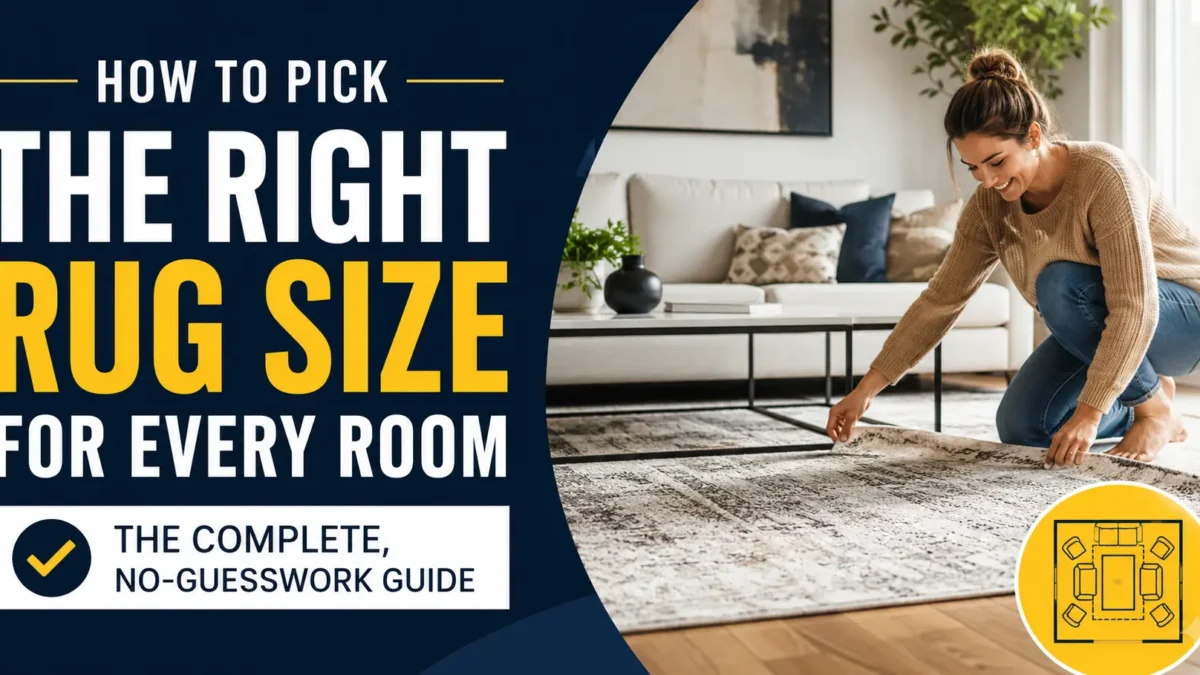
A rug underneath helps anchor the whole vignette so the console doesn’t feel like it’s floating against the wall. If you’re unsure what size to choose, our breakdown of how to pick the right rug size walks through the exact proportions for narrow spaces.
The 3-Layer Styling Framework
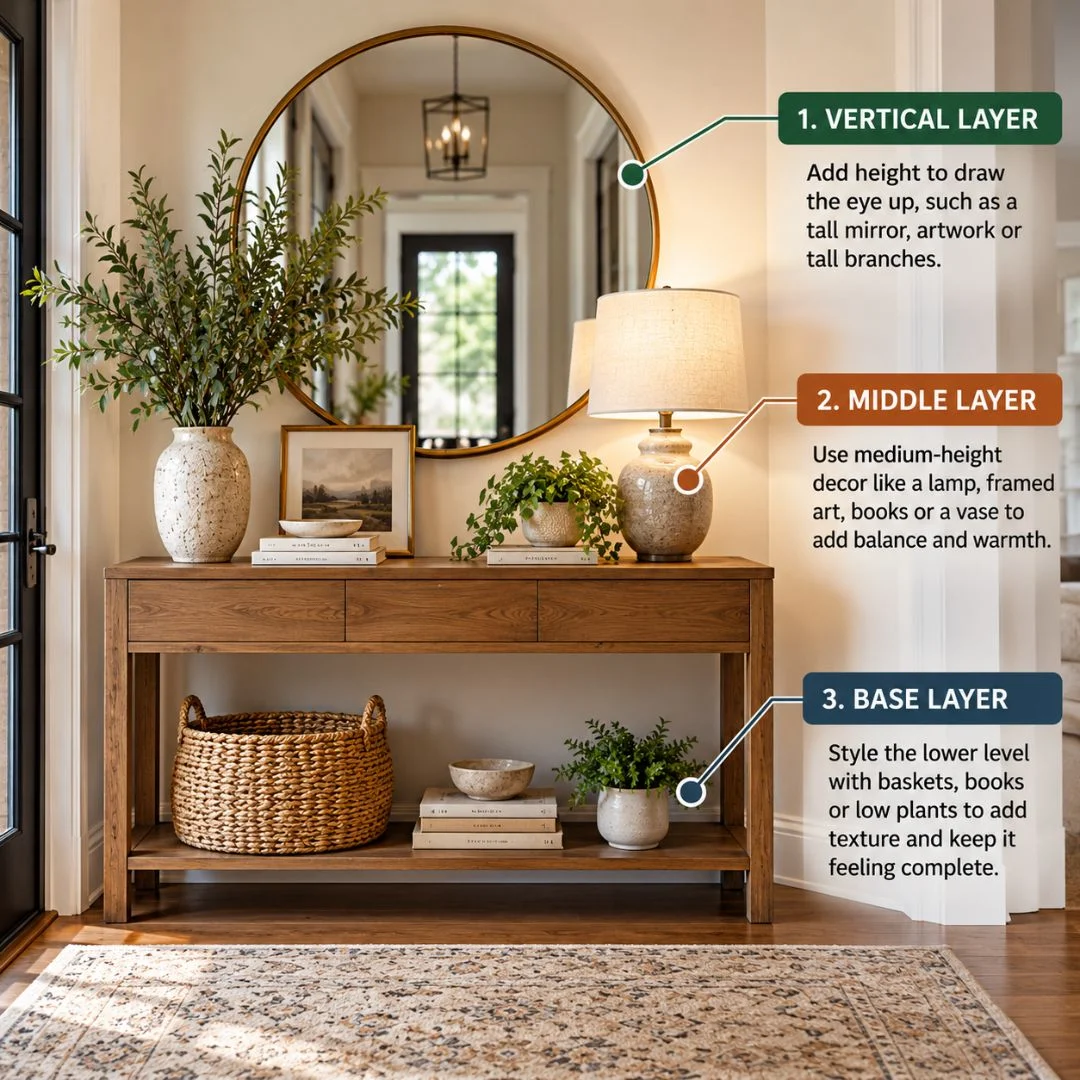
The difference between a console that looks thrown together and one that looks intentionally designed usually comes down to height variation. A three-layer approach works well because it forces visual balance — combining different heights, textures, and functions on one surface.
| Layer | What to Use | Purpose |
| Vertical | Mirror or artwork | Creates height and draws the eye up |
| Middle | Lamp, florals, or books | Adds personality and warmth |
| Base | Tray or basket | Adds everyday function |
Layer 1: Vertical (The Anchor)
This is the tallest element, and its job is to draw the eye upward:
- A large mirror (functional and space-expanding)
- A piece of framed art
- A tall branch or stem arrangement in an oversized vase
Center this piece over the console, or offset it slightly if the table itself is asymmetrical.
Layer 2: Middle (The Focal Interest)
This is your mid-height layer, and it usually carries the most personality:
- A table lamp for warmth in the evening
- A floral or greenery arrangement
- A stack of books topped with a small object like a bowl or candle
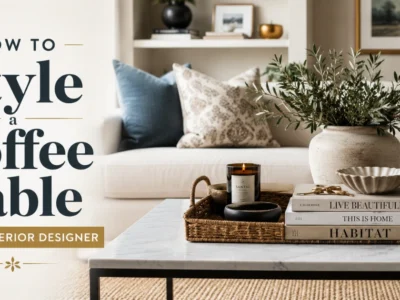
The same height-and-texture logic applies almost identically to other surfaces in the home — for a deeper look at balancing a centerpiece with supporting objects, our guide on how to style a coffee table covers similar ground from a different room.
Layer 3: Base (Function Meets Form)
The lowest layer keeps the table grounded and useful:
- Woven baskets for shoes, mail, or throw blankets
- A catchall tray for keys and sunglasses
- A low stool or bench tucked partially underneath.
This layer is what keeps the console working as a drop zone rather than just a display shelf — which matters more in an entryway than almost anywhere else in the house.
What to Put on a Console Table in an Entryway
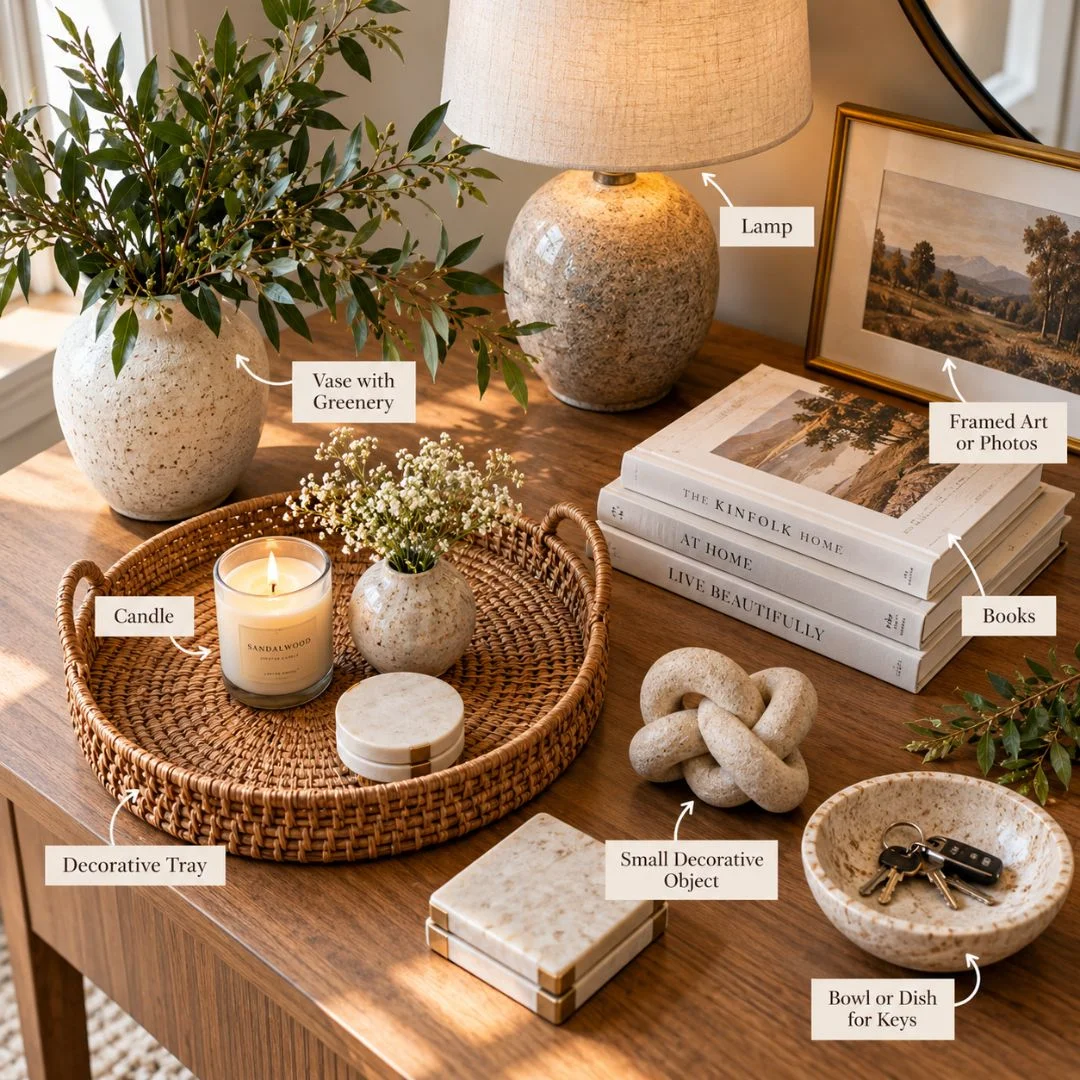
If you’re starting from a completely blank surface, here’s the full range of pieces to choose from:
- Mirror or artwork — the vertical anchor
- Table lamp — warmth and evening light
- Greenery or florals — fresh or faux, either works
- Books — stacked, ideally with a small object on top
- Decorative bowl or vase — a simple textural piece
- Catchall tray — for keys, mail, and sunglasses
- One personal item — a photo, a small sculpture, or a candle
You don’t need all seven. Choose three to five pieces based on the size of your table and how much everyday storage you actually need.
How to Style a Console Table With a Mirror
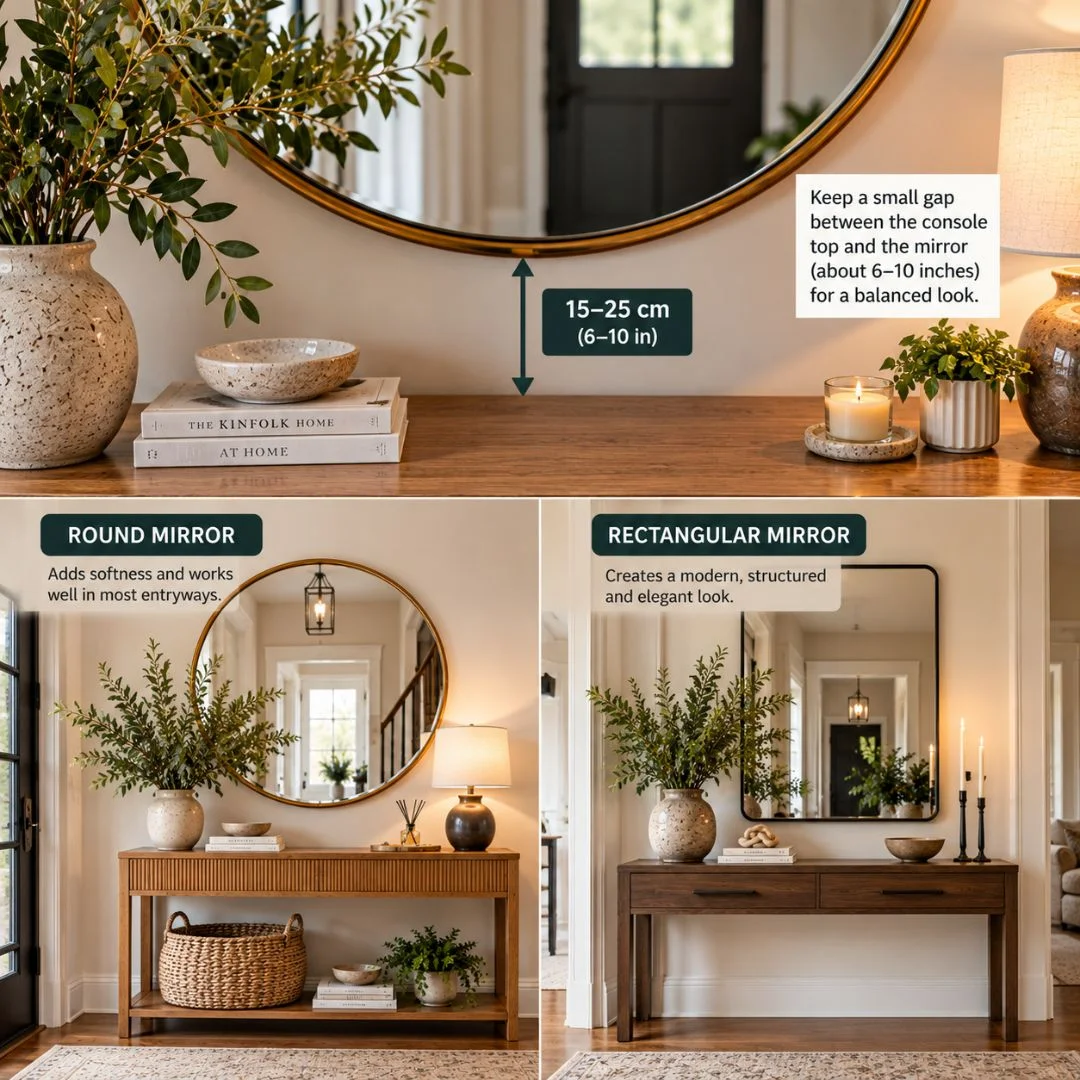
A mirror is one of the most common — and most effective — anchor pieces for a console, but proportion matters more here than with almost any other object.
- Width: As a general guide, choose a mirror that’s roughly 75–90% of the console’s width, so it doesn’t overwhelm or underfill the surface.
- Placement: Leave about 6–8 inches of space between the top of the console and the bottom of the frame.
- Shape: A round or arched mirror softens a space with a lot of straight lines (hallways, staircases), while a rectangular mirror suits a more symmetrical layout.
- Small entryways: A single oversized mirror often works better than a small mirror plus extra wall art — it reflects light and visually expands the space at the same time.
If wall space is tight, leaning a large mirror against the wall behind the console — rather than hanging it — is a flexible, renter-friendly alternative that still delivers the same visual anchor.
Tailored Style Inspirations for Every Entryway
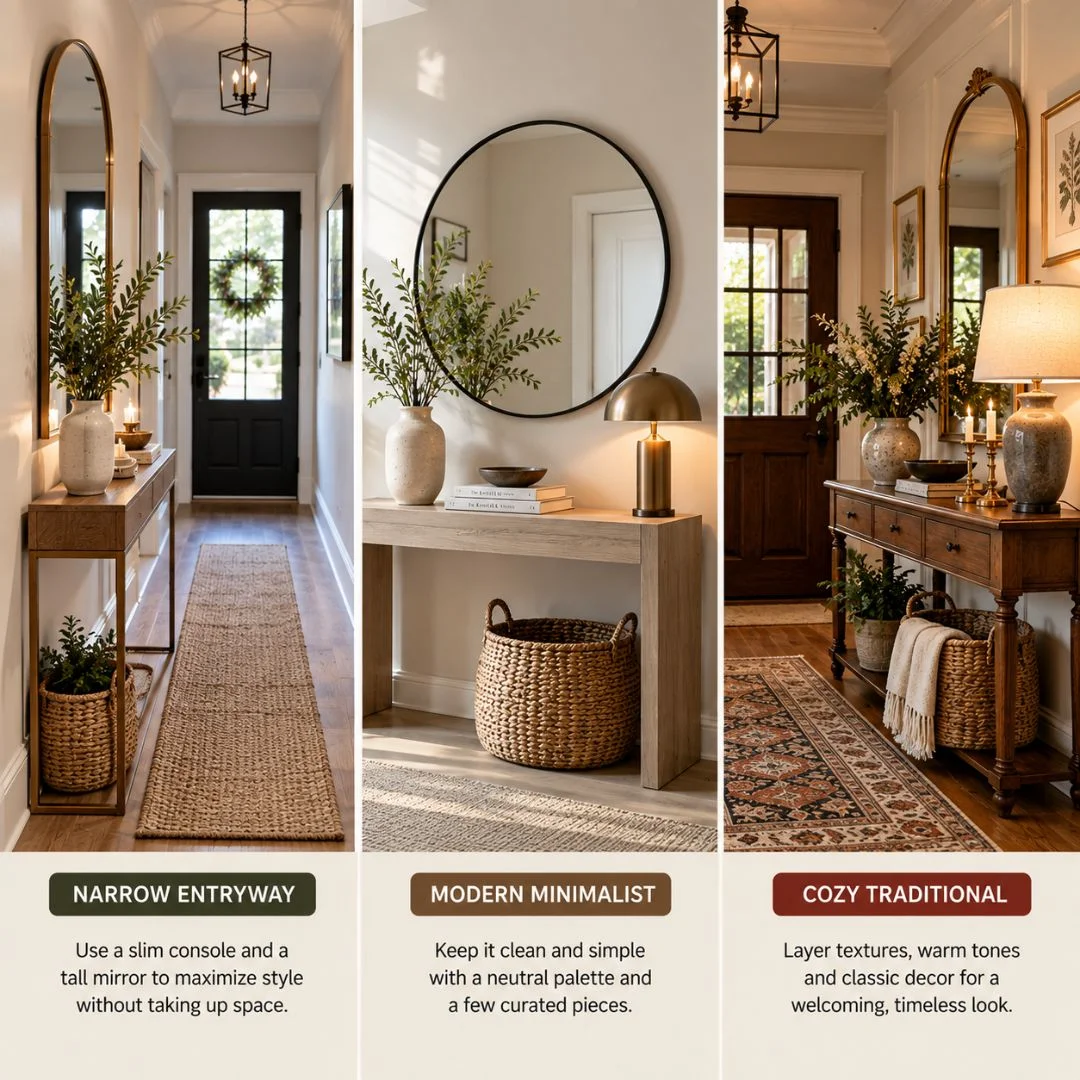
Not every entryway has the same footprint or aesthetic goals. Here are practical console table ideas for small entryways and beyond, organized by common layout.
Console Table Decorating Tips for Narrow Entryways
Narrow hallways call for restraint. Choose a slim-profile console (12 inches deep or less), a single tall mirror, and no more than three decor objects total. If there genuinely isn’t room for a console, a styled corner nook can create a similar visual impact — our guide on what to put in an empty corner has ideas worth adapting to a small foyer.
Modern Minimalist Console Table Decor Ideas
Minimalist entryways rely on negative space as much as the objects themselves. Stick to a neutral palette, one sculptural piece, and clean-lined hardware. Resist filling every inch of the surface — in this style, the empty space is part of the design, not a gap to fill.
Cozy Traditional Entryway Styling
Traditional entryways lean into layered texture: a patterned runner, a brass or ceramic lamp, a gallery-style arrangement above the console, and a woven basket underneath. Mixing materials — wood, glass, and metal — adds warmth without visual noise.
Across all three styles, small upgrades go a long way: a fresh coat of paint on the console, updated hardware, or one statement mirror. If you’re working with a tight budget, our guide on how to make your home look expensive has specific, low-cost swaps that apply directly to entryway styling.
What to Put Under an Entryway Console Table
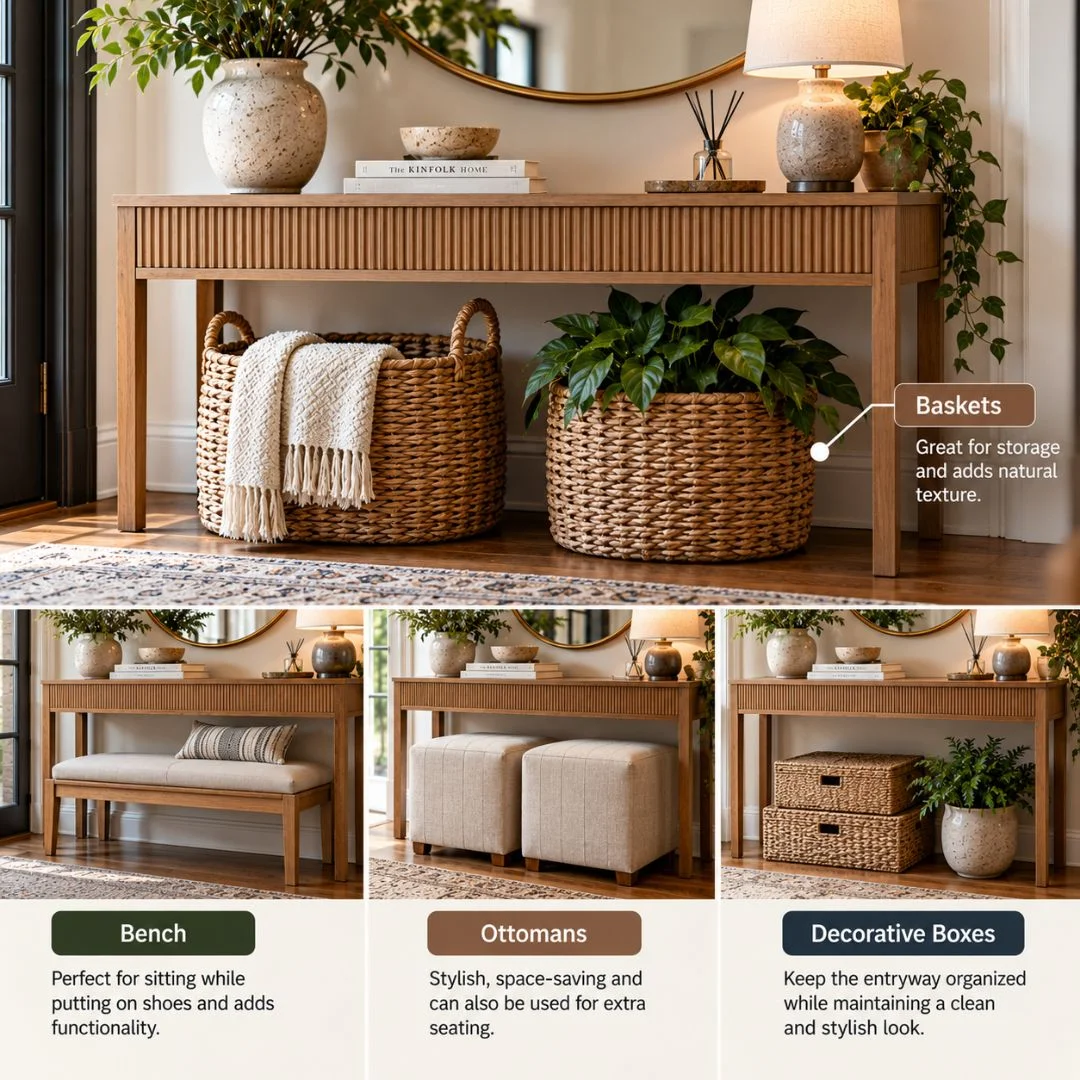
The space beneath the console is easy to overlook, but it’s often the most functional square footage in the entryway. A few reliable options:
- Woven baskets — ideal for shoes, umbrellas, or seasonal accessories
- A low storage bench — adds seating for putting shoes on and off.
- A small ottoman — softer, more casual than a bench
- Stacked baskets or bins — useful in a household with kids’ gear or pet supplies
- Nothing at all — in a minimalist entryway, leaving this space open can be the right call.
Choose based on how the space actually gets used day to day, not just how it photographs.
Common Styling Mistakes to Avoid
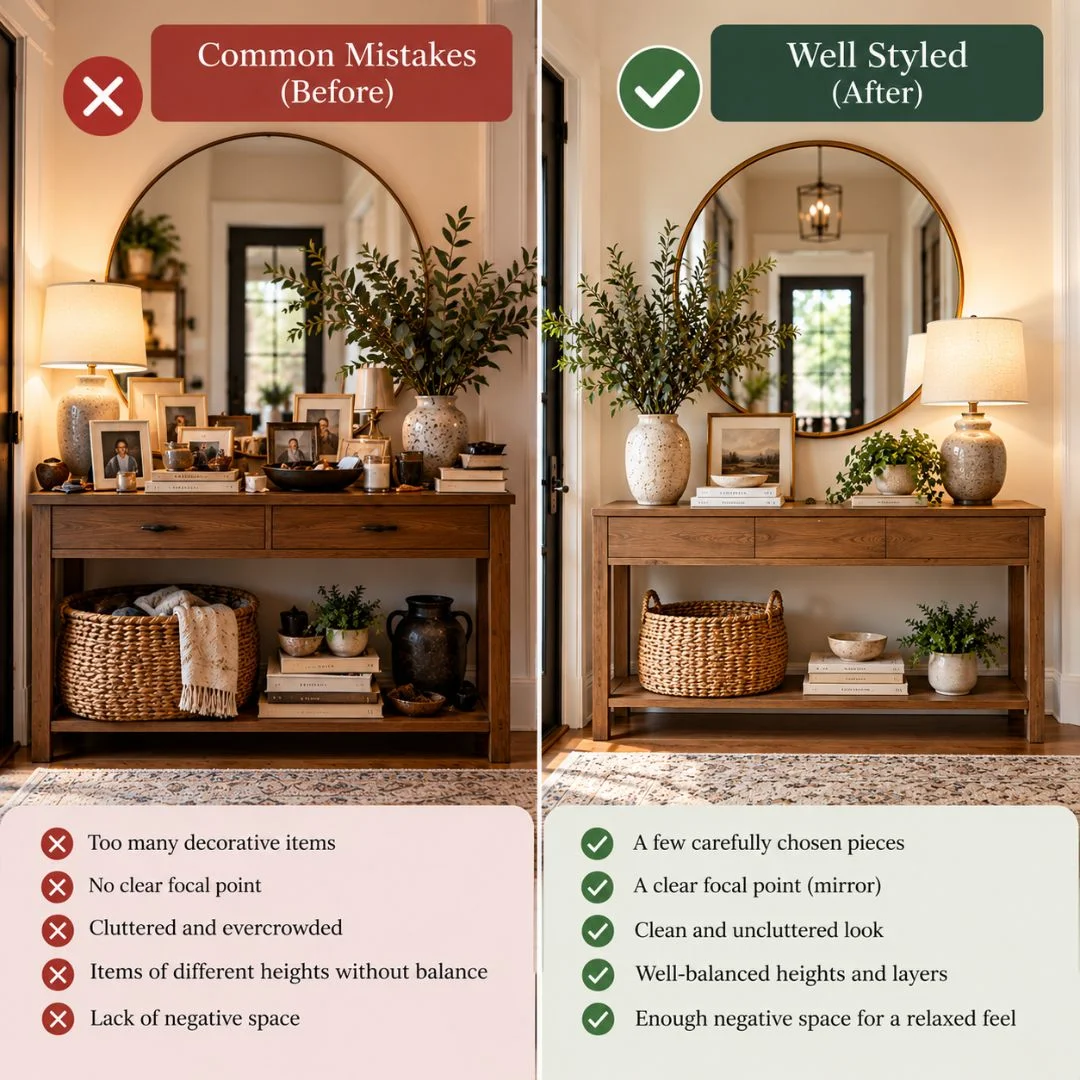
Even well-intentioned entryways can fall flat because of a few recurring errors:
- Overcrowding the surface. Too many objects tend to read as cluttered rather than curated.
- Hanging the mirror or art too high. Keep it close to the console — 6–8 inches above the surface, not at standard eye level.
- Ignoring function entirely. A beautiful console that can’t hold your keys, mail, or bag handles usually gets abandoned within a few weeks.
- Mismatched scale. A tiny lamp on an oversized console (or the reverse) throws off the whole balance.
- Forgetting lighting layers. Overhead light alone can feel flat in the evening — a lamp adds warmth and dimension.
For more ways to keep this high-traffic zone functional as well as good-looking, our guide to entryway organization ideas pairs well with the styling tips above.
Quick Comparison: Console Table Styling by Size
| Console Size | Depth | Decor Focus | Best For |
| Narrow / Slim | 10–12″ | Mirror + 2–3 objects | Tight hallways, apartments |
| Small / Standard | 12–14″ | Lamp + tray + greenery | Most entryways |
| Large / Wide Foyer | 14–18″ | Art + lamp + accessories + basket | Open, wide entry spaces |
Conclusion
Styling a console table isn’t about following a rigid formula — it’s about applying the same layering logic (vertical, middle, base) to whatever space and style you’re working with. Start with proportion, layer with intention, and always leave room for function. For more room-by-room inspiration, browse our full library of interior design ideas.
FAQ
What should I put on a console table in an entryway?
- A tall anchor piece (mirror or art), a mid-height item like a lamp or florals, and a functional base layer such as a tray or basket — grouped in varying heights.
How do I style a console table in a small entryway?
- Choose a slim, shallow console (12 inches deep or less), use one large mirror as the anchor instead of multiple wall pieces, and limit decor to two or three objects so the surface stays functional.
How many items should be on a console table?
- There isn’t a fixed number. Start with three to five pieces grouped in odd numbers — three tends to work especially well — and adjust based on the size of the console.
What height should a mirror be above a console table?
- Leave roughly 6–8 inches of space between the top of the console and the bottom of the mirror or art frame.
Do I need a rug under my entryway console table?
- It’s not mandatory, but a rug helps anchor the arrangement and adds warmth, especially on hardwood or tile floors.
Can a console table be functional and decorative at the same time?
- Yes — that’s the goal. Trays and baskets keep everyday items like keys and mail accessible while still looking intentional.