 By
By You’ve got a bathroom that’s been quietly judging you for weeks — soap scum creeping up the tiles, a mirror doing its best despite the toothpaste splashes, and a toilet that hasn’t seen a proper scrub in longer than you’d like to admit.
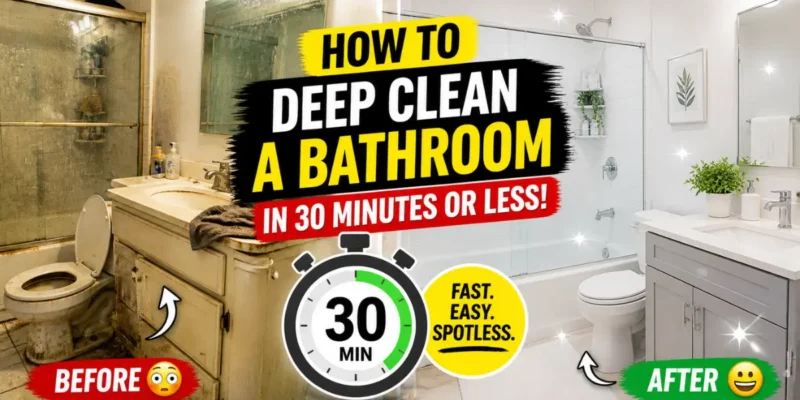
The good news? You don’t need a full Saturday afternoon, a hazmat suit, or fourteen different cleaning products to fix it. Deep cleaning a bathroom in under 30 minutes is completely doable — if you clean smart, not just hard.
This guide breaks it all down: the right sequence, the right products, and the tricks that professional cleaners use to cut time without cutting corners.
Why the Cleaning Order Matters More Than the Products
Most people grab a sponge and just start scrubbing — whatever’s nearest. That’s why bathroom cleaning takes so long.
The real secret to a fast deep bathroom clean is working top to bottom, dry to wet, and letting your cleaning products do the heavy lifting while you move on to the next task.
If you spray the toilet, immediately wipe it, then move to the mirror — you’re doing double the work. Products need dwell time to break down soap scum, bacteria, and mineral deposits. You spray, walk away, come back. That’s how professionals get fast results.
Think of it like cooking — prep everything first, then let the heat do the work.
What You Need Before You Start
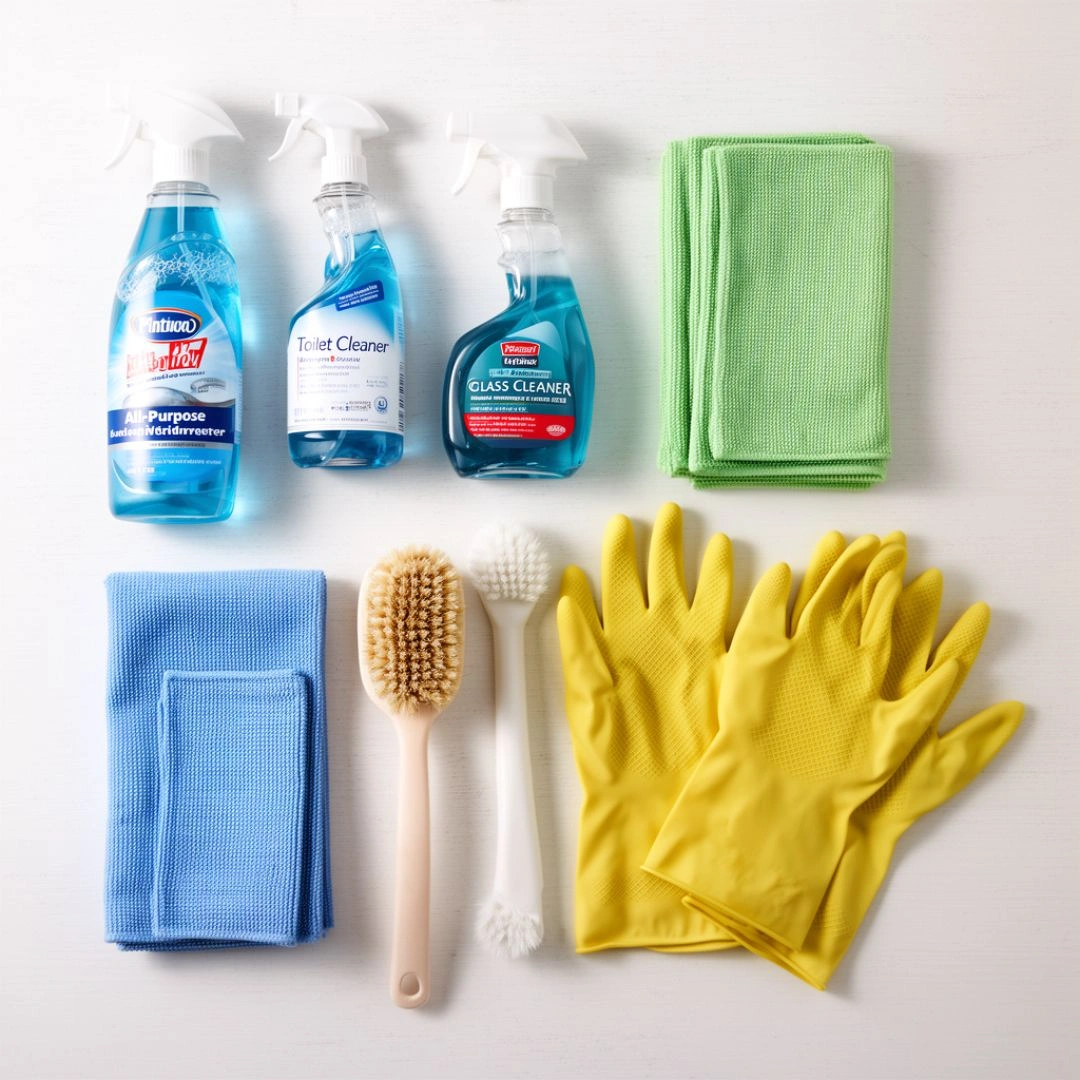
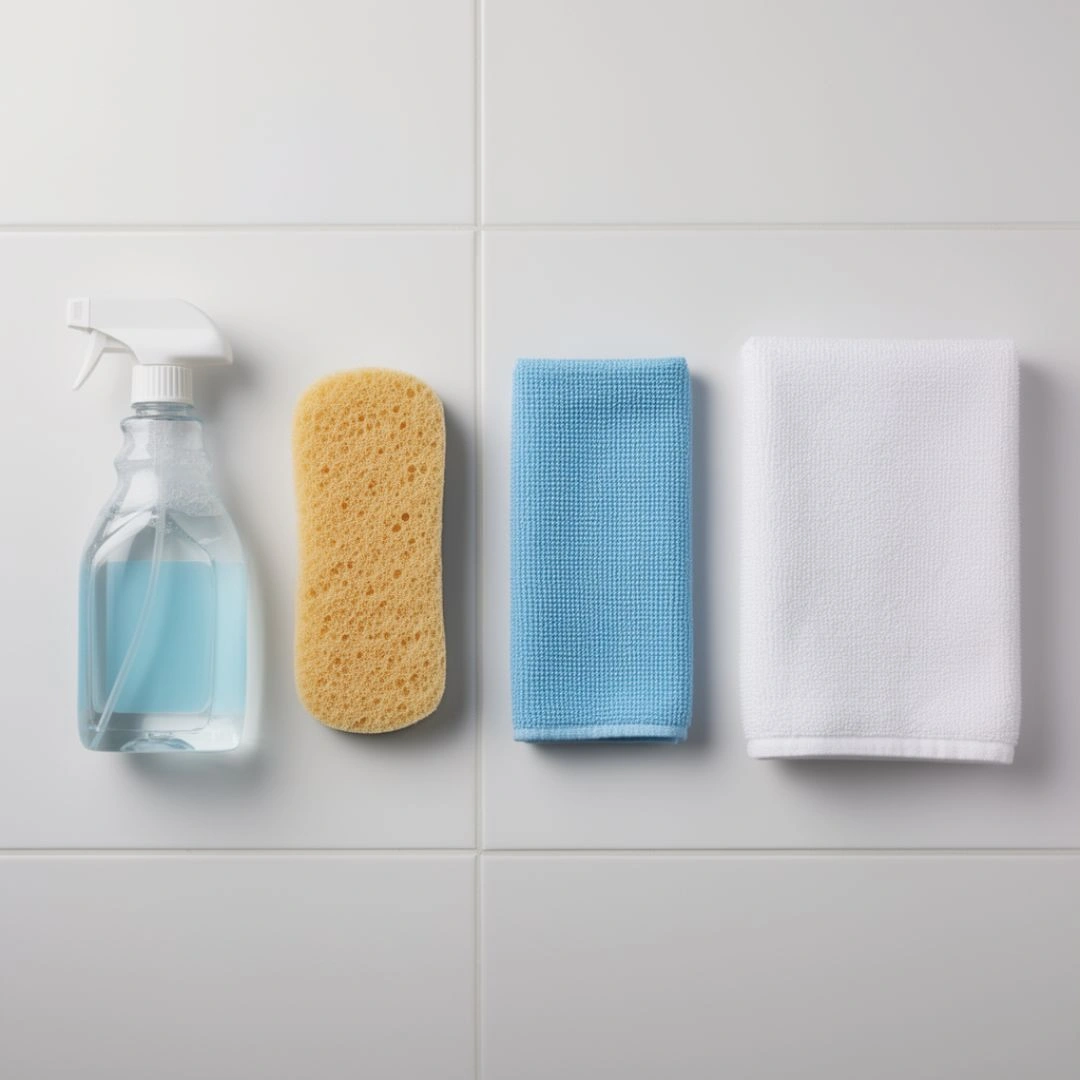
No need for an overwhelming arsenal. These essentials cover 95% of what a bathroom needs:
- All-purpose bathroom cleaner (or a DIY mix of white vinegar + dish soap)
- Toilet bowl cleaner
- Glass cleaner (or diluted vinegar for mirrors)
- Microfiber cloths (at least 3 — one for mirrors, one for surfaces, one for the toilet)
- A scrubbing brush or old toothbrush for grout and corners
- Toilet brush
- Rubber gloves
- A small caddy to carry everything in one trip
Pro move: keep your cleaning supplies inside the bathroom cabinet or under the sink. The time spent hunting down products in another room adds up fast.
Your 30-Minute Deep Clean Bathroom Plan — Step by Step
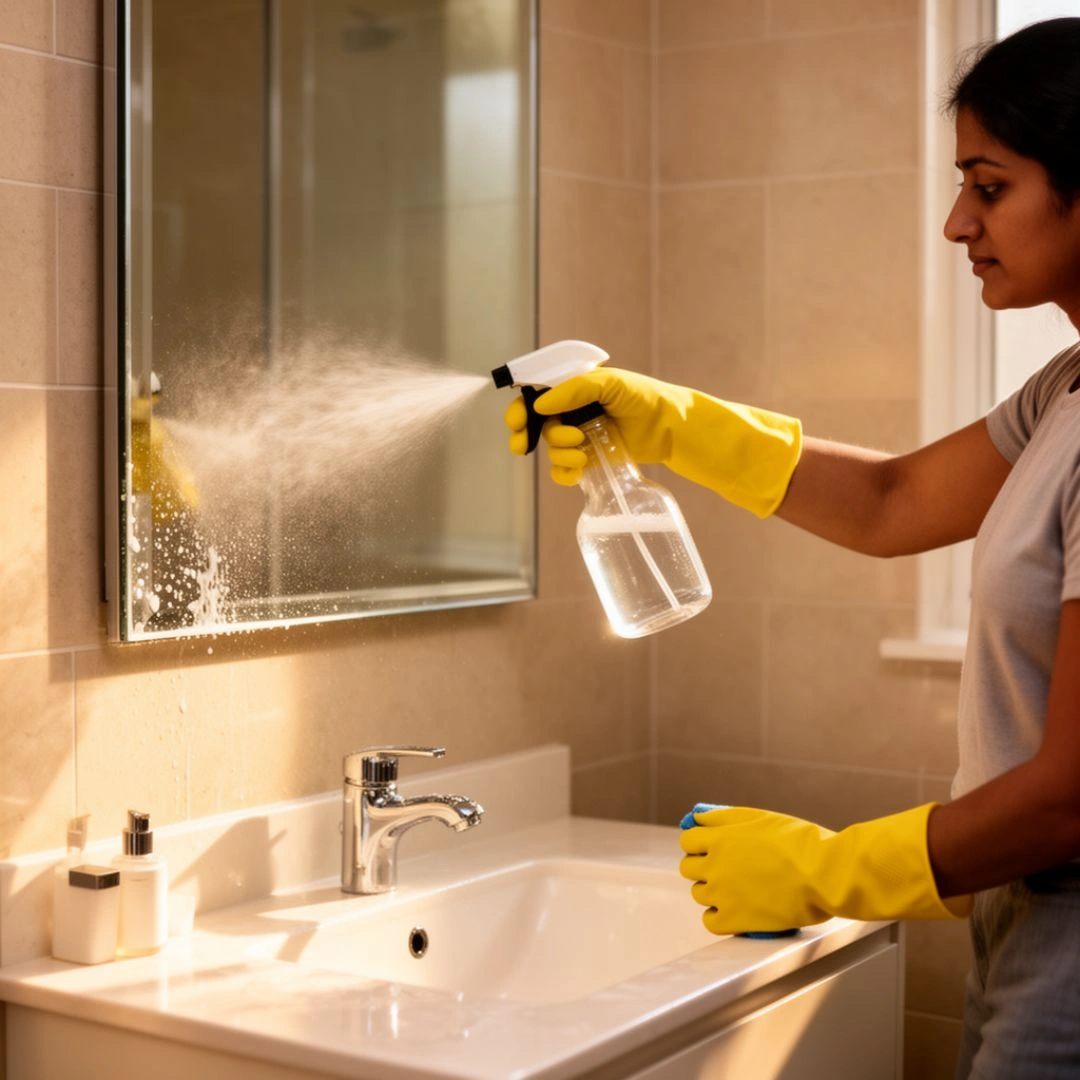
Here’s the exact sequence that works. Stick to it, and 30 minutes is genuinely enough.
Minutes 0–3: Declutter and Prep
Before anything gets wet, clear the counters. Move the shampoo bottles out of the shower. Grab anything that doesn’t belong in the bathroom and set it outside the door.
Throw any used towels and bath mats in the laundry pile. This gives you clear surfaces to work on and stops wet cleaning products from soaking into fabric.
Flush the toilet and apply toilet bowl cleaner inside the rim right now. Let it sit while you do everything else.
Minutes 3–8: Spray Everything That Needs Dwell Time
Work systematically. Spray:
- The shower walls and floor
- The bathtub (if applicable)
- The toilet exterior — tank, lid, seat, base
- The sink and faucet
- The countertop
Don’t wipe anything yet. Let the products penetrate. This is the step most people skip, and it’s the reason they end up scrubbing twice as hard.
Minutes 8–14: Tackle the Shower and Tub
Start scrubbing the shower now that the cleaner has had time to loosen buildup. Use a scrubbing sponge for the walls, paying attention to grout lines and the corners near the floor.
For stubborn soap scum on glass shower doors, apply a paste of baking soda and dish soap, let it sit for two minutes, then wipe with a damp microfiber cloth. The difference is remarkable.
Rinse everything thoroughly with hot water. Hot water helps lift residue faster than cold.
Small bathroom tip: In a tight shower, work in a clockwise direction — walls first, then the floor, then the drain. It prevents you from re-dirtying areas you’ve just cleaned.
Minutes 14–18: Clean the Toilet (Properly This Time)
The toilet bowl cleaner has been sitting for 10+ minutes now. Scrub the inside of the bowl with your toilet brush — under the rim especially, where bacteria hide.
Then take a fresh microfiber cloth and wipe down the entire exterior: tank, lid (both sides), seat (both sides), the bowl exterior, and the base where it meets the floor. That floor junction collects more grime than most people realize.
Use a separate cloth — or at minimum a clearly designated section of your cloth — for the toilet versus other surfaces. Cross-contamination is a real hygiene issue.
Minutes 18–23: Sink, Faucet, and Countertops
Wipe down the sink bowl and the faucet. Use an old toothbrush or cotton swab around the base of the faucet where gunk builds up. Mineral deposits (that white crusty buildup) dissolve well with a cloth soaked in white vinegar — hold it against the deposit for one minute.
Rinse the sink, then dry the faucet with a clean cloth. Drying the faucet prevents water spots, which is what makes fixtures look dull even after cleaning.
Wipe down the countertop and any soap dispensers, toothbrush holders, or accessories. For inspiration on styling your vanity after it’s clean, check out these jar decor ideas for bathroom vanities from Helpful Destination.
Minutes 23–27: Mirror and Glass
Spray glass cleaner (or a 50/50 vinegar-water solution) onto the mirror. Wipe with a clean, dry microfiber cloth using an S-pattern — not circular motions. Circular motions just spread the product around. The S-pattern lifts it off cleanly.
If your bathroom mirror is foggy or has hairspray residue, a small amount of rubbing alcohol on the cloth before the glass cleaner makes a significant difference.
Minutes 27–30: Floor and Final Pass
Sweep or vacuum the floor first, then mop or wipe with a damp microfiber mop. Start at the far end and work toward the door so you don’t step back onto the wet floor.
Do a final walk-through: check the light switch, the door handle, and the toilet flush handle. These high-touch surfaces are germ hotspots that most guides ignore entirely. Give them a quick wipe with a disinfectant cloth or a spritz of all-purpose cleaner.
Replace your clean bath mat. Open a window or turn on the exhaust fan to help the room dry faster.
Done. Bathroom deep cleaned — 30 minutes.
The Areas Most People Forget to Clean
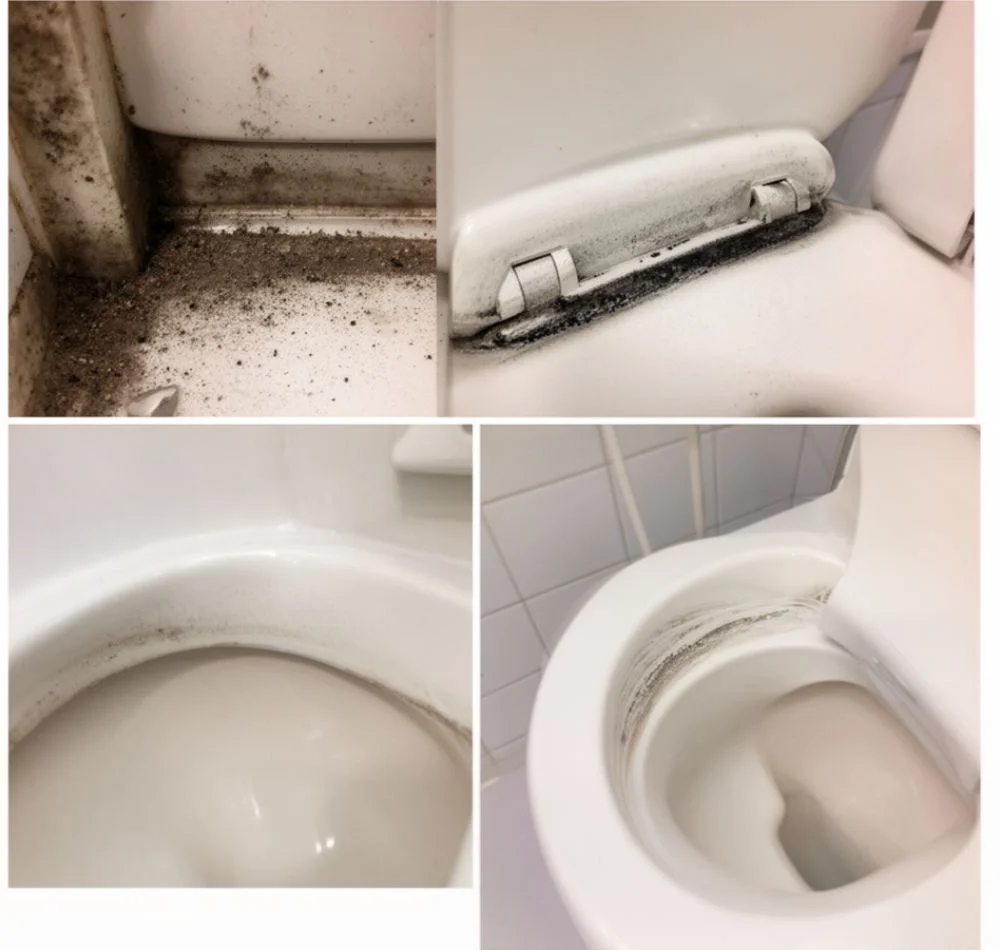
Even a thorough deep clean often misses these spots:
Behind the toilet. The gap between the toilet tank and the wall is a dust and grime magnet. A slim scrubbing wand or even a cloth-wrapped ruler gets in there.
The exhaust fan vent. Dust collects on those grilles and recirculates into the air every time the fan runs. A quick wipe with a dry microfiber cloth every couple of months makes a difference.
Toothbrush holders and soap dispensers. The inside of a toothbrush holder can be genuinely disgusting — rinse and scrub it every few weeks.
Grout lines. A paste of baking soda and hydrogen peroxide applied with an old toothbrush, left for five minutes, then scrubbed, brightens grout significantly. You don’t need professional whitening products.
The shower curtain and liner. Mildew grows on these invisibly until it’s obvious. Most fabric curtains are machine washable. Plastic liners can be soaked in a bathtub with warm water and white vinegar for an hour, then scrubbed and rinsed.
Light switches and towel bars. High-touch surfaces that rarely get any attention. A disinfectant wipe takes ten seconds.
Mistakes to Avoid When Deep Cleaning a Bathroom
Mixing cleaning products. Never mix bleach with vinegar or ammonia-based cleaners. The fumes are genuinely harmful. Pick one product type and stick to it.
Using the same cloth everywhere. Cross-contaminating surfaces defeats the purpose. Color-code your clothes: one for mirrors, one for surfaces, and one designated for the toilet area only.
Skipping the dwell time. Wiping immediately after spraying means you’re just pushing the product around, not actually lifting the grime. Give it at least two minutes.
Cleaning top to bottom — in reverse. Always clean higher surfaces first. Dust and product drips fall down. If you clean the floor first, you’ll need to redo it.
Using too much product. More cleaning doesn’t mean cleaner surfaces. Excess product leaves residue that attracts more grime. Use less than you think you need.
Forgetting ventilation. Cleaning product fumes build up fast in a small, enclosed space. Open a window or run the exhaust fan throughout. This also helps the surfaces dry faster.
Pro Tips for a Faster, Deeper Clean
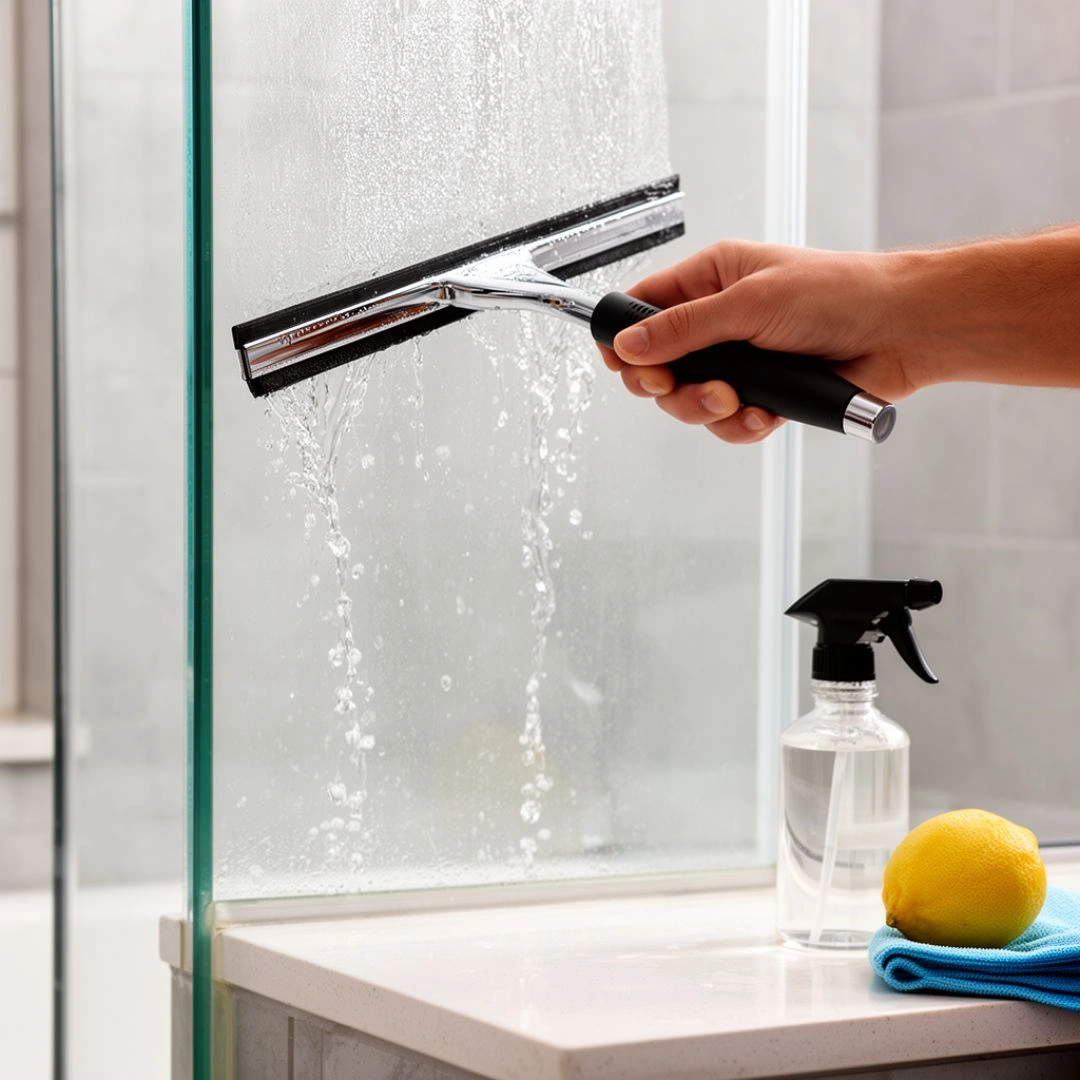
Use a squeegee on the shower walls after every use. This single habit cuts your shower cleaning time in half. It takes 20 seconds and prevents soap scum and mineral buildup from forming in the first place.
Microfiber is non-negotiable. Regular cloths push grime around. Microfiber actually traps it. They’re also better for glass — no streaks.
Line the toilet bowl with cleaner the night before. If you know you’re cleaning tomorrow, apply toilet bowl cleaner the evening before. It has hours to work, and the morning scrub is minimal.
Shower spray is worth the investment. Products like daily shower sprays (applied after every shower) dramatically reduce the frequency of deep cleaning needed. Spray, no rinse required, done.
White vinegar is your best low-cost tool. For mineral deposits, soap scum on glass, and general sanitizing, a 50/50 mix of white vinegar and water outperforms many commercial products at a fraction of the cost.
A pumice stone removes toilet bowl rings. Wet the stone and gently scrub — it won’t scratch porcelain but removes those stubborn brownish rings that nothing else touches.
For more ideas on upgrading the look of your bathroom once it’s clean, check out these modern bathroom lighting ideas — because good lighting makes a clean bathroom look spectacular.
How to Keep It Clean Between Deep Cleans
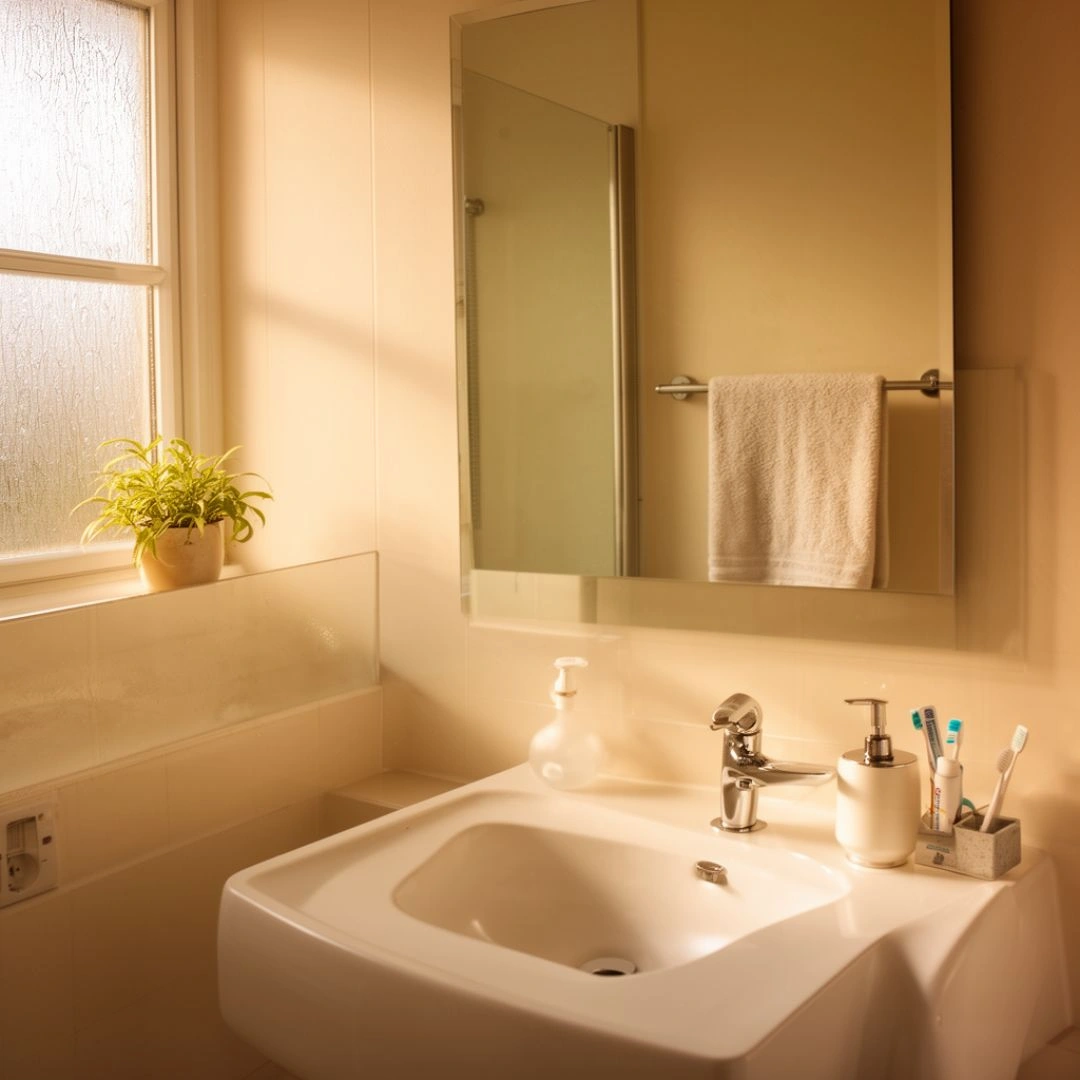
A deep clean of a bathroom session every 2–3 weeks is realistic for most households if you maintain it in between. Here’s what actually works:
- Wipe the sink and counter daily — takes 60 seconds with a damp cloth
- Squeegee the shower after use — prevents buildup entirely
- Spray and wipe the toilet seat and exterior twice a week — use flushable wipes if you’re short on time
- Keep a small spray bottle of all-purpose cleaner inside the cabinet — the easier it is to grab, the more likely it is to happen
If you struggle with a bathroom (or home) that looks untidy despite cleaning, this article on why your home looks messy even when it’s clean explains the real reasons and how to fix them.
A clean bathroom also genuinely adds to your home’s appeal. You can also explore how a refreshed bathroom fits into a broader home improvement strategy with this guide on how to increase home value without renovation.
Conclusion
Deep cleaning a bathroom doesn’t have to eat up your weekend. With the right sequence, a few product dwell-time tricks, and the forgotten spots addressed, 30 minutes is all it takes to go from grimy to genuinely fresh.
The key takeaways: spray first, clean top to bottom, use microfiber cloths, and don’t skip the high-touch surfaces everyone overlooks.
Build the 30-minute routine into your schedule every few weeks, add a few daily two-minute habits in between, and your bathroom will stay clean with dramatically less effort over time.
For more practical home improvement advice that actually works, explore Helpful Destination — practical guides for real homes and real lives.
FAQ
How often should you deep clean a bathroom?
- Every 2 to 4 weeks is the standard recommendation for most households. If multiple people share one bathroom, lean toward every 2 weeks. If it’s a rarely used guest bathroom, once a month is fine. Regular light maintenance between sessions keeps the deep clean quick.
What’s the fastest way to deep clean a bathroom?
- The fastest method is product dwell time + correct sequence. Apply your cleaner to all surfaces first, let it sit for 2–5 minutes, then work top to bottom — mirror and surfaces first, toilet, sink, then floor. This eliminates backtracking and re-cleaning.
Can I deep clean a bathroom without harsh chemicals?
- Yes. White vinegar, baking soda, dish soap, and hydrogen peroxide handle the vast majority of bathroom cleaning tasks safely and effectively. Vinegar dissolves mineral deposits and soap scum; baking soda is a gentle abrasive for grout and tubs; hydrogen peroxide disinfects and brightens grout.
How do I remove soap scum from glass shower doors?
- Apply a paste of baking soda and a few drops of dish soap. Leave it for two minutes. Wipe off with a damp microfiber cloth. For very stubborn buildup, a commercial product containing hydrofluoric acid alternative (like CLR) works well — follow the label instructions carefully. A daily squeegee habit prevents it from forming.
What’s the best way to clean bathroom grout?
- A paste of baking soda and hydrogen peroxide, applied with an old toothbrush and left for 5–10 minutes before scrubbing, works extremely well for whitening and disinfecting grout. For very dark or moldy grout, a diluted bleach solution (1 part bleach to 10 parts water) applied carefully with a brush and rinsed thoroughly is more effective.
Is it safe to clean a bathroom with vinegar and baking soda together?
- They’re both safe individually, but when mixed together they neutralize each other — creating a fizzing reaction that looks impressive but actually reduces cleaning power. Use them separately: baking soda as an abrasive paste, vinegar as a spray solution.
How do I get rid of bathroom mould quickly?
- A diluted bleach spray (1:10 bleach to water) applied directly to moldy grout, tiles, or caulking, left for 10 minutes, then scrubbed and rinsed, is the most effective short-term fix. For prevention, improve ventilation — run your exhaust fan during and for 20 minutes after showers. Consider adding a bathroom plant that naturally absorbs moisture.