 By
By If you’ve ever pulled out your winter coats in October only to find one smells like mildew, or gone to grab the holiday decorations and spent forty minutes moving things to reach them, you already know the real problem with seasonal storage in a small home.
It’s not that you don’t have enough space. It’s that most storage advice assumes you have a basement, an attic, or at minimum a spare closet — and it skips over the thinking that actually makes a system work. The result? You buy bins, stack them somewhere, and still can’t find what you need six months later.
This guide takes a different approach to how to store seasonal items in a small home. It starts with a framework most people never use, explains why common methods fail (not just what to do instead), and gives you a practical rotation system that holds up past the first season.
The Framework Nobody Talks About: Access Frequency
Most seasonal storage guides treat “seasonal items” as one category. They’re not. And treating them that way is the reason most storage systems fall apart.
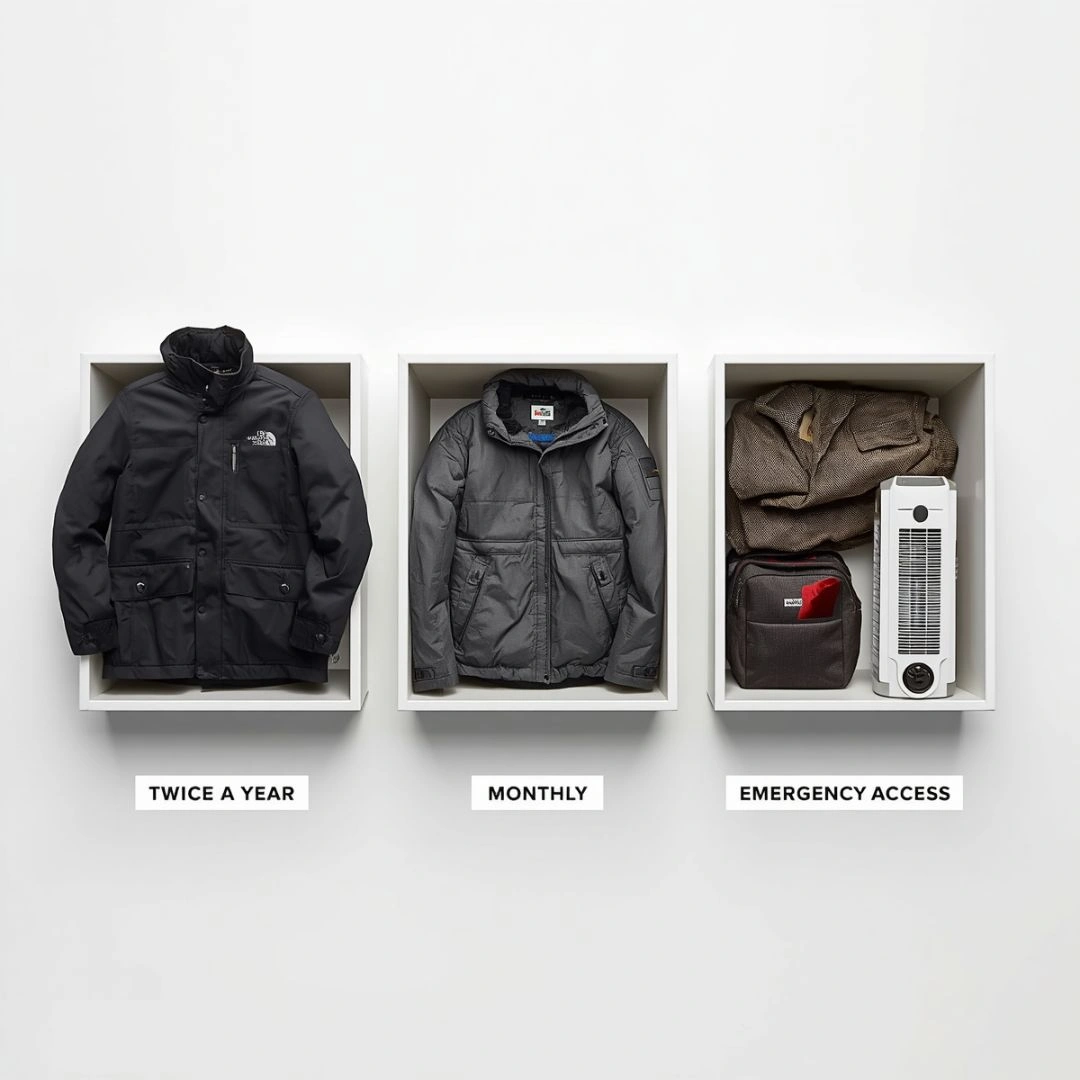
Before you touch a single bin, sort everything you’d call “seasonal” into three groups based on how often you actually need it:
- Twice-a-year items: Things you put away for an entire season and don’t touch until the swap — heavy winter coats, pool floats, holiday decor, spare bedding
- Monthly items: Things that come and go during a season but aren’t used weekly — a lightweight jacket for unpredictable spring weather, a fan you run during heat waves, specialty cooking equipment for holidays
- Emergency-access items: Seasonal gear you don’t use often but might need on short notice — a space heater during a cold snap, an umbrella during a dry summer, medical supplies stored by season
Once you know which group an item belongs to, the storage decision gets easier. Twice-a-year items can live in high, hard-to-reach spots — above the closet rod, at the back of under-bed storage, on a top shelf. Monthly items need to be more reachable, ideally at eye level. Emergency-access items should be findable in under two minutes, even in the dark.
This single shift — sorting by access frequency rather than by season — changes where things live, which means you stop digging through boxes of Christmas ornaments to reach the fan you need in July.
Understanding why visual clutter builds up even in an organized home also matters here. Keeping frequently accessed seasonal items in genuinely reachable spots is part of the reason homes can look messy even when they’re technically clean — everything is stored, but nothing is stored correctly for how it’s actually used.
Why “Seasonal” Is a Trap Category in Small Homes

Here’s something most organization guides won’t say directly: a large portion of what people classify as “seasonal” in a small home shouldn’t be stored at all. It should be donated, sold, or discarded.
This isn’t minimalism for its own sake. It’s math. When you’re working with 600 or 800 or even 1,000 square feet, every bin of stored items represents square footage that can’t be used for living. The question isn’t just “where do I put this?” — it’s “does this item justify the space it’s taking from me for six months?”
The “aspirational item” problem is particularly common. These are seasonal things you own because of who you planned to be, not who you are:
- The camping gear for trips you haven’t taken in four years
- The ski equipment from before the kids were born
- The holiday hosting items for a gathering you no longer throw
- The outdoor furniture cushions for a patio you barely use
None of these are bad things to own in the right context. In a small home with limited seasonal storage, each one is competing directly with something else. And when you’re storing aspirational items, you’re often displacing things you actually use — which leads to poor accessibility, more digging, and a system that gradually stops working.
Before any seasonal swap, run what might be called an “honest occasion” test on each item: When is the next realistic occasion I’ll use this? If you can’t name a specific occasion within the next 18 months, the item probably isn’t earning its storage space.
How to Store Seasonal Items in a Small Home Without Buying More Bins
The first instinct when seasonal storage feels chaotic is to buy new storage products. This almost always makes things worse before it makes them better, because new bins without a system just create more organized-looking clutter.
Before purchasing anything, work through what you already have:
Suitcases and Large Bags You Already Own
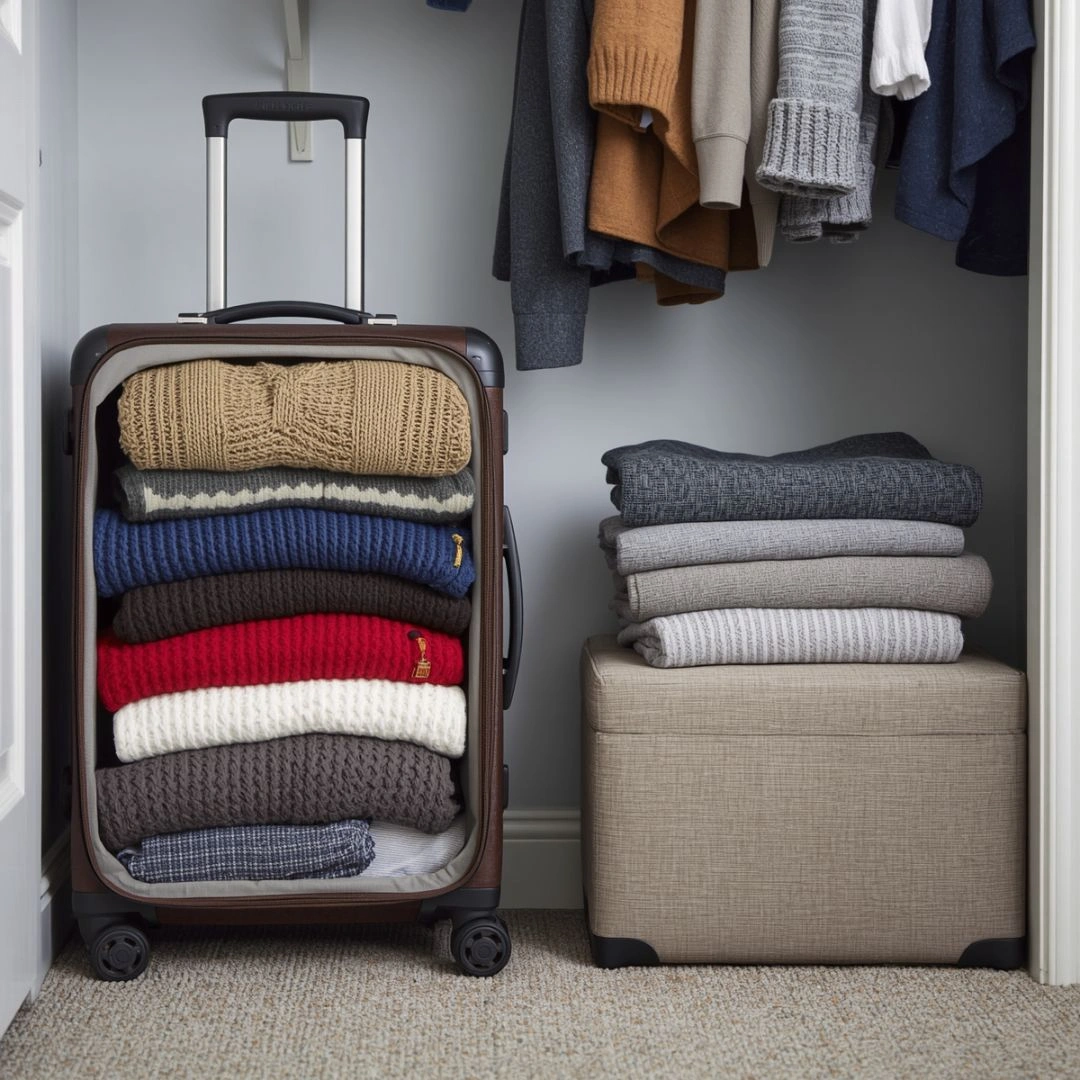
Rolling luggage, large duffel bags, and oversized totes are storage vessels that most people leave empty. Pack off-season clothing neatly inside them, then store the luggage as you normally would. A large rolling suitcase can hold two full seasons of sweaters. A weekend duffel fits a set of lightweight bedding. This is one of the most space-efficient approaches available because it uses containers you’d be storing anyway.
Furniture You’re Not Using Fully
A storage ottoman holds more than most people realize — typically the equivalent of a medium storage bin. A bench at the foot of the bed can hold a season’s worth of throw blankets. A sideboard that currently holds everyday items might have a lower cabinet that’s a better fit for seasonal serving pieces.
The Refrigerator Top and Cabinet Top Space
The gap between upper kitchen cabinets and the ceiling is real, useful storage. So is the top of the refrigerator. These spots work best for seasonal kitchen items — holiday-specific serving pieces, specialty bakeware, or decorative items that rotate in twice a year. Keeping this space looking intentional rather than chaotic is mostly a matter of using matching baskets or bins that blend with your kitchen aesthetic. If you haven’t fully rethought your kitchen storage, organizing kitchen cabinets efficiently can free up interior cabinet space that’s more valuable for daily-use items.
Container Science: Why Specific Materials Fail in Specific Conditions
Most guides say “use the right container” and leave it at that. But understanding why certain containers fail in certain conditions helps you make decisions that protect your belongings for the long term — which matters particularly in a small home, where replacing damaged items is an expense you don’t need.
The Sealed Plastic Problem with Textiles
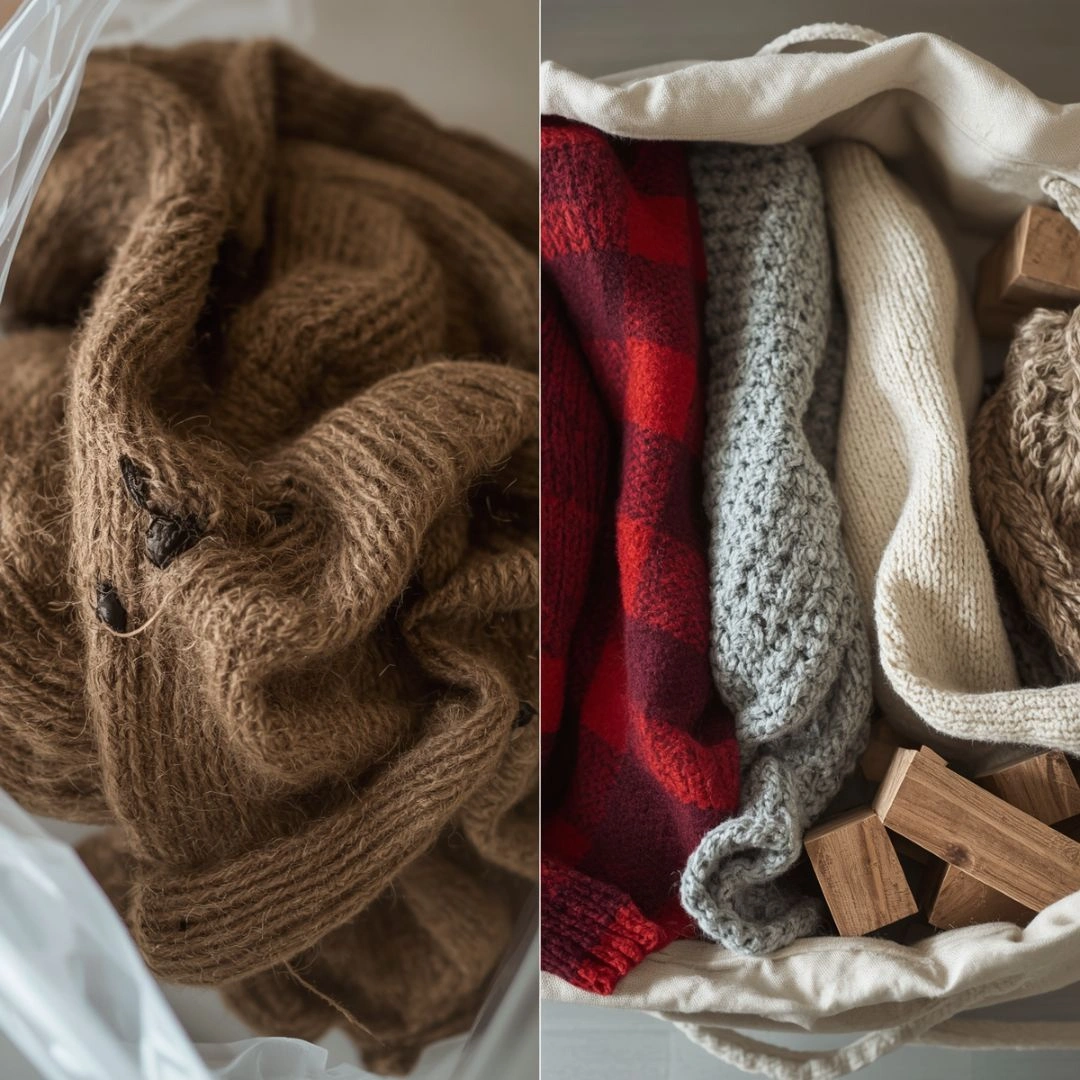
Sealed plastic bins — the kind that click shut and feel airtight — are excellent for non-porous items like decorations, sporting goods, and kitchen equipment. They’re actively harmful for fabric and clothing stored long-term. The reason: textiles need to breathe. When fabric is sealed in plastic for six months, any residual moisture (even from fabric that feels dry) becomes trapped. The result is that characteristic musty smell, and in some conditions, early mildew development.
For seasonal clothing, bedding, and anything fabric-based, use:
- Cotton canvas bins or bags — genuinely breathable, compressible, and easier to store in awkward spaces than rigid containers
- Cedar-lined storage boxes — cedar naturally repels moths and absorbs minor moisture fluctuations
- Vacuum-seal bags, with one critical caveat — don’t fill them to capacity. Compressing down-filled items or heavy knits too aggressively damages the fill and can set permanent creases in structured clothing. Fill to about 75–80% before sealing, and items will recover their shape when unpacked
Cardboard Degrades Faster Than You Think
Holiday decorations often end up in the original cardboard boxes they came in — which makes sense, because those boxes are sized for the items. The problem is cardboard absorbs moisture, weakens over time, and provides no protection against insects. Ornaments and delicate decorations stored in cardboard for several years are significantly more likely to arrive next December with scratches, chips, or that faint smell that tells you the box didn’t hold up.
For anything fragile or valuable, move to divided plastic organizers with foam inserts or tissue paper layering. The investment pays for itself the first time it prevents a broken ornament.
Boot Storage Specifically
Boots stored collapsed or stacked lose their shape within one or two seasons. The fix is cheap and underused: stuff boots with rolled magazines, pool noodle cut-outs, or purpose-made boot shapers before storing. The goal is to maintain the shaft’s structure while the boots are off your feet for three to six months. If you’re reorganizing shoe storage more broadly, there’s good detail on organizing shoes in a small closet that applies directly to seasonal footwear rotation.
The Micro-Season Problem (And How to Solve It)
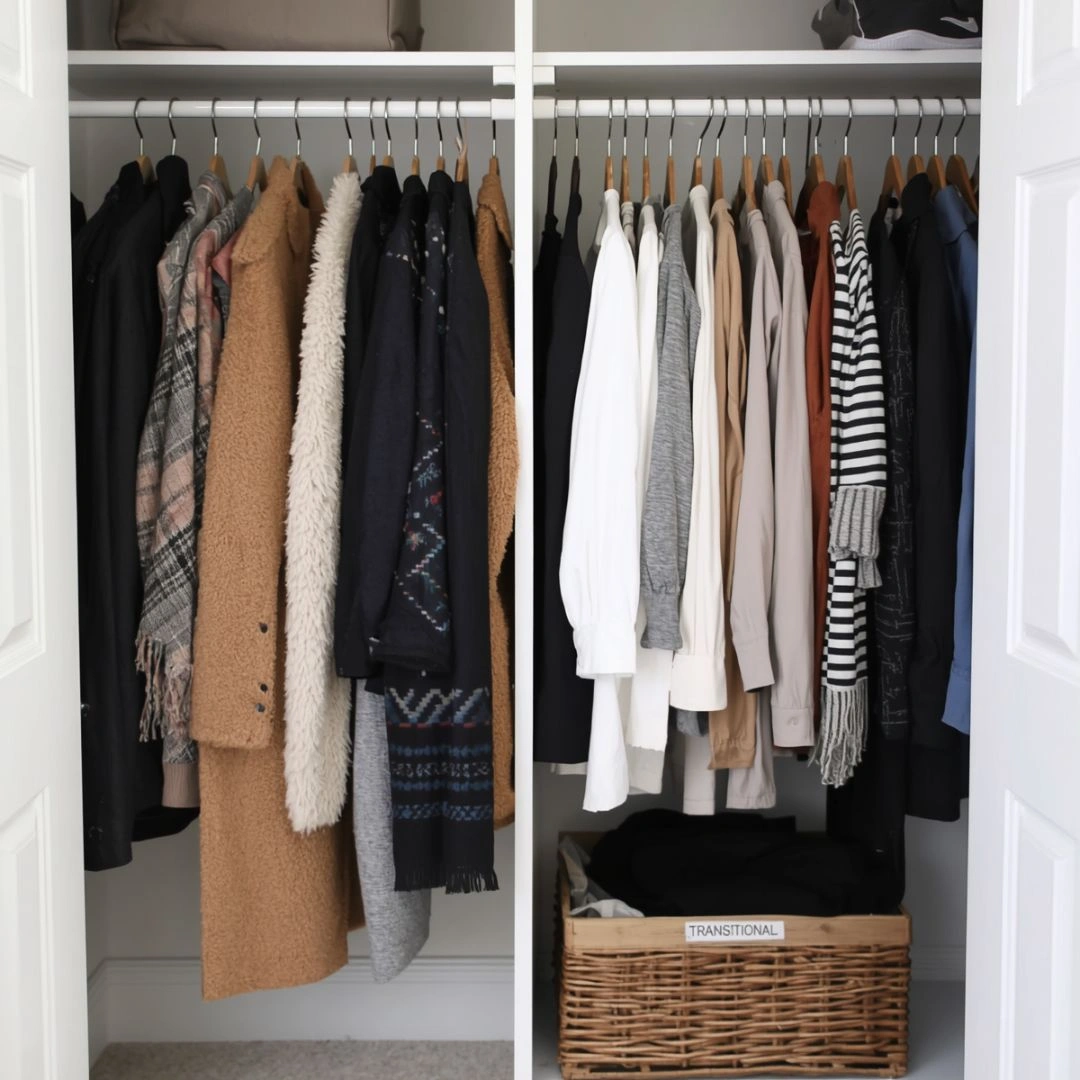
Here’s something big-home advice consistently misses: in a small home, a twice-a-year seasonal swap often isn’t enough. Real seasons don’t flip on a single date, and shoulder seasons — October, March, and April especially — create a specific problem where you need items from both your active and stored seasons simultaneously.
What Shoulder Season Looks Like in Practice
In a typical March in most of the US, you might need:
- Your winter coat (still cold in the mornings)
- Lighter layers for afternoons that hit 65°F
- Rain gear that’s neither winter-weight nor summer-weight
- Allergy medication that lives with your spring items
- Summer bedding not yet out, but the winter duvet already too heavy
If your storage system only has two states — “winter active, summer stored” or vice versa — shoulder seasons create a mess. Things get half-unpacked and never fully put back. This is often when seasonal storage systems quietly collapse.
The Solution: A Transitional Zone
Designate one small, accessible space — a single shelf, a basket in a visible spot, or the top shelf of a main closet — specifically as a transitional zone. During shoulder seasons, items that are “between seasons” live here. They’re not buried in storage, and they’re not mixed into your main wardrobe. They’re in a defined, temporary holding area.
When the season fully turns and you’ve confirmed you no longer need those items, they migrate to long-term storage. This two-step system sounds like extra work but actually reduces the disorganized half-state that makes most seasonal rotations feel perpetually incomplete.
Hidden Storage Spots Worth Reconsidering
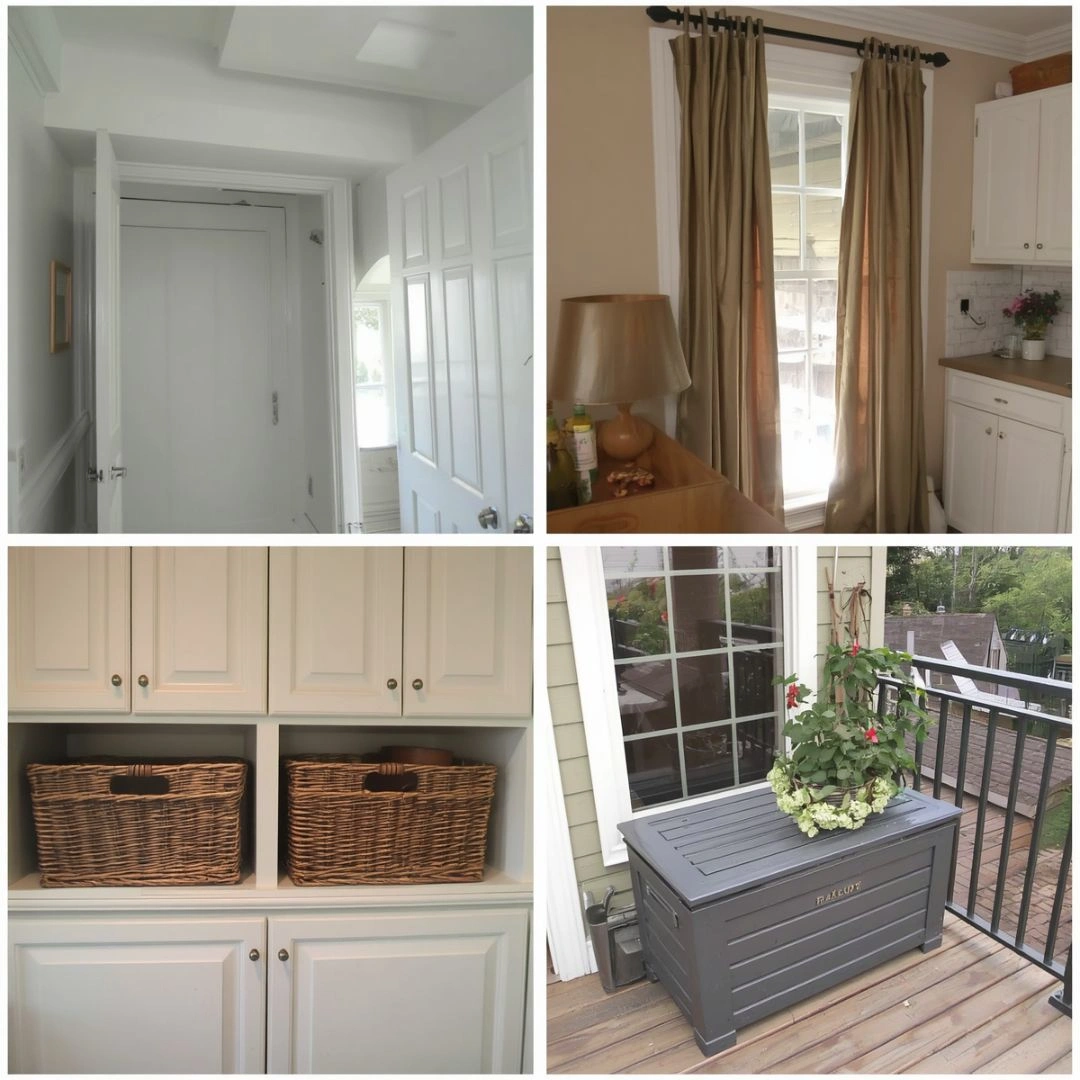
Once you’ve worked through access-frequency sorting and container selection, you may still need to find additional storage space. These spots are underused specifically in small homes:
The Space Above Interior Doors
Interior door frames typically sit 6–12 inches below the ceiling. That gap is enough for a shallow floating shelf on each side of the door — wide enough for folded textiles, decorative bins, or lightweight holiday items. A series of these shelves through a hallway or bedroom can add meaningful storage without touching floor space.
The Back Wall of Deep Closets
Most closets are accessed from the front and the sides get used — but the back wall often collects things that drift there and get forgotten. Mounting a shallow pegboard or a row of hooks on the back wall of a closet makes it an intentional, visible storage surface rather than a dead zone.
Behind Long Curtains
Floor-length curtains conceal the space against a wall below the window. A flat storage bench or a row of labeled bins behind curtains in a living room or bedroom creates storage that’s completely invisible and doesn’t affect the room’s aesthetic.
Balconies and Outdoor Areas
If you have even a small balcony or patio, weather-resistant deck storage boxes can house outdoor-specific seasonal items — gardening tools, patio cushions, beach gear, sports equipment — and keep them entirely out of your indoor space. This frees up interior storage for items that genuinely need to be inside. Balcony storage solutions for small spaces covers what to look for in outdoor-rated storage and how to make a small balcony genuinely functional.
Inside Other Seasonal Items
A large camping cooler is an item most people store empty. Fill it with camping supplies before storing it. A wicker basket that comes out at Christmas can spend the rest of the year holding other off-season items. A large decorative bowl used only at Thanksgiving can store smaller items inside it while it’s packed away. Nesting storage inside storage is one of the highest-efficiency approaches available in a small home — and one of the least discussed.
The Rotation System That Actually Sticks
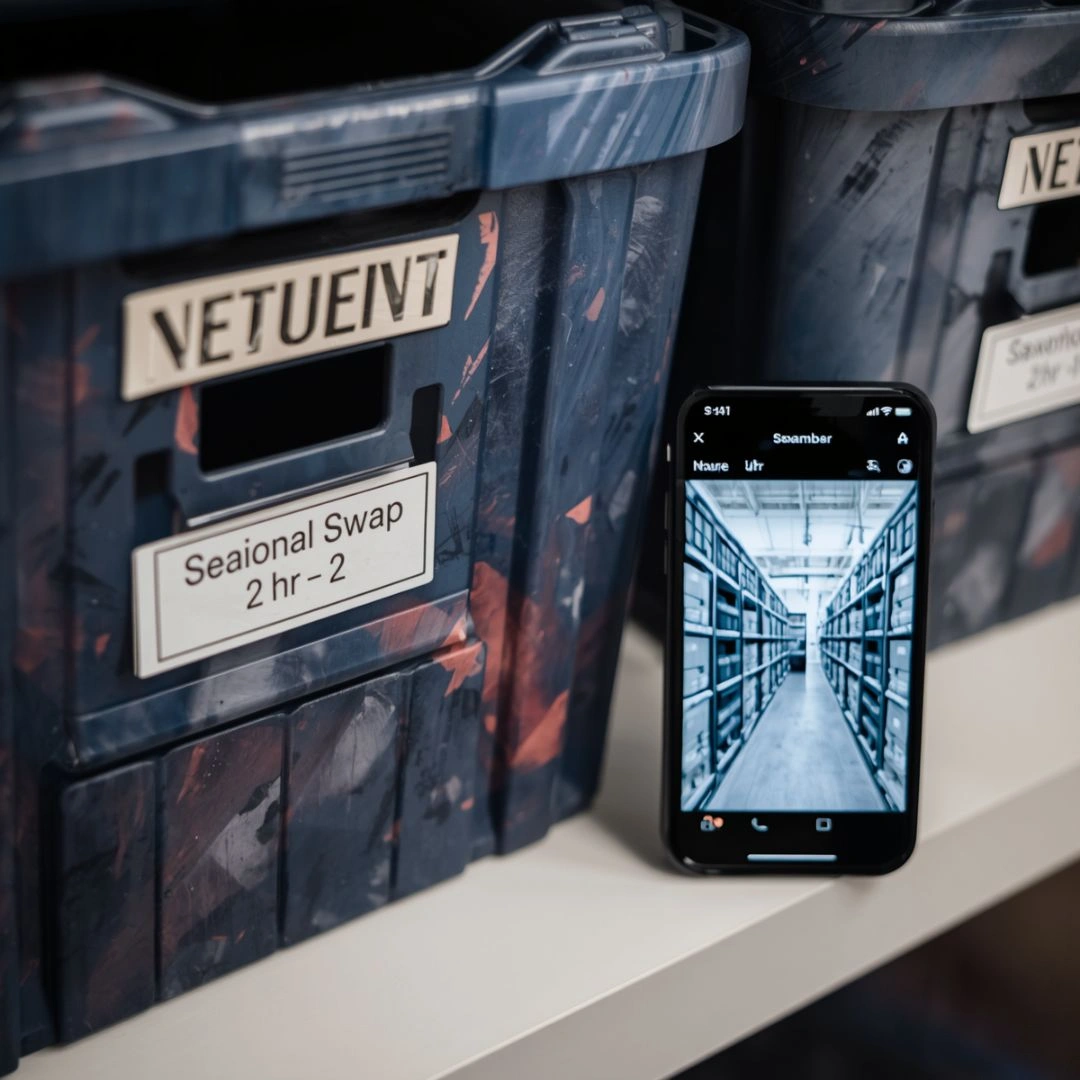
The technical side of seasonal storage — containers, locations, labeling — matters less than the system you use to maintain it. Without a consistent process, even a well-organized storage setup deteriorates within two seasons.
The Two-Date Rule
Set two calendar appointments per year — one in late March and one in late September — for your seasonal rotation. These dates don’t have to be exact, but they need to be specific. A vague intention to “swap things over when it gets warm” reliably turns into July and nothing has moved.
Block two to three hours for each swap. That’s enough time to move everything properly, clean containers, and make decisions about items that are borderline. Don’t try to do it faster — the rush is what leads to bins labeled “misc winter stuff” that haunt you later.
The Photograph Accountability System
After each rotation, photograph every storage zone. Not for reference (though that helps) — for accountability. When you look at a photo of your under-bed storage six months after organizing it, you can see clearly whether the system held up or whether things drifted back toward chaos. It also makes it much easier to answer “where did I put the…?” questions mid-season, because the photo shows you the state of each zone right after the swap.
Timestamped phone photos stored in a dedicated album take about three minutes after each rotation and are genuinely useful.
Why Label Placement Matters More Than Label Content
Side-labeling bins is standard advice, but the reason behind it is worth understanding: stack order changes. A bin that’s on top today may be at the bottom of a stack by next season because of how things get rearranged. If labels are only on the top, a bin buried at the bottom of a closet stack has no visible identifier without moving everything above it.
Label all four sides of every bin, or at minimum two opposite sides. The content of the label matters less than the placement — even a basic category name visible from any angle saves significant time and frustration.
The One-Pass Rule During Swaps
Every item that comes out of storage gets evaluated before it goes back in. One pass, at swap time, is enough to prevent the slow accumulation of things that gradually make the system too full. Ask two questions: Is this still in usable condition? Do I have a realistic occasion to use this in the next 12 months? If both answers aren’t yes, the item doesn’t go back into storage.
If you use mudroom or entryway organization as part of your seasonal flow — somewhere coats and gear transition between active use and storage — integrating that zone into your rotation schedule helps the whole system feel connected rather than like a series of unrelated storage problems.
What Good Seasonal Storage Costs You If You Get It Wrong
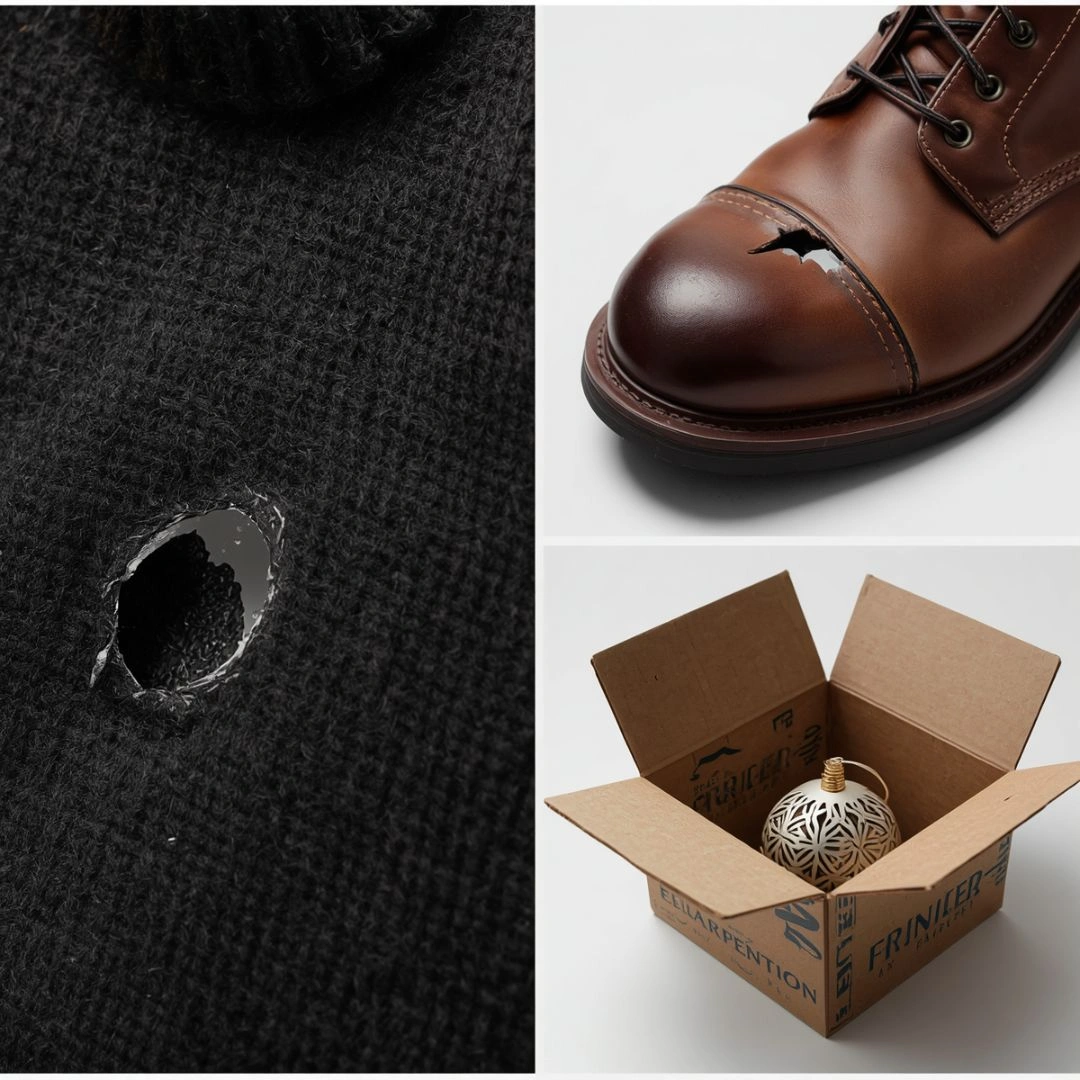
This section doesn’t appear in most organization guides, and it should. Poor seasonal storage has a real dollar cost that most people underestimate until something goes wrong.
Moisture damage to clothing: A wool coat stored in sealed plastic develops mildew in a season. Replacement cost: $150–$400. A cedar-lined bag: $20.
Moth damage to natural fibers: Moths target wool, cashmere, and natural blends stored without protection. One damaged sweater isn’t a crisis; a season’s worth of knitwear is. Cedar blocks and lavender sachets are both effective deterrents when refreshed seasonally — the key is refreshing them, because cedar loses its potency after about a year and needs to be lightly sanded to reactivate.
Compression damage to down items: Down coats and comforters compressed in vacuum bags at full capacity lose loft — sometimes permanently. A compressed comforter that doesn’t recover fully is functionally less warm than it was. Fill vacuum bags to 75–80% capacity.
Shape loss in boots and structured items: Leather boots stored unsupported crack along the shaft creases over multiple seasons. Boot shapers or rolled inserts cost a few dollars and prevent damage to footwear that may have cost hundreds.
Broken holiday decorations: Ornaments and fragile items stored in deteriorating cardboard break at a rate that’s easy to underestimate. If you’ve been replacing broken ornaments every few years, switching to padded divided storage pays for itself.
The pattern here is consistent: the upfront cost of storing things correctly is almost always less than the cost of replacing things that weren’t stored correctly. In a small home, where budget and space are both limited, getting the protection right from the start is worth the extra attention.
Conclusion
Knowing how to store seasonal items in a small home is genuinely less about the specific products you use and more about the thinking behind the system. The access-frequency framework, the honest category audit, the right container-to-material pairing, the micro-season transitional zone, and the twice-yearly rotation with photograph accountability — these are the pieces that separate a storage system that holds up from one that quietly collapses by the second season.
None of this requires a large budget or a complete home overhaul. Start with the audit. Sort by access frequency. Pick one zone and do it properly. Then build outward from there.
A small home handled well isn’t a compromise — it’s a space where every decision was made on purpose. Seasonal storage done right is one of the highest-impact places to start.
Start Organizing Your Home, One Zone at a Time
The strategies in this guide apply beyond seasonal storage. If your closets, kitchen cabinets, or entry areas still feel chaotic, explore more practical, experience-based organization guides at HelpfulDestination.com.
👉 If your closet is the next thing that needs attention, start with how to organize shoes in a small closet — it’s one of the highest-impact swaps in any small home.
FAQ
How do I store seasonal items in a very small apartment with almost no closet space?
- Focus first on furniture with built-in storage — an ottoman, a storage bench, a bed with drawers or space underneath. Use vacuum-seal bags for all soft items, which dramatically reduce volume. Prioritize the access-frequency framework: only your most-used seasonal items need to be in your primary living space. Truly infrequently used items can live in harder-to-reach spots like the top shelves of kitchen cabinets or inside stored luggage.
Is it worth using a storage unit for seasonal overflow?
- For most people in small homes, the ongoing cost of a storage unit outweighs the benefit — particularly because items stored off-site tend to become “out of sight, out of mind” and get neglected. A better first step is an honest edit of what’s actually earning its keep. In most cases, donating or selling the items you’re considering putting in storage frees up both money and space.
What’s the single most damaging mistake people make with seasonal clothing storage?
- Sealing fabric items in airtight plastic containers. Textiles need airflow over long storage periods. Even clothing that feels completely dry has residual moisture that becomes trapped in sealed plastic, leading to mustiness and in humid climates, early mildew. Use breathable containers — canvas bins, cotton storage bags, or cedar-lined boxes — for anything fabric-based.
How do I prevent the “shoulder season chaos” where my storage is half-unpacked for months?
- Designate a transitional zone — a single shelf or basket — specifically for items that are between seasons. During March and October, this zone holds the things you might need from either season. Items only move from transitional to long-term storage once the season has fully turned. This two-step system prevents the half-unpacked limbo that makes seasonal storage feel perpetually disorganized.
Do cedar blocks actually work for moth prevention?
- Yes, with one important condition: they need to be active. Cedar loses its aromatic potency after 6–12 months. Lightly sand cedar blocks before each seasonal storage period to reactivate the surface oils that repel moths. Alternatively, refresh them with cedar oil. Inactive cedar blocks are essentially just decorative wood — they won’t protect your wool or cashmere.