 By
By Most people get their rug size wrong — not because they have bad taste, but because the common advice is frustratingly vague. “Go bigger than you think” sounds helpful until you’re standing in a store with a tape measure, second-guessing yourself against a wall of 8×10s.
Here’s the real problem: rug sizing isn’t one-size-fits-all. What works beautifully in a sprawling living room can look awkward in a bedroom or completely wrong in a dining space. The rules actually change depending on the room, the furniture layout, and even the ceiling height.
In this guide, we’ll walk through exactly how to pick the right rug size for every room — with real measurements, practical examples, and the kind of specific guidance that helps you make a confident decision before you ever add something to your cart.
Why Rug Size Matters More Than Most People Realize
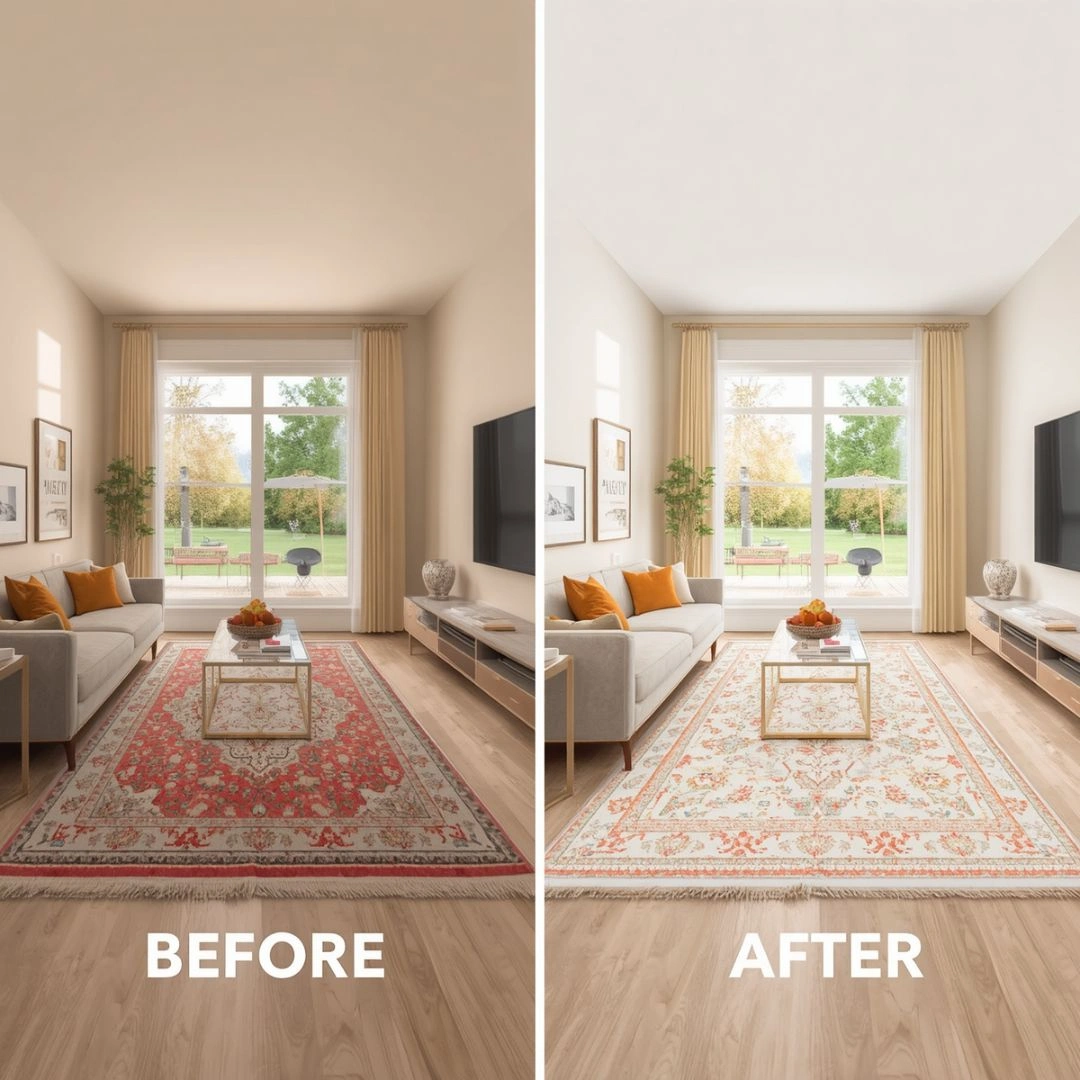
A rug that’s too small doesn’t just look off — it actually makes a room feel less cohesive and smaller than it is. When we analyzed dozens of before-and-after interior design portfolios, the single most common fix designers made wasn’t paint color or furniture placement. It was swapping out an undersized rug for one that actually fit the space.
The reason comes down to visual anchoring. A properly sized rug “grounds” the furniture, creating a defined zone that tells the eye where a seating area, dining setup, or sleep space begins and ends. Without that anchor, furniture tends to look like it’s floating — even when it’s arranged perfectly.
Rug size also affects how large or small a room feels. Counterintuitively, a larger rug often makes a room feel bigger by defining the space clearly. A tiny rug in the center of a big room draws attention to all the empty floor around it.
Before you shop, do one thing: tape off the proposed rug size on your floor using painter’s tape. It takes five minutes and will immediately show you whether the proportions work.
How to Pick the Right Rug Size for Your Living Room
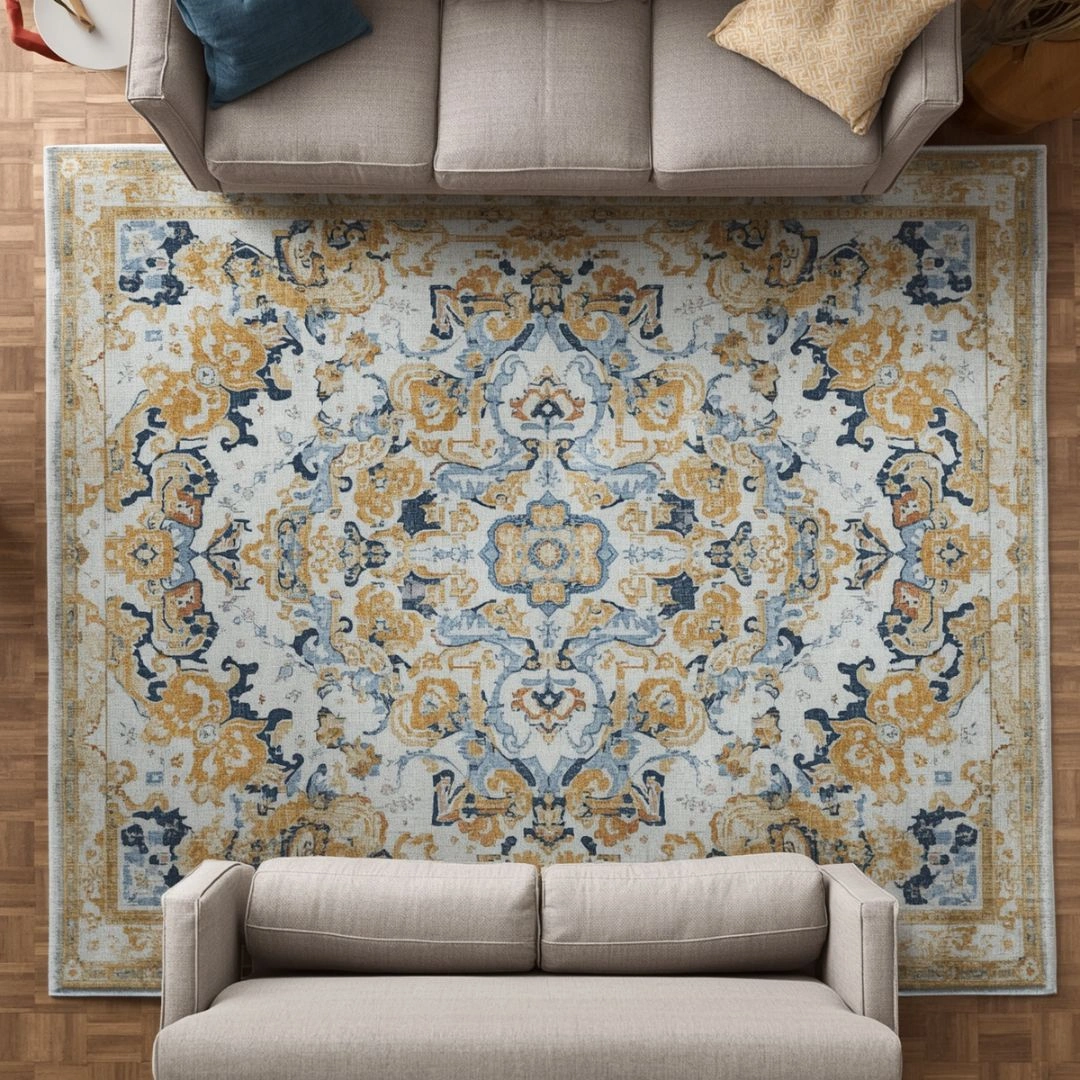
The living room is where most rug-sizing confusion happens, and that’s mostly because there are three valid approaches — and they all look different.
The All-Legs-On Approach
This is the most cohesive option. Every piece of furniture in the seating area has all four legs sitting on the rug. For this to work, you typically need a rug that’s at least 9×12 feet in a standard living room, and often 10×14 or larger in open-plan spaces. The rug essentially becomes the floor of the room within a room.
The Front-Legs-On Approach
This is the most common option in American homes, and it works well in mid-size rooms. Only the front two legs of each sofa and chair sit on the rug. This still creates a visual connection between the furniture pieces without requiring a massive rug. An 8×10 typically works here for a standard three-seat sofa and two chairs.
The No-Legs-On (Floating) Approach
All furniture sits off the rug, which acts more like a centerpiece. This only works well in very large rooms or when the rug itself is a statement piece. It requires careful proportioning — typically at least 18–24 inches of breathing room between the rug edge and the furniture.
Quick sizing guide for living rooms:
| Room Size | Recommended Rug |
| Up to 12×12 ft | 5×8 ft (small seating area) |
| 12×18 ft | 8×10 ft |
| 15×20 ft | 9×12 ft |
| Open-plan 20+ ft | 10×14 ft or larger |
Always leave at least 12–18 inches of bare floor between the rug edge and the wall. Less than that, and the rug reads as almost wall-to-wall carpet.
Bedroom Rug Sizing: What Actually Works
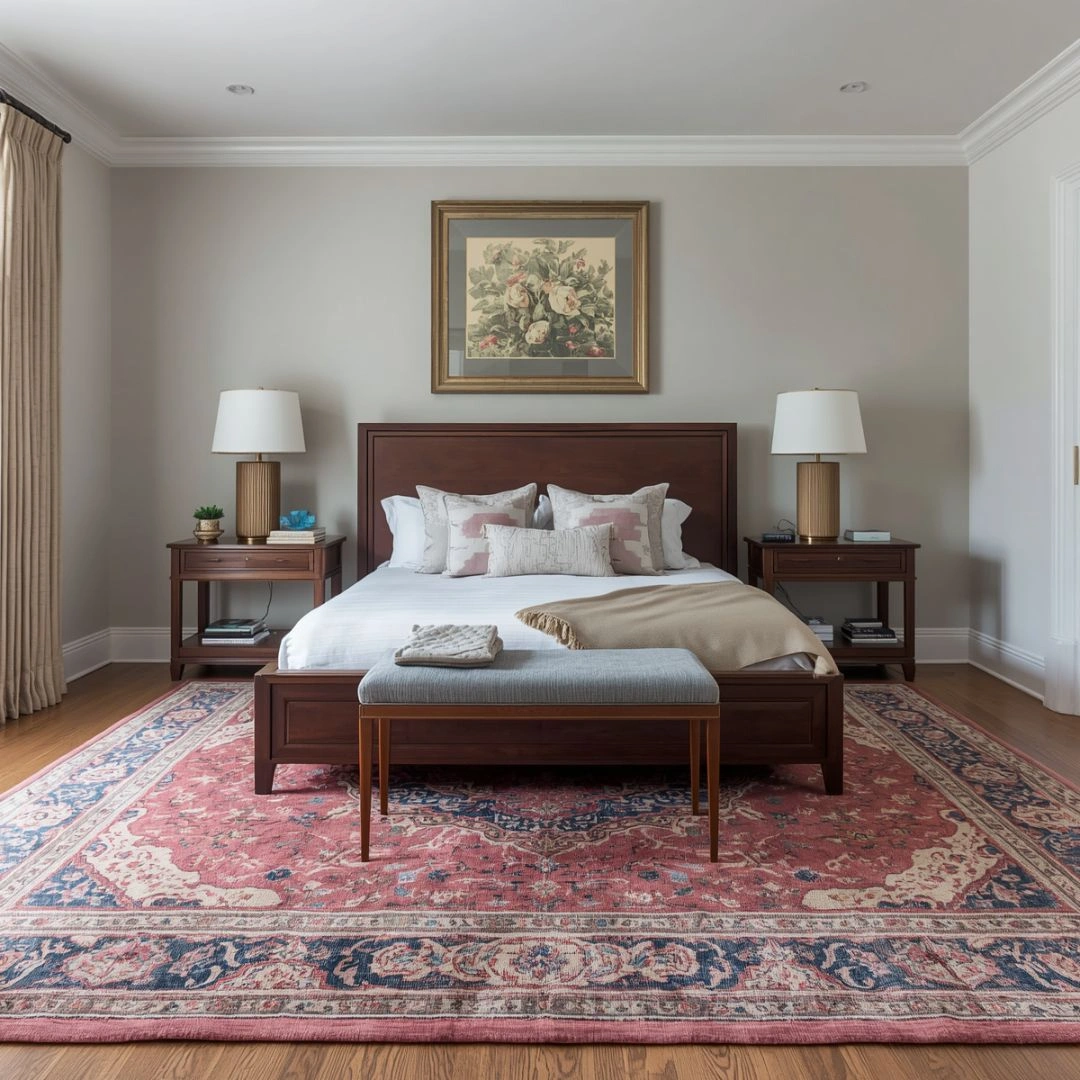
Bedrooms are actually more forgiving than living rooms, but they come with one specific challenge: the bed takes up a lot of real estate, and you want the rug to still feel intentional underneath it.
The Most Common Bedroom Rug Mistake
Place a small rug at the foot of the bed. This is almost always too small and too disconnected from the bed itself. It ends up looking like an afterthought rather than a design decision.
What Works Better
- Option 1: A large rug under the full bed. The rug extends at least 18–24 inches out from each side of the bed and from the foot. For a queen bed, that typically means a 9×12 rug. For a king, you’re usually looking at a 10×14 or larger. This option works best when the rug starts about 6 inches under the bed frame (not the headboard).
- Option 2: Two matching runners on each side of the bed. This works well in narrower bedrooms or when a large rug would overwhelm the space. Each runner should be about 2–3 feet wide and extend 6–12 inches past the foot of the bed.
- Option 3: One large runner across the foot of the bed. This only works well with beds that have a strong visual headboard, so the composition feels balanced. The runner should extend a foot or more on each side of the bed’s width.
For a twin or full bed in a smaller room, a 5×8 rug placed two-thirds under the bed (leaving the foot exposed) often strikes the right balance.
Dining Room Rug Size Guide: The Chair Rule Explained
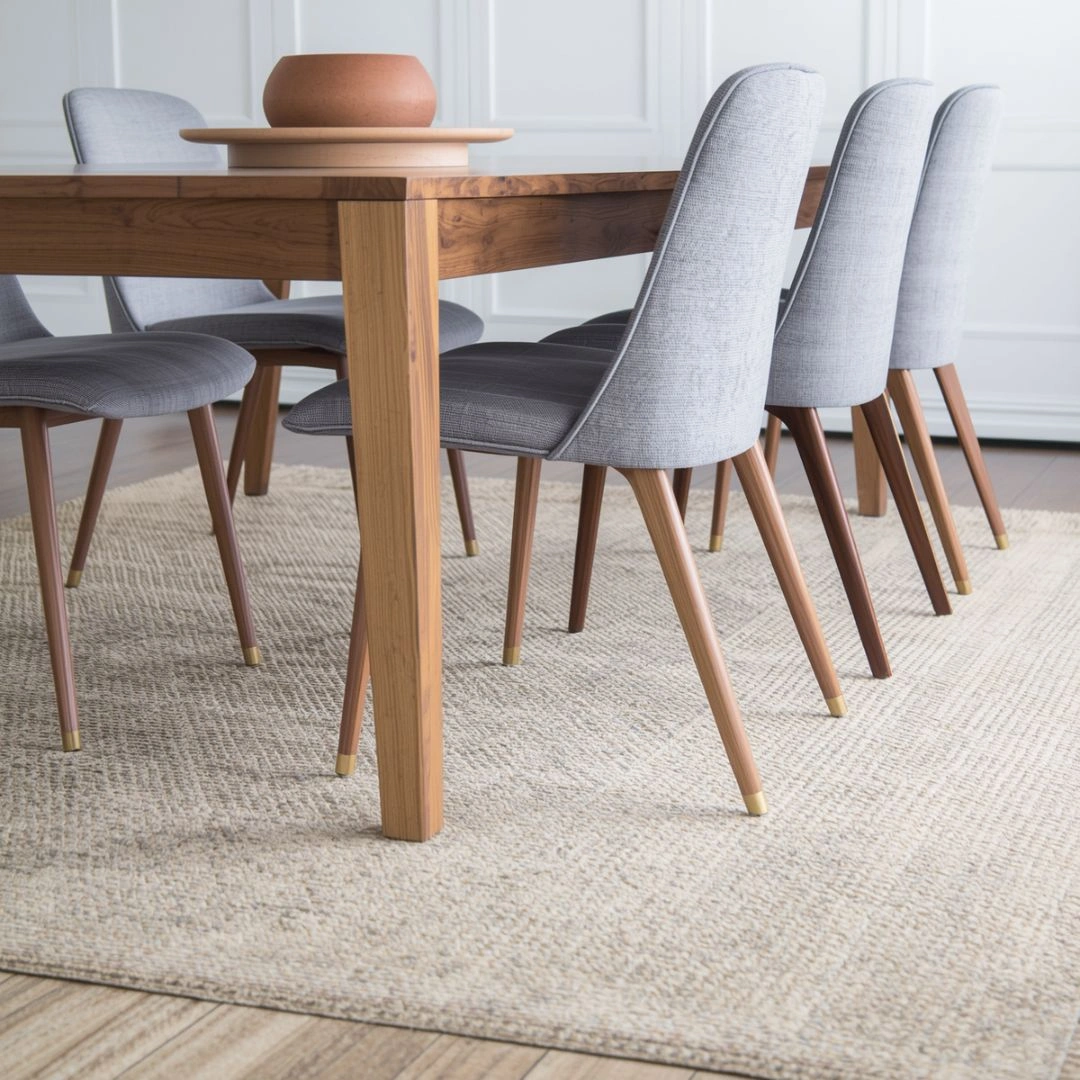
Dining rooms have the most logical rule of all, and once you understand it, the sizing becomes almost automatic.
The Chair Rule
The rug needs to be large enough that all dining chairs remain on the rug even when they’re pulled out from the table. This typically means adding 24 inches to each side of your table dimensions.
So if your dining table is 36×72 inches, your rug should be at least 84×120 inches — or roughly 7×10 feet. Most people underestimate this and end up with a rug where the chair legs catch the edge every time someone gets up. That edge-catching is not just annoying; it actually damages rugs quickly.
Standard Dining Room Rug Sizes by Table Size
| Table Size | Minimum Rug Size |
| 36×60 in (4-seat) | 6×9 ft |
| 36×72 in (6-seat) | 8×10 ft |
| 42×84 in (8-seat) | 9×12 ft |
| Round 48-inch | 8×8 ft or 8-ft round |
Round Tables and Round Rugs
Round tables look great with round rugs, but you can also pair them with a square rug. What doesn’t work as well is a rectangular rug under a round table — the corners of the rug tend to look awkward and clip the chairs unevenly.
For any dining rug, low-pile or flatweave construction is strongly recommended. High-pile rugs trap food debris and make chairs harder to slide.
Hallway, Entryway, and Runner Rugs: Getting the Length Right
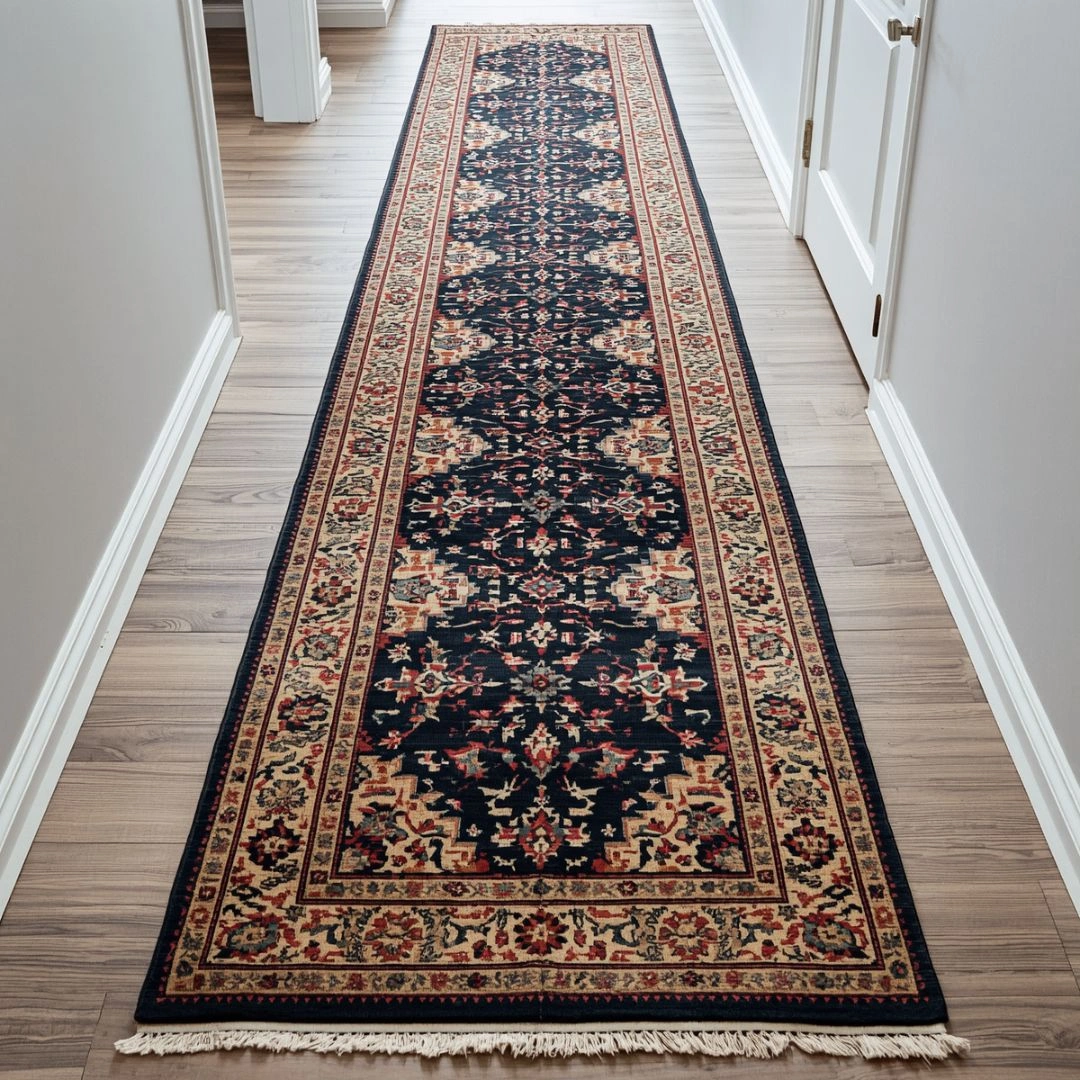
Runners are one of the most underused decor tools in American homes. When sized correctly, they make hallways feel intentional and finished. When sized poorly, they look like leftovers.
Hallway Runner Sizing
The width should leave at least 4 inches of bare floor on each side of the runner — ideally 6 inches. In a 36-inch wide hallway, that means a 24-inch wide runner (2 feet). In a wider 48-inch hallway, a 30- to 36-inch runner works better.
For length, the runner should extend almost to the end of the hallway, stopping 6 inches from the wall on each end. Don’t cut a runner short — a runner that fills 60% of a hallway looks more hesitant than intentional.
Entryway Rug Sizing
Entryways are usually smaller, so the main rule here is functional: the rug should be large enough that someone can step fully onto it when entering. A 3×5 works for tight entries, while a 4×6 or 5×8 suits most standard foyer spaces.
If styling your entryway alongside organizing your space, it’s worth thinking about how rugs interact with your overall storage flow — especially if you’re organizing shoes near the entry.
Home Office and Small Room Rugs: Avoiding the Postage Stamp Look
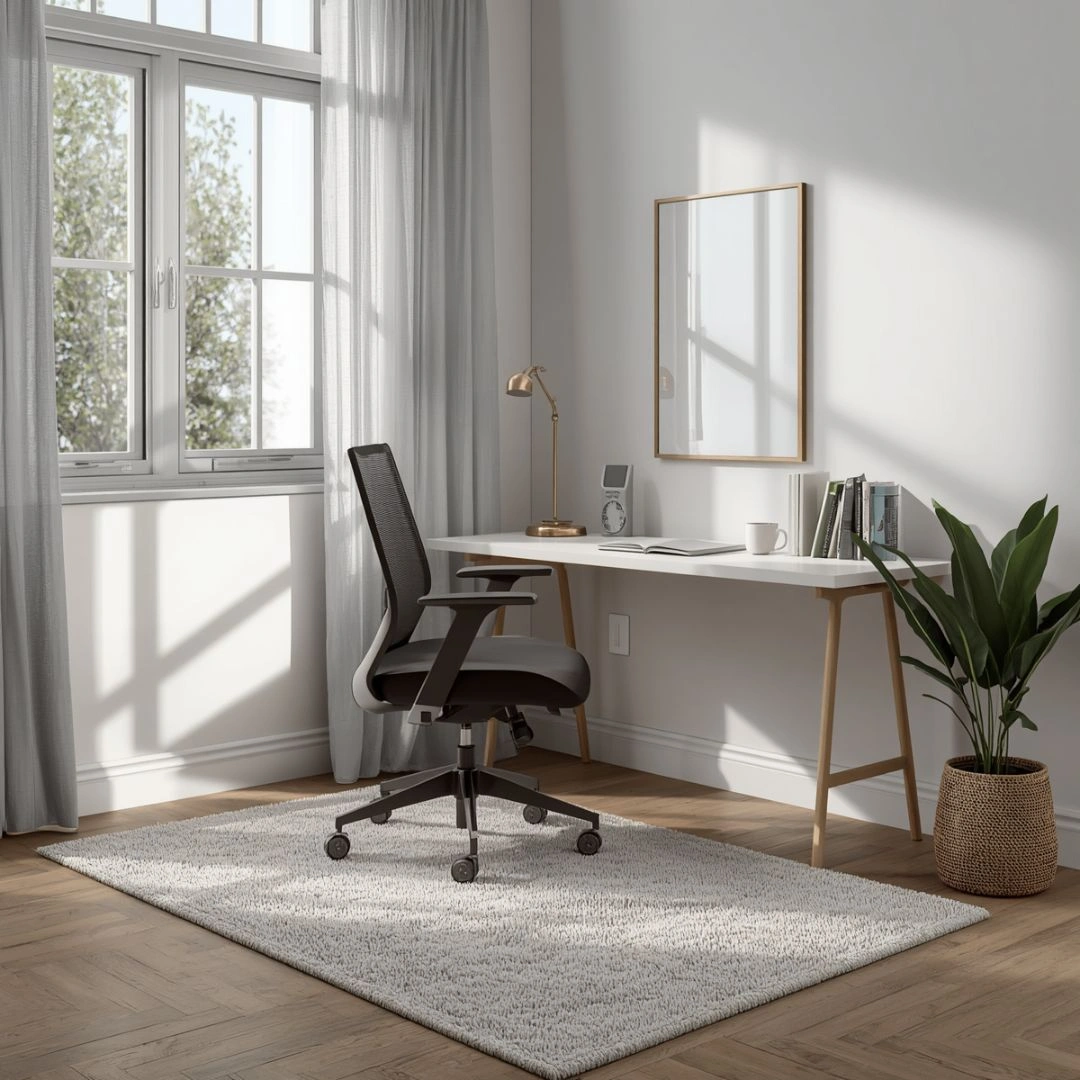
Small rooms and home offices are where the “go bigger” advice is most often ignored — and most needed.
The Postage Stamp Problem
A rug that’s too small in a small room doesn’t create coziness. It actually highlights the smallness of the space by putting a tiny island of texture in a sea of bare floor. The instinct to go small in a small room is understandable but almost always wrong.
What to Do Instead
In a small home office (around 10×10 feet), a 6×9 or 8×10 rug — placed so the desk’s front legs and any guest chair sit on it — creates a proper work zone without overwhelming the space.
In a studio apartment’s “living zone,” sizing up to a 7×9 or 8×10 visually separates the living area from the sleeping zone, which is one of the most effective tricks for making a studio feel less chaotic.
The One-Size-Down Trap
Many people choose a rug one size down from what would actually work, thinking it’ll look less crowded. In practice, that smaller rug just looks like a mistake. If you’re torn between a 5×8 and a 6×9, go with the 6×9 almost every time.
This same principle applies to storing items in small spaces — thoughtful proportioning always beats cramped minimalism.
How to Choose Rug Size When You’re Decorating on a Budget
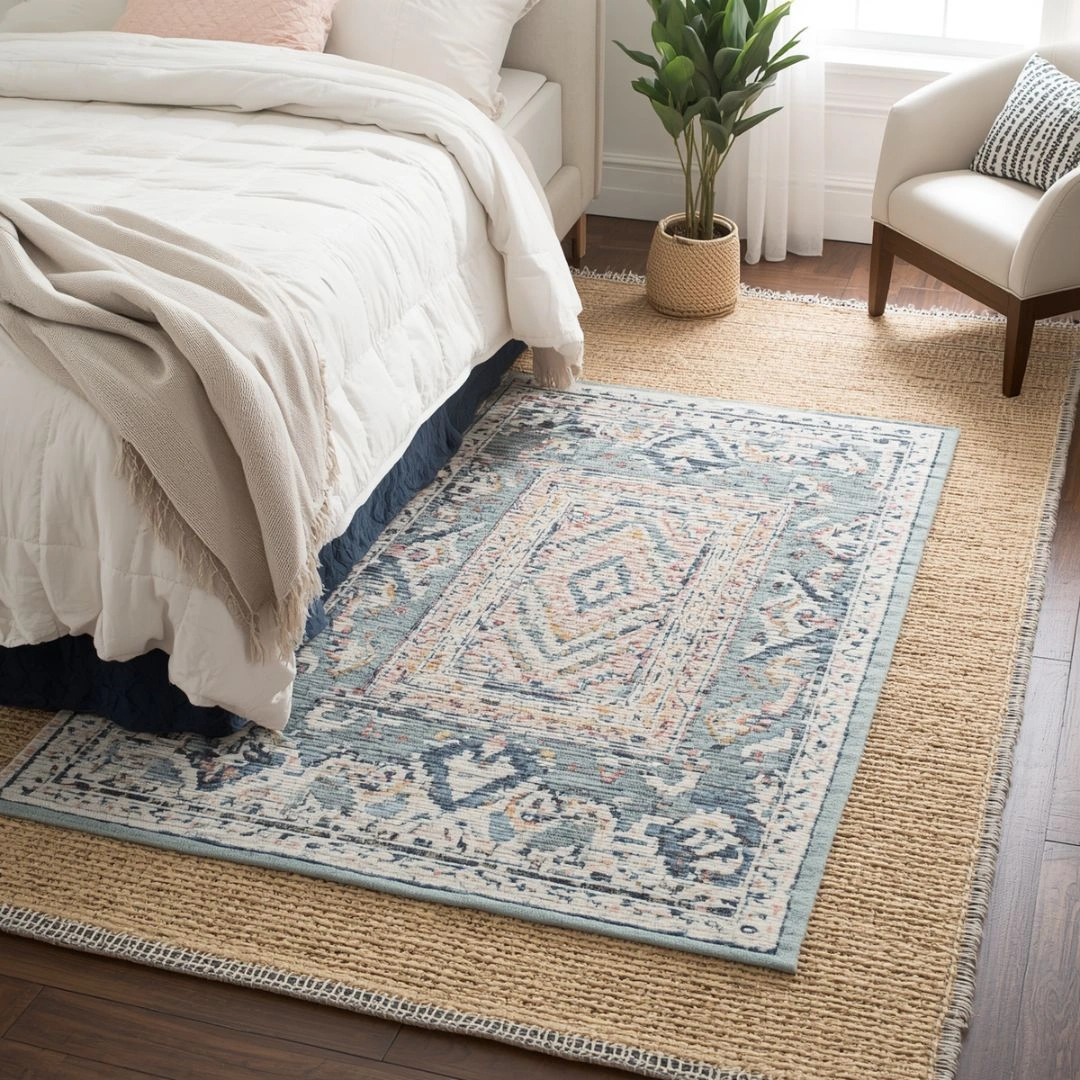
Getting the right size shouldn’t mean blowing your budget, but the sizing logic doesn’t change just because you’re spending less. Here’s how to approach it practically.
Use the Tape Trick First
Before spending anything, tape out your ideal rug size on the floor with painter’s tape. Live with it for 24–48 hours. Walk around it, sit in your furniture, and look at it from multiple angles. This is the single best way to confirm the size before committing.
Layer for Size
One budget-friendly trick: layer a smaller, more decorative rug over a large, inexpensive natural fiber rug (like jute or sisal). The base rug provides the sizing and grounding, while the decorative rug adds the visual interest. This lets you get the scale right without paying for an expensive, large rug in a statement pattern.
Prioritize Size Over Style
When budget forces a trade-off between getting the right size in a simpler rug versus getting a beautiful rug in the wrong size, always choose the correct size. A well-proportioned, solid, or simple-patterned rug will look far better than an intricate rug that’s too small.
Just as styling a coffee table works best when you prioritize proportion over price, rug selection rewards the same thinking.
Common Rug Sizing Mistakes (and How to Avoid Them)
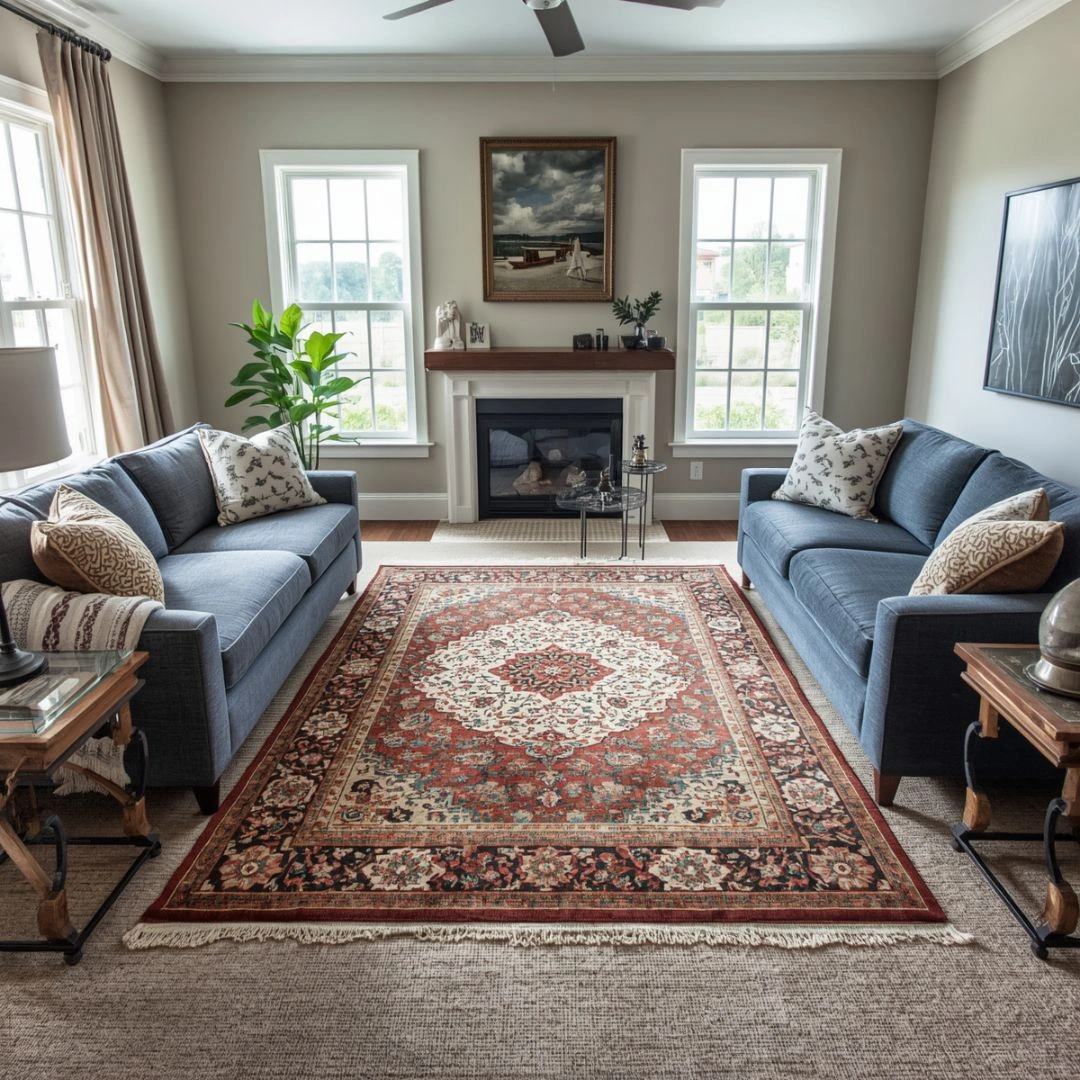
Based on an analysis of real homeowner forum discussions and interior design Q&As, these are the mistakes that come up most often — and they’re almost all avoidable.
1. Buying Without Measuring First
- This sounds obvious, but it’s the most common mistake. People eyeball the space or go by room dimensions without accounting for furniture placement. Always measure the actual furniture footprint, not just the room.
2. Placing the Rug Too Far From the Furniture
- The rug should be in dialogue with the furniture, not just nearby. If your sofa is 12 inches from the nearest rug edge, that gap reads as an error. Front legs on the rug, or all legs on the rug — but not neither.
3. Matching the Rug to the Room Instead of the Furniture Zone
- A 10×12 room doesn’t necessarily need a 9×11 rug. What it needs is a rug sized to the furniture arrangement within it, which might only be a 5×8 if the seating area is compact.
4. Ignoring Pile Height for High-Traffic Areas
- In living rooms and dining rooms, high-pile rugs trap debris and wear unevenly. In these zones, a low-pile or medium-pile rug in the right size will outlast and outperform a fluffy rug that looks great on day one.
5. Not Accounting for Rug Pad Thickness
- Rug pads add grip and cushion — they’re genuinely worth using. But a thick pad under a high-pile rug can create a tripping hazard near doorways. In doorway-adjacent areas, use a thinner pad (around 1/4 inch) or trim the pad slightly away from the door path.
Conclusion
Picking the right rug size really does come down to three things: know your furniture footprint (not just your room size), leave adequate breathing room between the rug and your walls, and when in doubt, size up rather than down.
The tape trick alone — spending five minutes marking out your intended rug dimensions on the floor before buying — can save you from the most common and most expensive mistake: buying a beautiful rug in the wrong size.
Whether you’re anchoring a living room seating arrangement, creating a cozy perimeter around a bedroom, or just trying to make a narrow hallway feel finished, the right rug size is the foundation everything else sits on. Get that right, and the rest of the room tends to fall into place.
Ready to Transform Your Space?
If this guide helped you figure out your rug sizing, you might also enjoy:
- How to Style a Coffee Table Like an Interior Designer — practical tips for the surface that sits right on top of your new rug
- How to Organize Shoes in a Small Closet — because a well-designed entryway starts before you even reach the rug
- How to Store Seasonal Items in a Small Home — if you’re rotating rugs seasonally, this one’s especially useful.
Have a rug sizing question that wasn’t covered here? Drop it in the comments — we read every one and use real questions to keep this guide updated.
FAQ
What’s the most common rug size for a living room?
- The most commonly purchased living room rug size in the US is 8×10, and it works well for most standard living rooms where the front legs of a sofa and chairs rest on the rug. If your space is larger or you prefer the all-legs-on look, step up to 9×12.
Can a rug be too big for a room?
- Technically, yes, but in practice, it almost never happens. Leaving less than 12 inches of bare floor between rug and wall can make the room feel like it has wall-to-wall carpet, which works in some rooms (like bedrooms) but can feel heavy in living areas.
How do I know if I need a 5×8 or a 6×9?
- Tape both sizes on your floor with painter’s tape before buying. If the 5×8 tape outline looks like it’s floating in the space with lots of room around it, go to 6×9. If the 6×9 looks like it crowds your furniture arrangement, stick with 5×8.
Should a dining room rug be bigger than the table?
- Yes — always. The rug needs to accommodate chairs that are pulled out. Add at least 24 inches to each dimension of your table. A rug that only covers the table footprint will catch chair legs every time someone sits down or stands up.
What size rug goes under a king bed?
- For a king bed, a 9×12 is the minimum to look intentional. A 10×14 is ideal if the room’s proportions allow it. The rug should extend at least 18 inches on each side of the bed and at the foot.
Is it okay to use a round rug in a rectangular room?
- Absolutely. A round rug works beautifully in rectangular rooms, especially under round dining tables or as a focal point in a sitting area. Size it the same way — the diameter should be large enough to anchor the furniture arrangement.
What rug size works in a 12×12 bedroom?
- An 8×10 rug placed so it extends out on both sides and the foot of the bed is the standard choice. If budget is a factor, a 5×8 centered under the lower two-thirds of the bed also works in a 12×12 room.