 By
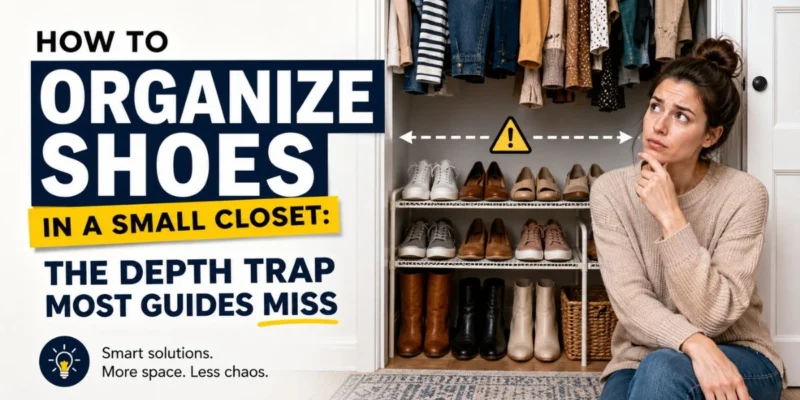
By Most advice on how to organize shoes in a small closet tells you to “go vertical” and buy an over-the-door rack. While this advice is not incorrect, it overlooks the true reason small closets seem unmanageable and often leads people to purchase organizers that exacerbate the problem. Before you spend a cent, it’s worth understanding the real constraint you’re fighting. Once you see it, the right system becomes obvious, and it’s usually cheaper than what you were about to buy.
The Real Problem Isn’t Space—It’s Unreachable Depth
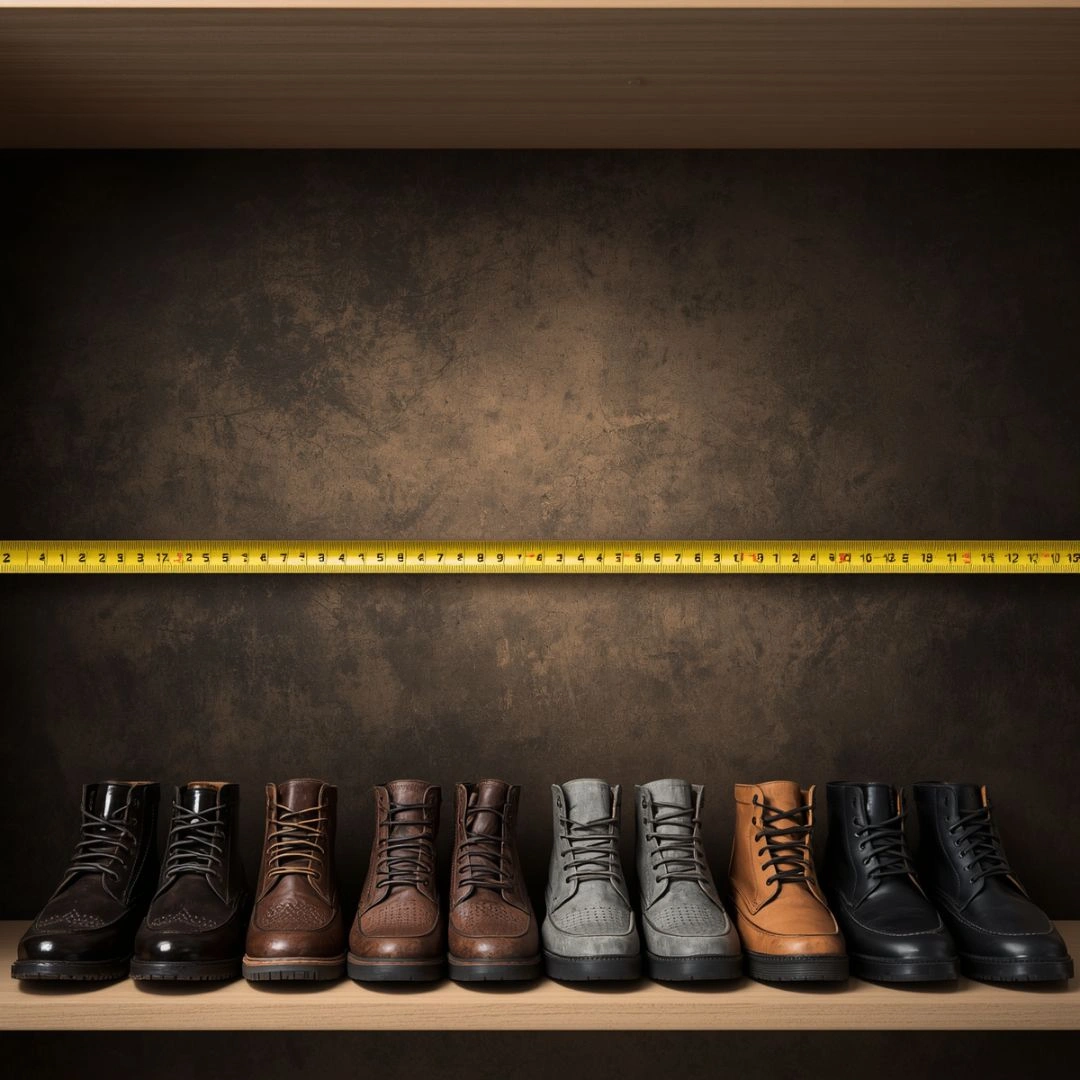
Here’s the math nobody mentions. A standard reach-in closet is about 24 inches deep. An adult shoe is roughly 10 to 12 inches long. Put a shoe on a flat shelf, and you’ve used half the depth—the back 12 inches becomes a dead zone you can’t see into or reach without moving the front row first.
That’s the whole problem in one sentence. A small closet doesn’t usually lack room; it lacks reachable room. Stacking a second row behind the first technically stores more shoes, but you’ll never wear the back row, so it’s just hidden clutter — the kind that makes a tidy closet still feel chaotic. It’s the same reason a clean home can still look cluttered right after cleaning: the issue is visibility and access, not square footage.
Reframing the goal this way changes everything that follows. You’re not trying to fit more shoes. You’re trying to make every pair you keep visible and grabbable in one motion. Any solution that fails that test—deep flat shelves, a floor pile, bins you have to dig through—will quietly defeat you no matter how organized it looks on day one.
So the two levers that actually matter in a small closet are:
- Shrink the footprint of each pair (store them toe-to-heel or angled, not side by side flat).
- Convert depth you can’t use into height you can (shelves, hanging tiers, door space).
Keep those two ideas in mind, and the rest of this guide is just application.
How to Organize Shoes in a Small Closet: Match the System to Your Closet
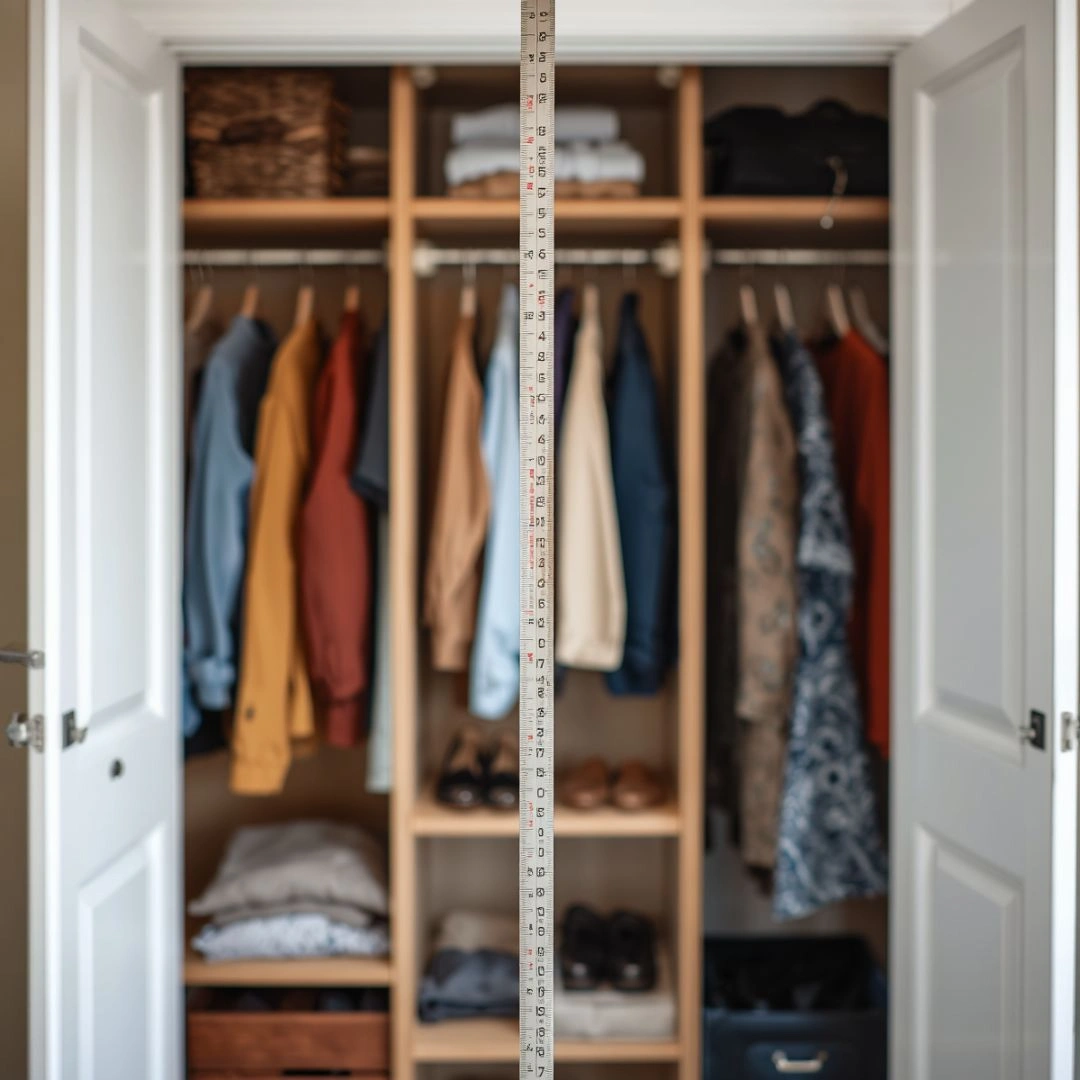
The reason most shoe-storage advice disappoints is that it’s generic—it recommends a product without knowing your closet. A shoe storage system that works well for a deep walk-in closet may not be suitable for a shallow reach-in closet. So instead of a list of ideas, here’s a quick decision framework. Answer three questions and your path is clear.
Question 1: How deep is your closet?
- Under ~16 inches (shallow): Single-row only. Go up the walls and onto the door. Never attempt a back row.
- 20–24 inches (standard): You have room for angled or toe-to-heel storage that uses the back half without burying it.
- Walk-in or deeper: You can run double-depth shelving if the back row is dedicated to rarely worn pairs.
Question 2: How many pairs do you actually wear?
Pull everything out and count only what you’ve worn in the last year. If it’s under ~10 pairs, a single smart rack solves the problem. If it’s 20+, your real problem may be volume, and decluttering will do more than any organizer—the same declutter-first logic that works when organizing kitchen cabinets efficiently applies here.
Question 3: What’s your heaviest, bulkiest shoe?
Your storage solution must be able to accommodate your heaviest and bulkiest shoe, rather than just your average one. If you own boots, hanging pocket organizers and lightweight stick-on racks are out—they sag and fail. Plan around the boots, and the sandals take care of themselves.
Once you’ve answered these, you’re no longer guessing. You’re selecting the system that best suits the closet you currently have.
Shoe Organizer Ideas for Small Spaces That Actually Work (and When They Don’t)
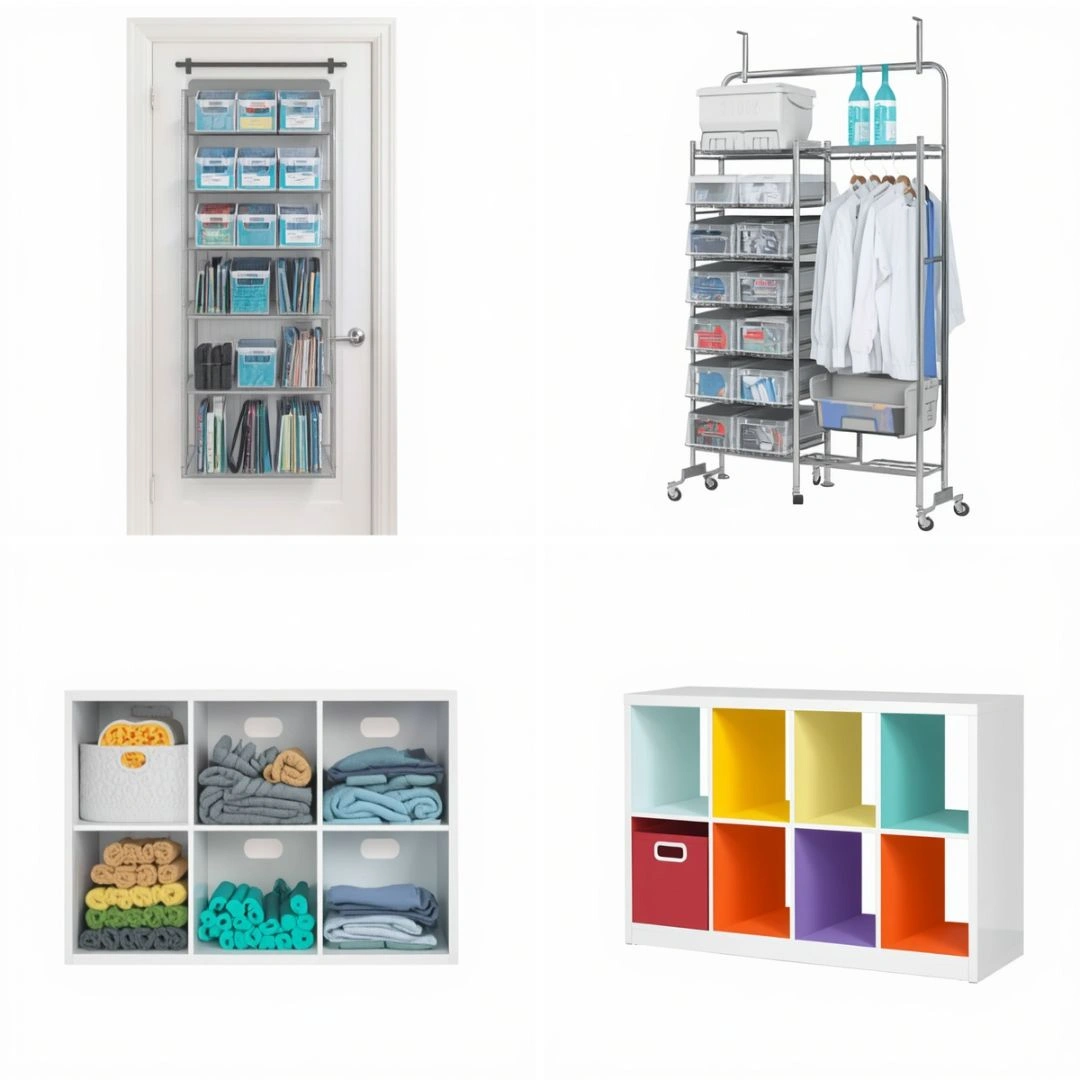
Every blog lists the same shoe organizer ideas for small spaces. Few tell you when they backfire. Here’s an honest assessment of each option—what it is genuinely good for and the potential failure modes to watch out for.
Over-the-door racks
The default recommendation for over-the-door racks is widely promoted but often incorrect. They’re excellent for flats, sandals, and sneakers on a solid-core door. However, on a hollow-core door (which most interior doors are), using boots and heavy shoes can cause the panel to bow or crack, and the rack reduces the door clearance needed to close it properly. Use them for light shoes only, and check your door type first.
Angled or tension-rod racks
Underrated. Angling shoes by the heel reduces the depth that a pair occupies, directly addressing the depth problem mentioned in the first section. Ideal for standard-depth closets where flat shelves waste the back half.
Clear stackable boxes
The best option for dressy and seasonal pairs is visible, dust-free, and stackable into the vertical space above your hanging clothes. The same label-and-stack logic that is effective for storage in other tight spaces, such as a small balcony, also applies here. Just don’t use them for everyday shoes; the lid step is enough friction that you’ll stop bothering.
Cubbies and stackable shelves
Reliable for everyday rotation because each pair has a slot, and grabbing one is a single motion. The failure mode is buying a unit too deep for a shallow closet—measure first.
The takeaway: there’s no “best” organizer, only a best match. Pick based on your three answers above, not on what photographs well.
The Drop-Point Problem: Why Your System Keeps Failing
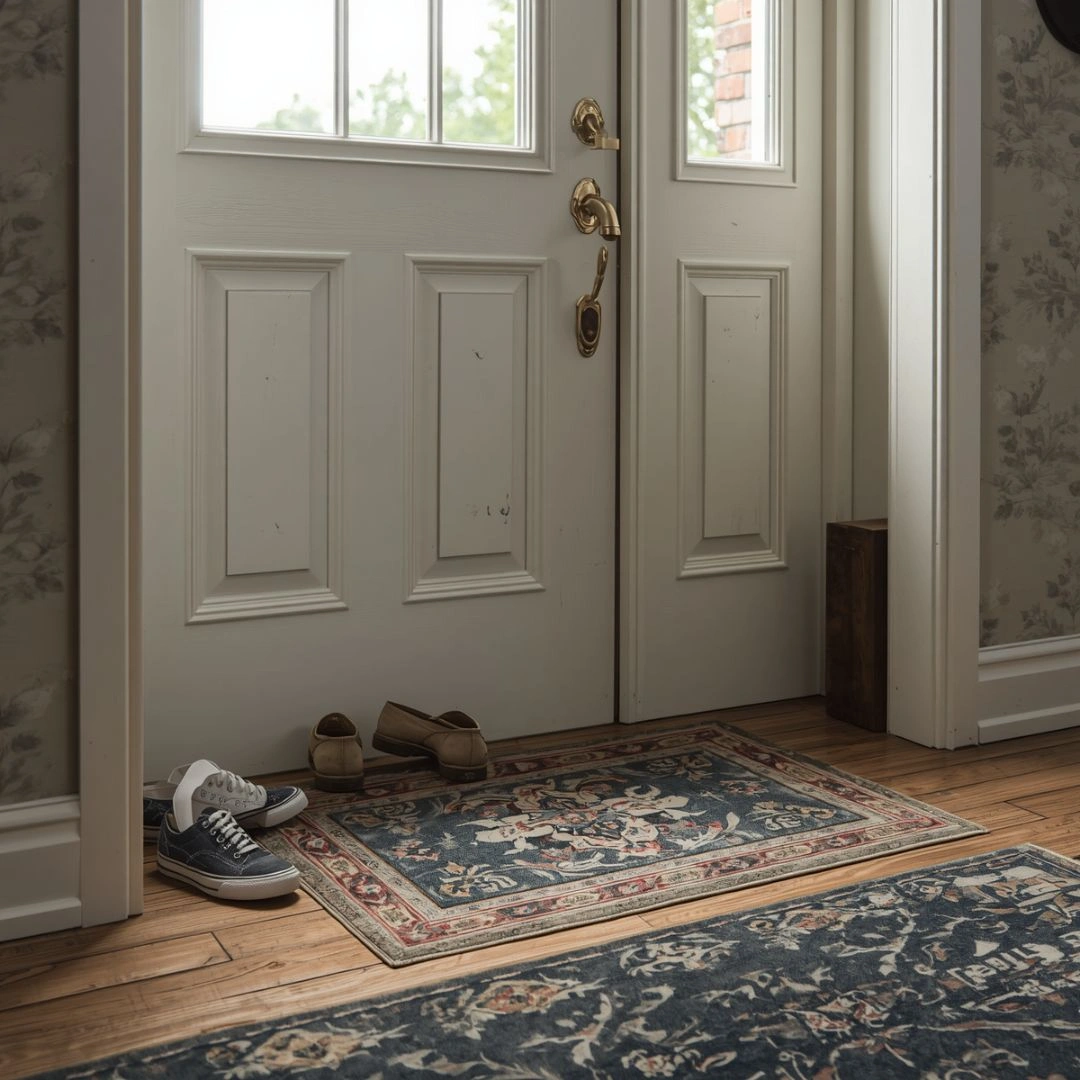
Here’s the insight that explains why people reorganize the same closet every few months: the system rarely fails at the closet. It fails at the drop point.
Consider where your shoes typically end up. They don’t end up in the closet; instead, they are left by the door, under a chair, or at the bottom of the stairs. You take shoes off where you stop moving, and the closet is almost never that spot. Therefore, a solution that only addresses the closet is ineffective because it does not resolve the issue in the areas where shoes are actually left.
This is why even the most organized-looking closet cannot compete with a daily pile of shoes. The shoes never make it back. Fixing that means designing for the behavior, not against it:
- Put a small catch zone at the real drop point—a low tray or single shelf by the entry—so shoes have a home before the closet.
- Make closet return effortless. If putting a shoe away takes more than one motion, your busy-morning self won’t do it. This is the strongest argument against fiddly bins for daily pairs.
- Do a 30-second nightly reset. Move the day’s shoes from the drop point to the closet. Tiny and consistent beats a big reorganization every season.
Once you account for the drop point, your closet system finally holds—because you’ve stopped fighting your own habits.
Storing Shoes by Material (the Part Most Guides Skip)
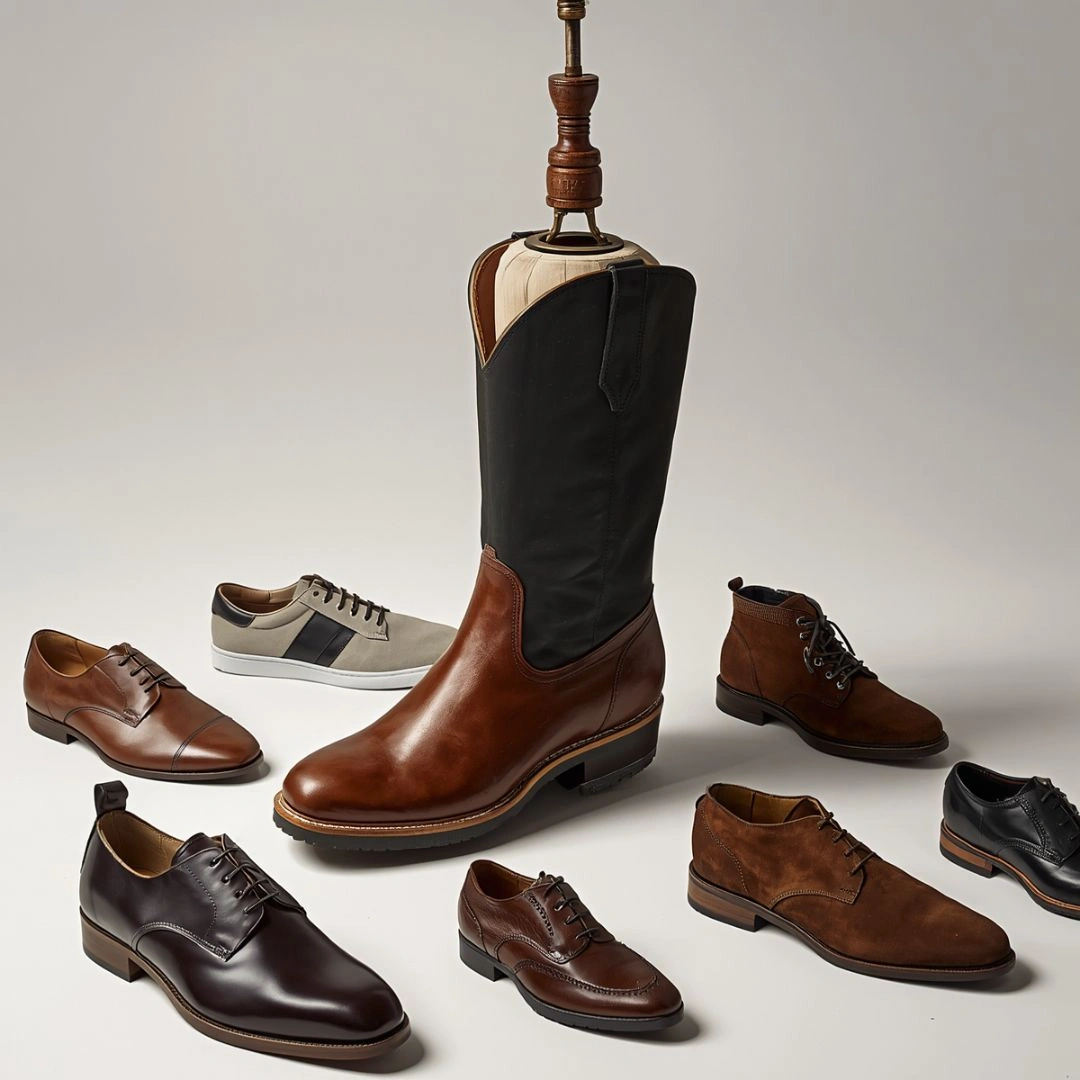
Most guides treat every shoe the same. They’re not. Storing the wrong material the wrong way doesn’t just clutter your closet—it ruins the shoes. A few rules worth knowing:
- Leather: Needs to breathe. Sealing leather shoes in an airtight bin for months traps moisture and can invite mildew or cause drying and cracking. Store with airflow, and toss in a cedar block rather than a plastic seal.
- Athletic and foam shoes release moisture after being worn. Give them airflow and a day to dry before storing; cramming sweaty sneakers into a closed box accelerates odor and breakdown.
- Suede: Hates compression and dust. Keep it where it won’t get crushed, and a dust bag beats an open shelf.
- Boots: Store upright to keep their shape—a boot shaper or even a rolled magazine works. Folded boots crease permanently.
This is also where containment helps without hurting: a drawer-divider style approach keeps delicate pairs separated so they don’t scuff each other, while still leaving airflow. Matching storage to material is the difference between a tidy closet and a closet of slowly degrading shoes.
Seasonal Rotation, Reconsidered
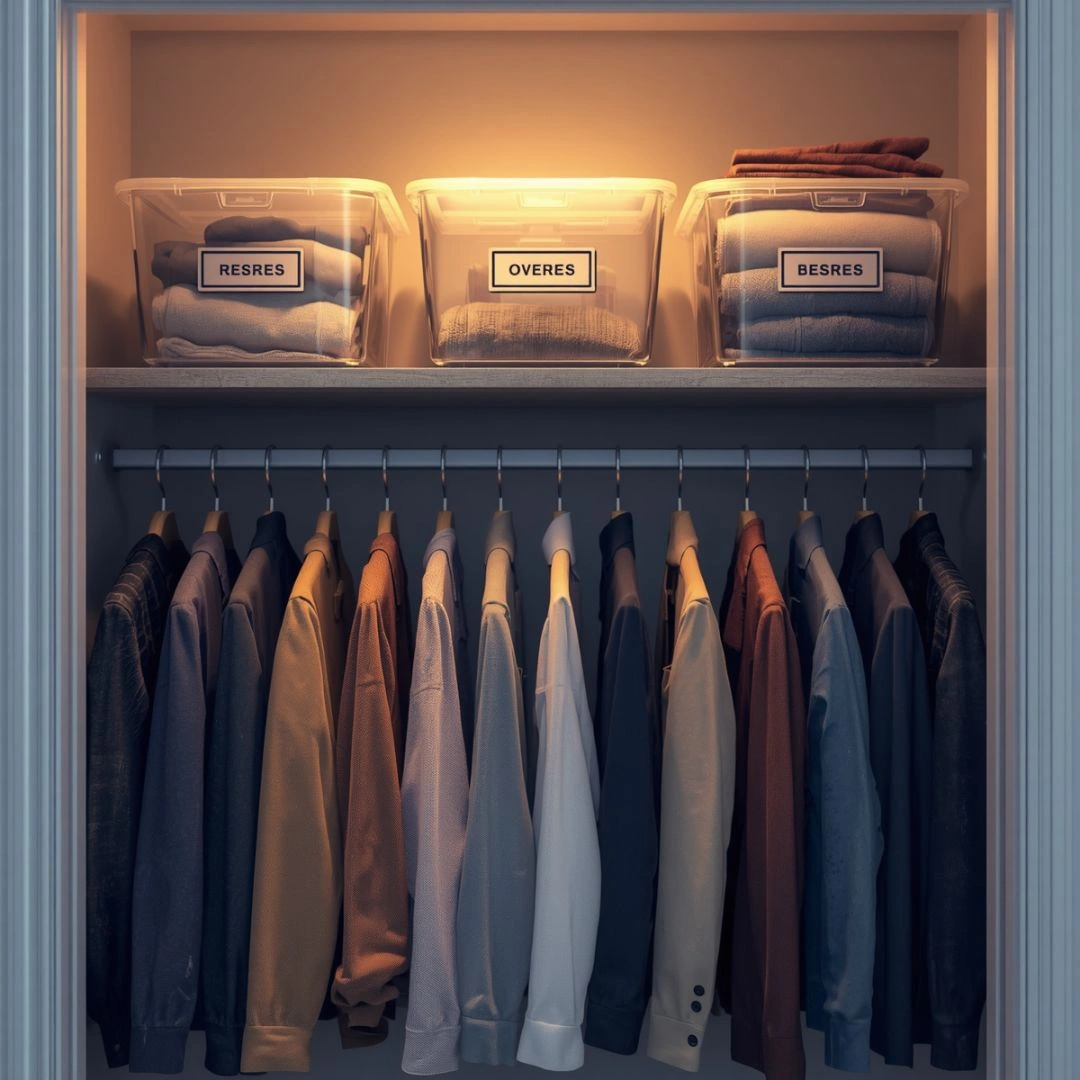
Seasonal rotation is standard advice, but the reason usually given—”save space”—undersells it. The real value is that rotation is what makes the depth fix sustainable.
Remember the unreachable back row and the high shelf above your clothes? Those dead zones are perfect for off-season pairs precisely because you don’t need to reach them often. Rotation gives the hard-to-access space a job, freeing your prime, one-motion zone for what you actually wear right now.
Twice a year, swap the active set. Use clearly labeled bins so the swap takes ten minutes instead of an excavation. And treat each rotation as a built-in declutter checkpoint: anything you didn’t wear all season is a strong candidate to donate.
If you live somewhere with little seasonal change, rotate by use instead—daily pairs in the reachable zone, occasion-only pairs in the dead zones. Same principle, same payoff: not every shoe earns front-row access.
Conclusion
The key to organizing shoes in a small closet is not to invest in a better rack; rather, it is to recognize that the main challenge is dealing with unreachable depth, rather than a shortage of space. Shrink each pair’s footprint, convert dead depth into reachable height, match the system to your specific closet, and design around where you actually drop your shoes. Do that, and the closet stays organized because it finally fits how you live, not how a catalog photo looks.
Pick the one change with the biggest payoff for your setup, make it this week, and add your own real-world details where this guide leaves room.
Keep the momentum going.
If rethinking your closet clicked, the same “fix the real constraint” mindset works everywhere in a small home. Explore more practical guides on Helpful Destination – from smart storage for tight spaces to simple ways to make your whole home feel more put-together on a budget. Choose one area, apply one idea, and let the wins build.
FAQ
Why do my shoes never fit even though the closet looks big enough?
- Because depth is deceptive. A 24-inch shelf only gives you one reachable row of ~12-inch shoes; the back half becomes a dead zone. Store pairs of shoes either angled or toe-to-heel, as this arrangement allows the same shelf to hold significantly more usable space.
Are over-the-door shoe racks a bad idea?
- Not always—they’re excellent for light shoes on a solid door. But on a hollow-core door, they can bow the panel, and heavy boots will sag the pockets. Check your door and shoe weight first.
How do I store shoes without ruining them?
- Match storage to material: leather and athletic shoes need airflow, suede needs protection from crushing, and boots need to stay upright. Airtight bins are fine for short-term seasonal storage, not long-term leather.
Why does my closet get messy again so fast?
- Usually because shoes pile up at the drop point—the door or entryway—not the closet. Add a small catch tray there and do a quick nightly reset.
How many pairs should I keep in a small closet?
- Keep only what you’ve worn in the last year in the reachable zone. Off-season and rarely worn pairs go in the dead zones (high shelf, back row), rotated in when needed.