 By
By Okay, Let’s Talk About Sharing a Bedroom
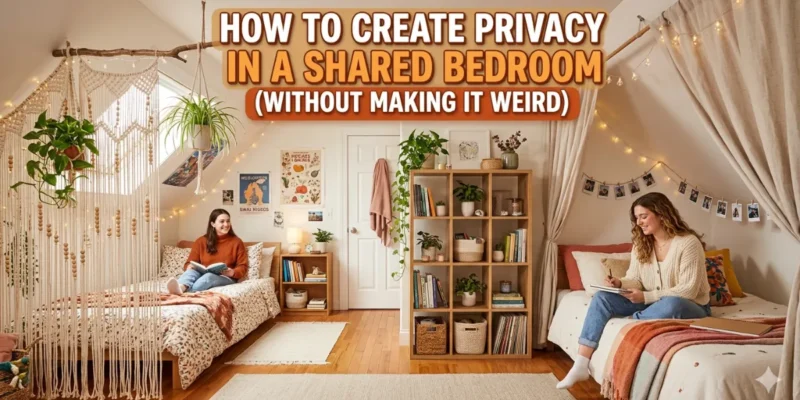
Sharing a bedroom can feel overwhelming—especially when you’re craving even a little personal space. Whether you’re living with a roommate, sibling, or partner, the challenge is the same: how to create privacy in a shared bedroom without expensive renovations or awkward setups.
The good news? You don’t need to build walls or move to a bigger place.
With the right mix of room divider ideas, smart furniture layouts, and simple decor tricks, you can easily turn one room into two comfortable, private zones.
In this guide, you’ll discover practical, stylish, and renter-friendly ways to create privacy in a shared room—without sacrificing design.
Why Privacy in a Shared Bedroom Matters More Than You Think
It might sound dramatic, but having your own little zone in a shared bedroom genuinely affects your mood, sleep quality, and even how well you get along with the person you’re sharing with. When there’s no visual separation between spaces, everything starts to blur — your stuff, their stuff, your routines, their routines. It gets chaotic fast.
Having a defined personal space, even in a small bedroom, gives you somewhere to decompress, wind down, and feel like yourself. It’s not about being antisocial — it’s about having a little breathing room. And the beautiful thing? Creating that separation can actually make the whole room look more intentional and put-together.
If you’re also working with a studio situation, check out these studio apartment ideas — there are some brilliant zone-creating tips in there that work perfectly for shared spaces too.
1. Use a Room Divider or Partition Screen — The Classic That Never Gets Old
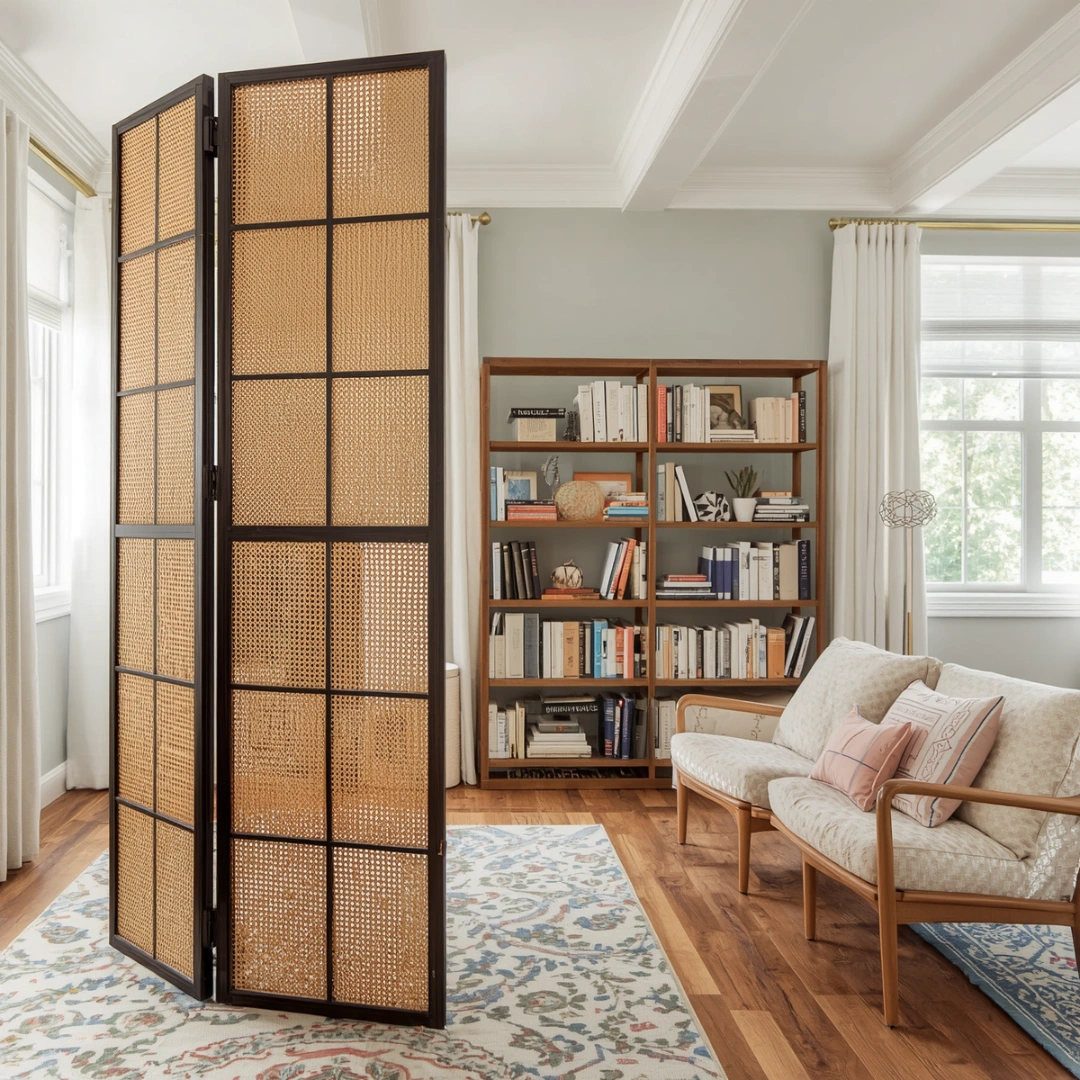
Let’s start with the obvious one, because honestly, it’s obvious for a reason: room dividers WORK. A well-chosen partition screen or room divider instantly creates two distinct areas in a shared bedroom without any construction, renting drama, or permanent changes.
The trick is picking one that fits the vibe of your room. Here are your main options:
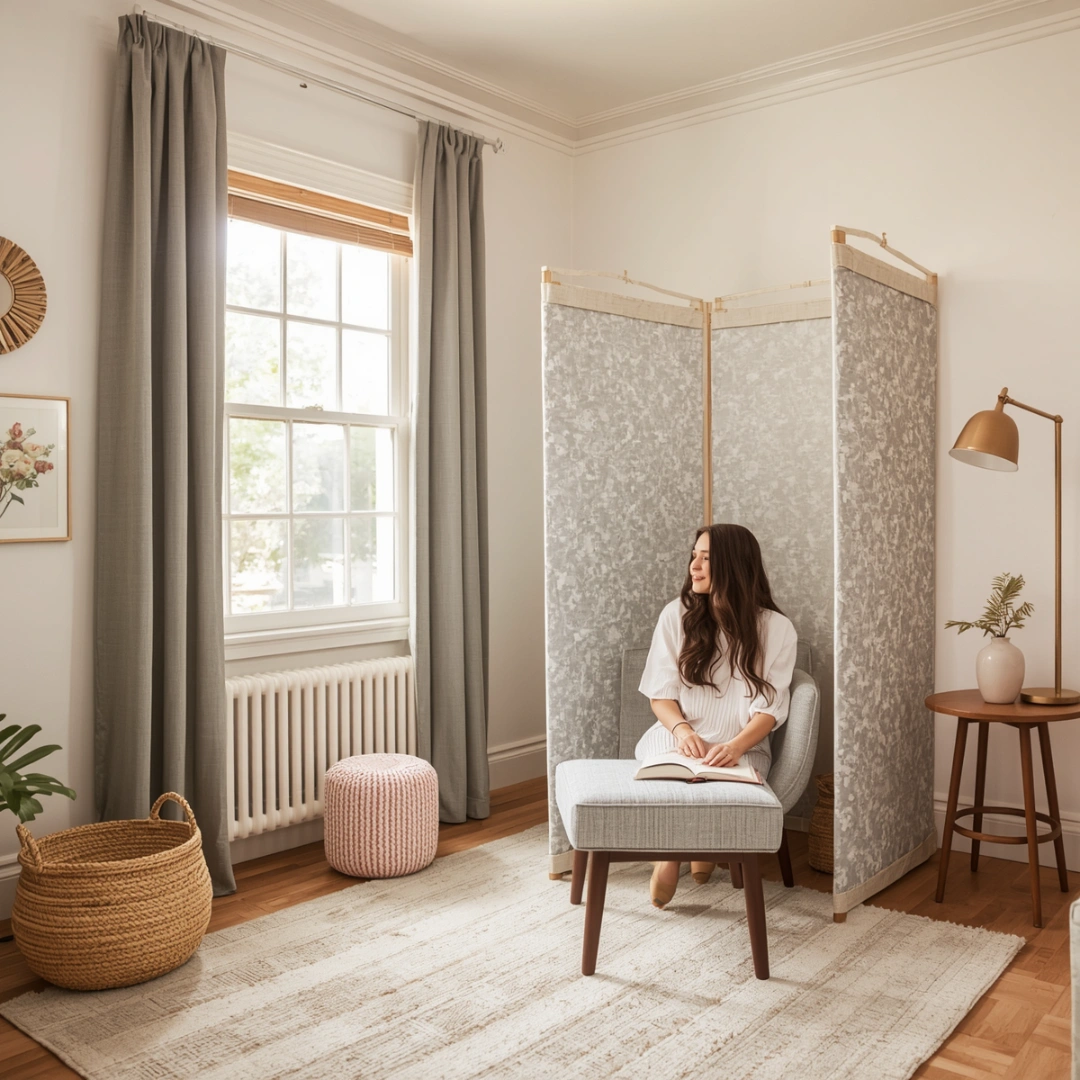
- Folding screens: Great for renters! They’re portable, come in tons of styles (rattan, wooden, fabric-paneled), and you can tuck them away when you want the space to feel more open.
- Bookshelf dividers: A tall bookshelf placed strategically down the middle of a room acts as a divider AND gives you storage. Win-win. Go for open shelving so the room still feels airy.
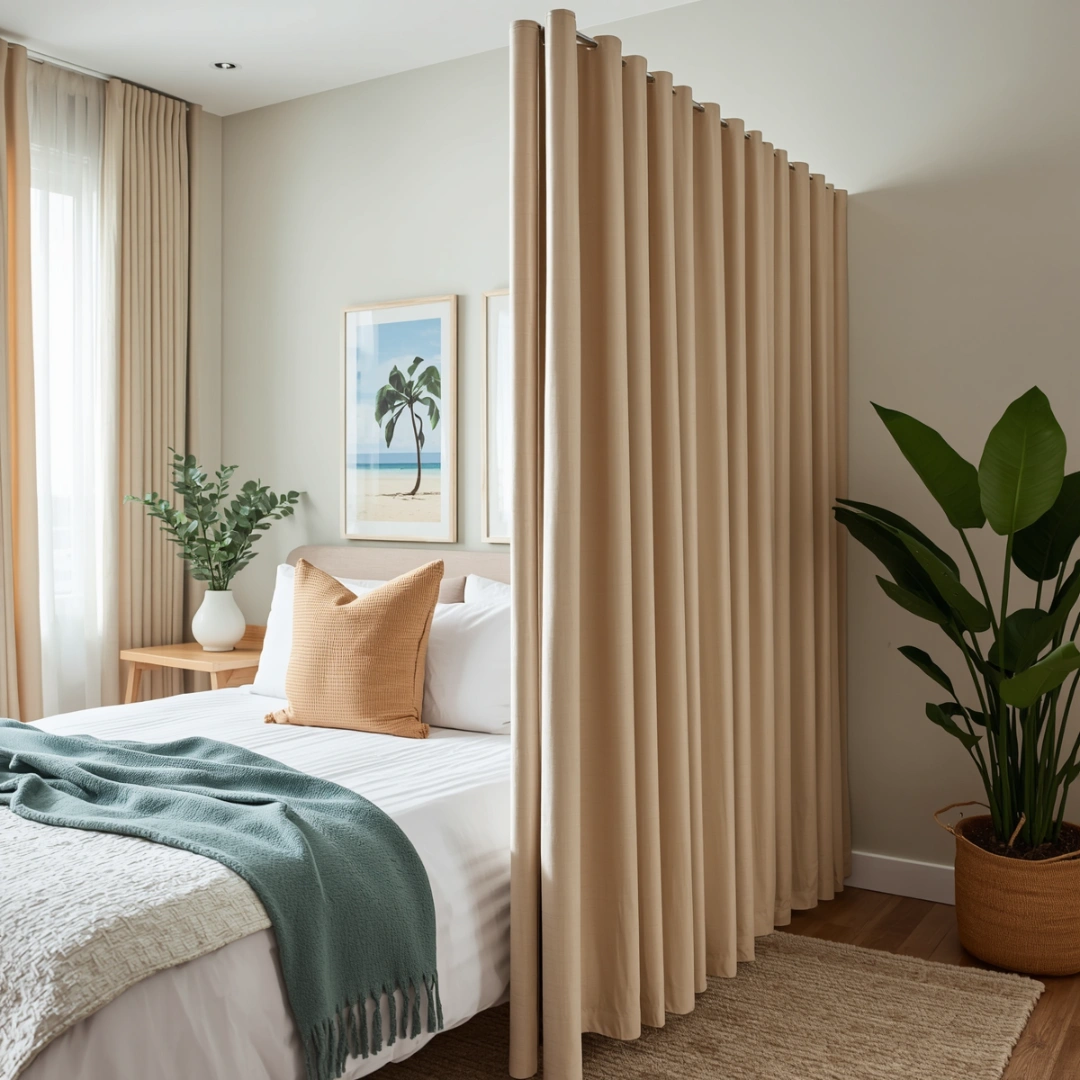
- Curtain room dividers: Hang a ceiling curtain rod (or use a tension rod if you can’t drill into the ceiling) and add floor-length curtains to carve out your zone. This is SO popular right now and for good reason — it looks amazing.
- Sliding panel systems: More of a semi-permanent option, but sliding panels give you the most flexibility. Open them up during the day, slide them closed at night for full privacy.
The key with any room divider is to go tall. Short dividers don’t feel like real boundaries — you want something that goes at least 5-6 feet high to create a genuine sense of separation.
2. Curtain Room Divider Ideas for Bedroom Privacy
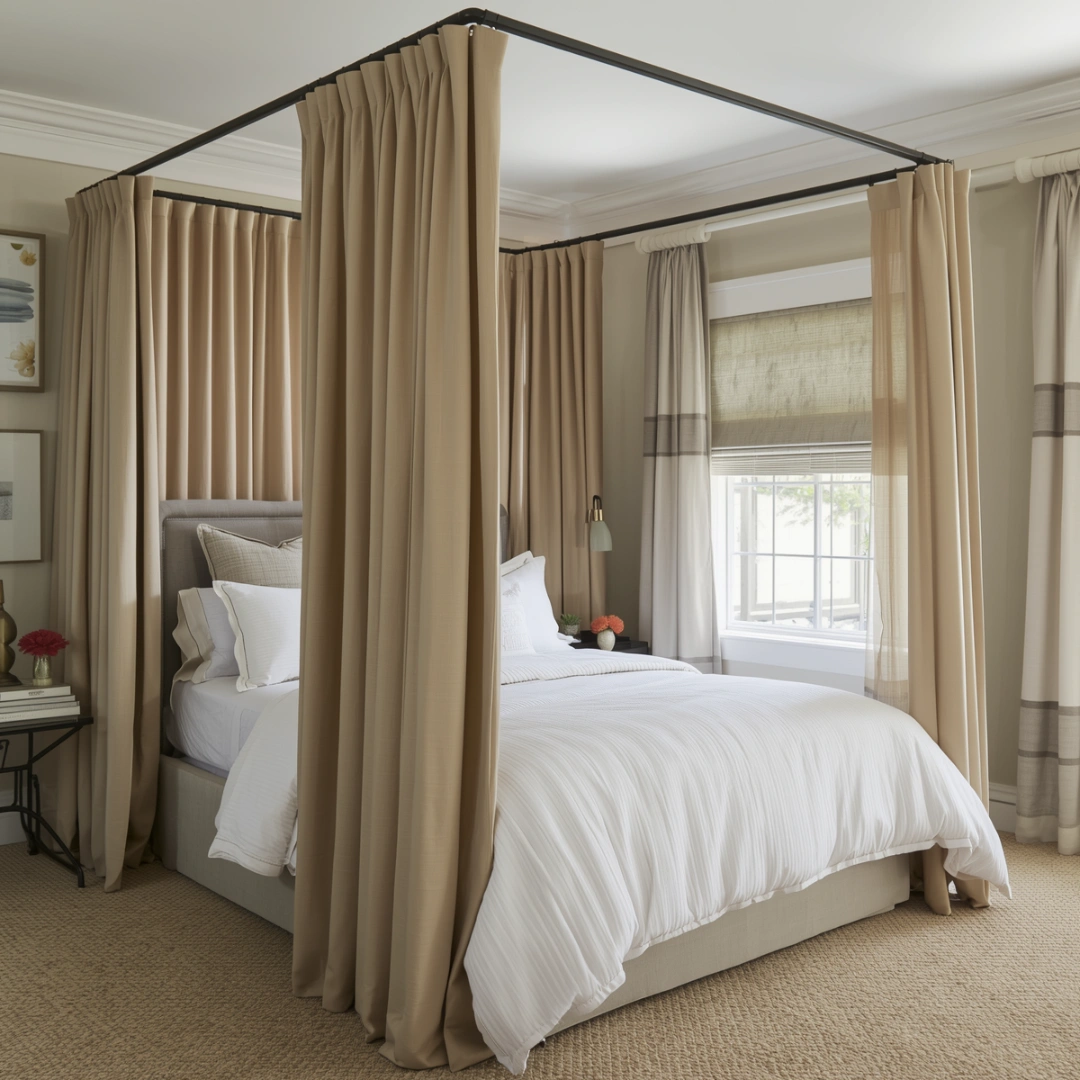
Okay, can we just appreciate curtains for a second? They’re soft, they’re affordable, they come in every color and pattern imaginable, and they can transform a shared bedroom faster than almost anything else. Using curtains for bedroom privacy is genuinely one of the best small bedroom divider ideas out there.
One of the most popular approaches right now is the “bed curtain” or “canopy curtain” setup. Basically, you hang curtains around your bed so it becomes its own little cocoon. You can use a ceiling-mounted curtain track, four-poster bed frame rails, or even a curtain rod mounted to the wall above your headboard.
It feels incredibly luxurious — and it actually is! Hotels have been doing this forever. If you want your bed to feel like a true sanctuary, this is one of the best shared bedroom tips you’ll ever try.
For more inspiration on making your sleep space feel incredible, take a look at how to style a bed like a luxury hotel — seriously, the layering techniques there work amazingly well when you’re trying to create a cozy private zone.
When using curtains as dividers, stick to these tips:
- Go floor-to-ceiling — short curtains look awkward as dividers.
- Choose a fabric that has some weight to it. Sheer curtains are pretty, but won’t give you much visual privacy.
- Blackout curtains around your bed zone are a total game-changer if you and your roommate have different sleep schedules.
3. Best Furniture Layout Ideas for Shared Bedroom Privacy
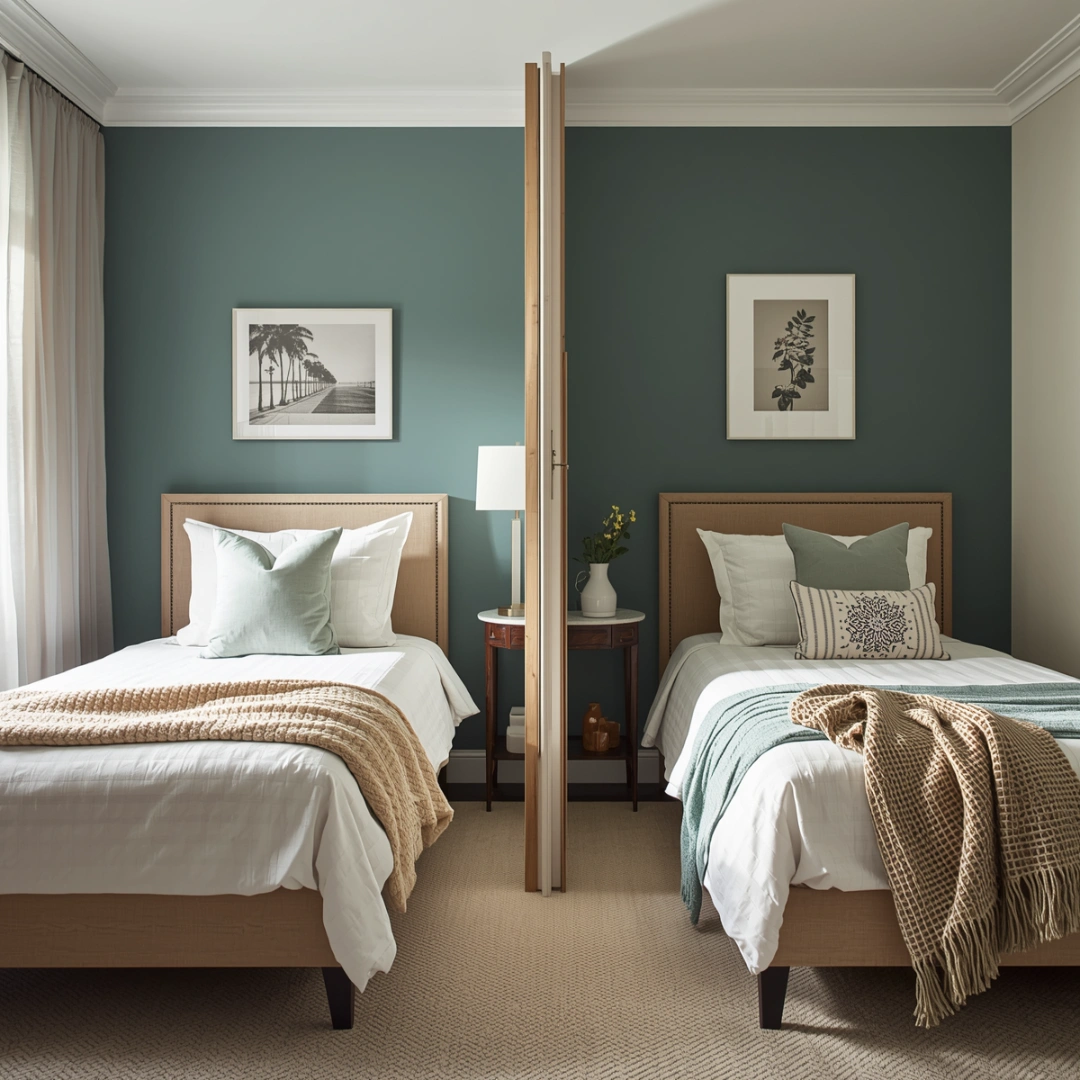
Here’s something a lot of people overlook: how you arrange your furniture can create natural privacy zones without adding a single new piece to the room. Smart furniture placement for bedroom privacy is completely free and surprisingly effective.
The idea is to use your existing furniture as natural barriers. A few ideas:
- Place a dresser or wardrobe perpendicular to the wall, sticking out into the room. Instantly creates a visual separation between two zones.
- Position beds with the headboards facing opposite walls rather than side by side. This naturally reduces the “we’re right next to each other” feeling.
- Use a sofa or bench at the foot of one bed to create a mini buffer zone between the two sleeping areas.
- Float furniture away from walls to define areas — a desk with its back to the room acts like a little visual boundary.
When you’re rearranging, think about sightlines. Where can each person be without being directly in the other person’s eyeline? That’s your starting point. Sometimes, just rotating a bed or moving a dresser 90 degrees makes an enormous difference.
Not sure where to start when your room feels shapeless? What to Do If Your Room Has No Focal Point is a fantastic read for figuring out how to anchor a space — super helpful when you’re dividing a room and need each zone to feel intentional.
4. Create Personal Zones with Rugs, Lighting, and Color
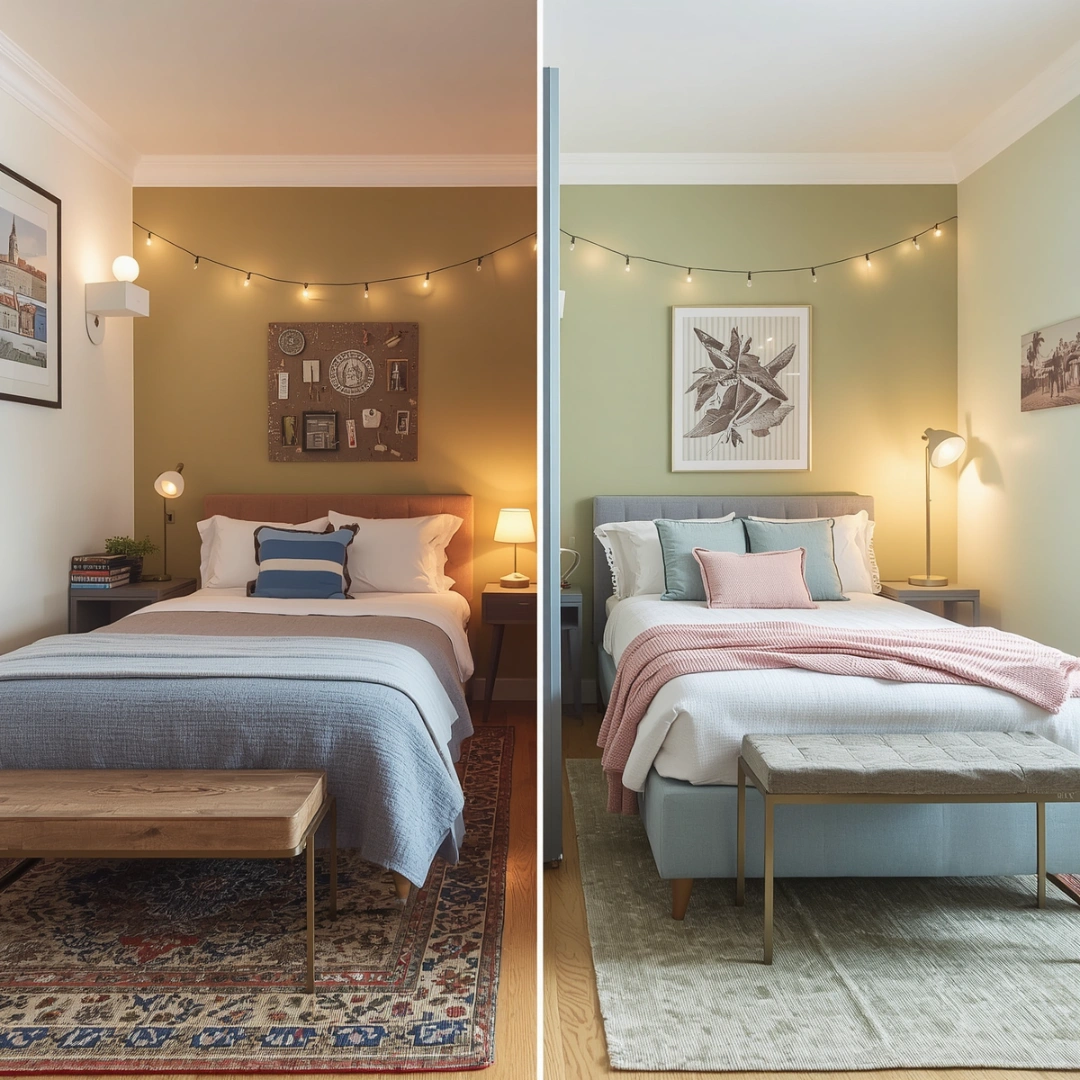
This one is so underrated. You don’t always need a physical barrier to define separate spaces — sometimes all you need is a visual one. And the trio of rugs, lighting, and color does this beautifully.
Rugs
Placing a rug under each person’s “zone” — their bed, their desk, their reading chair — immediately signals that this is their space. Even in an open room, rugs create invisible boundaries that both people instinctively respect. Choose rugs that complement each other but are slightly different to reflect each person’s personality.
Lighting
Personal bedside lamps or clip-on reading lights mean each person controls their own lighting. This is huge for different sleep schedules! One person can have their lamp on while the other sleeps without the whole room being lit up. String lights or a small floor lamp around your bed zone also creates a warm, cocoon-like atmosphere that feels distinctly “yours.”
Color and Decor
If you’re allowed to put things on the walls, use that vertical space to differentiate zones. One person’s gallery wall, their pinboard, their color palette — these things create a visual identity for each side of the room. Even just having your own color scheme for your bedding, cushions, and small decor pieces makes your zone feel personal and separate.
5. Loft Beds and Bunk Beds — Not Just for Kids
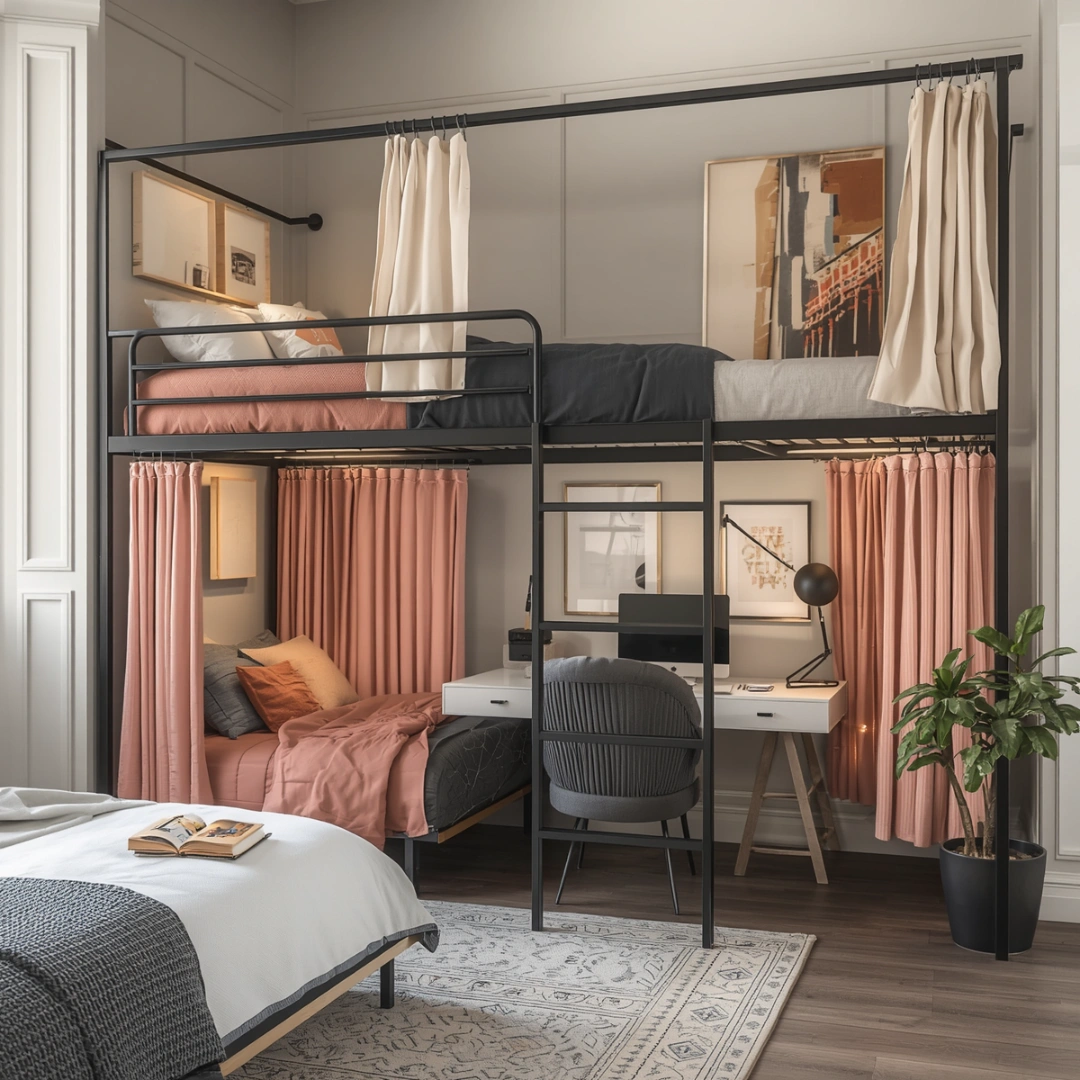
If you’re open to it, loft beds or bunk beds for shared bedrooms are genuinely space-genius. A loft bed (where one person sleeps elevated and has their desk, wardrobe, or reading zone underneath) essentially gives each person their own “level.” It’s the ultimate space-saving bedroom idea for small shared rooms.
Modern loft bed designs are sleek, stylish, and don’t scream “I’m ten years old.” Some come with built-in curtains for the sleeping area, privacy screens, or modular shelving. If you’re sharing a small bedroom long-term, a loft setup could genuinely be life-changing.
For bunk beds, look for versions with privacy curtains or built-in study nooks. Adding curtains to the individual bunks gives each person their own cozy sleeping pod — and it makes such a stylish shared room setup.
6. Sound and Sensory Privacy Matter Too
Physical visual privacy is important, but don’t forget about sound! Sharing a bedroom means dealing with different schedules, different noise tolerances, and sometimes just… different vibes.
Here are some easy wins:
- White noise machines or apps: Both people using a white noise machine means neither person is disturbed by the other’s movements, phone notifications, or light snoring. Genuinely one of the most underrated shared bedroom solutions ever.
- Noise-canceling headphones: Especially useful during study time, wind-down routines, or when you just need a moment.
- Thick curtains and rugs also dampen sound: This is a bonus you get from adding visual dividers — fabric absorbs noise, so a curtained-off area actually feels quieter too.
- Plants as gentle buffers: A cluster of tall indoor plants along a divide can soften both visual and acoustic separation. Monstera, fiddle leaf fig, snake plants — all work beautifully.
7. Storage Solutions That Double as Dividers
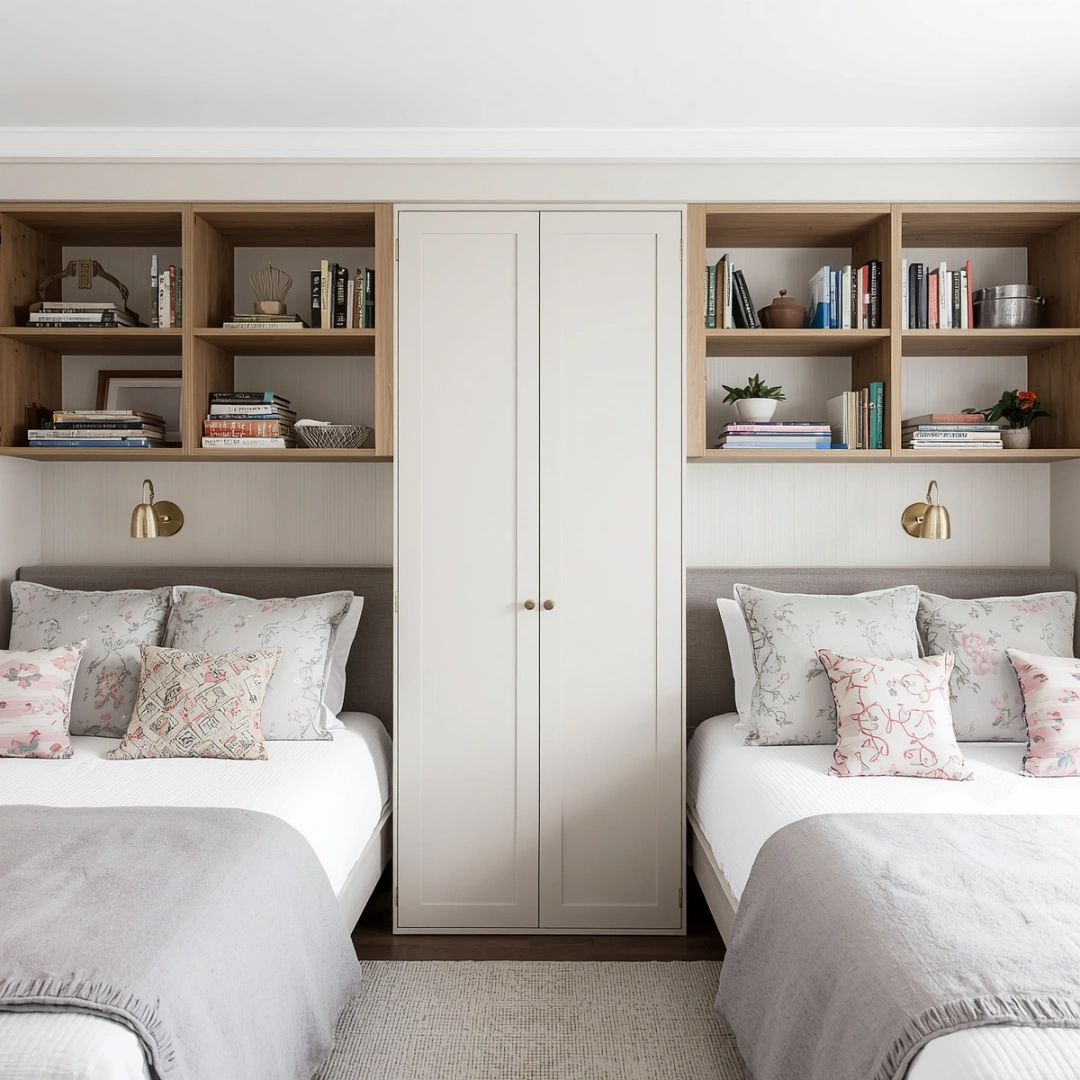
Getting creative with bedroom storage for shared rooms is a total hack. Storage pieces — when positioned correctly — act as dividers while solving the clutter problem at the same time.
- A tall wardrobe or armoire placed in the middle of the room creates a solid wall between two zones. Both people can access it from their respective sides.
- A double-sided shelving unit (open on both sides) lets both people store and display their things while creating a clear boundary.
- Bed frames with built-in storage keep each person’s belongings contained to their zone.
- Under-bed storage organizers, bedside caddies, and wall-mounted shelves maximize each person’s area without spilling into shared space.
Want to make your space look elevated without spending a fortune? How to Make Your Home Look Expensive on a Budget is packed with ideas that apply just as well to shared bedrooms — small upgrades, big impact.
8. Create a Personal Reading or Relaxation Nook
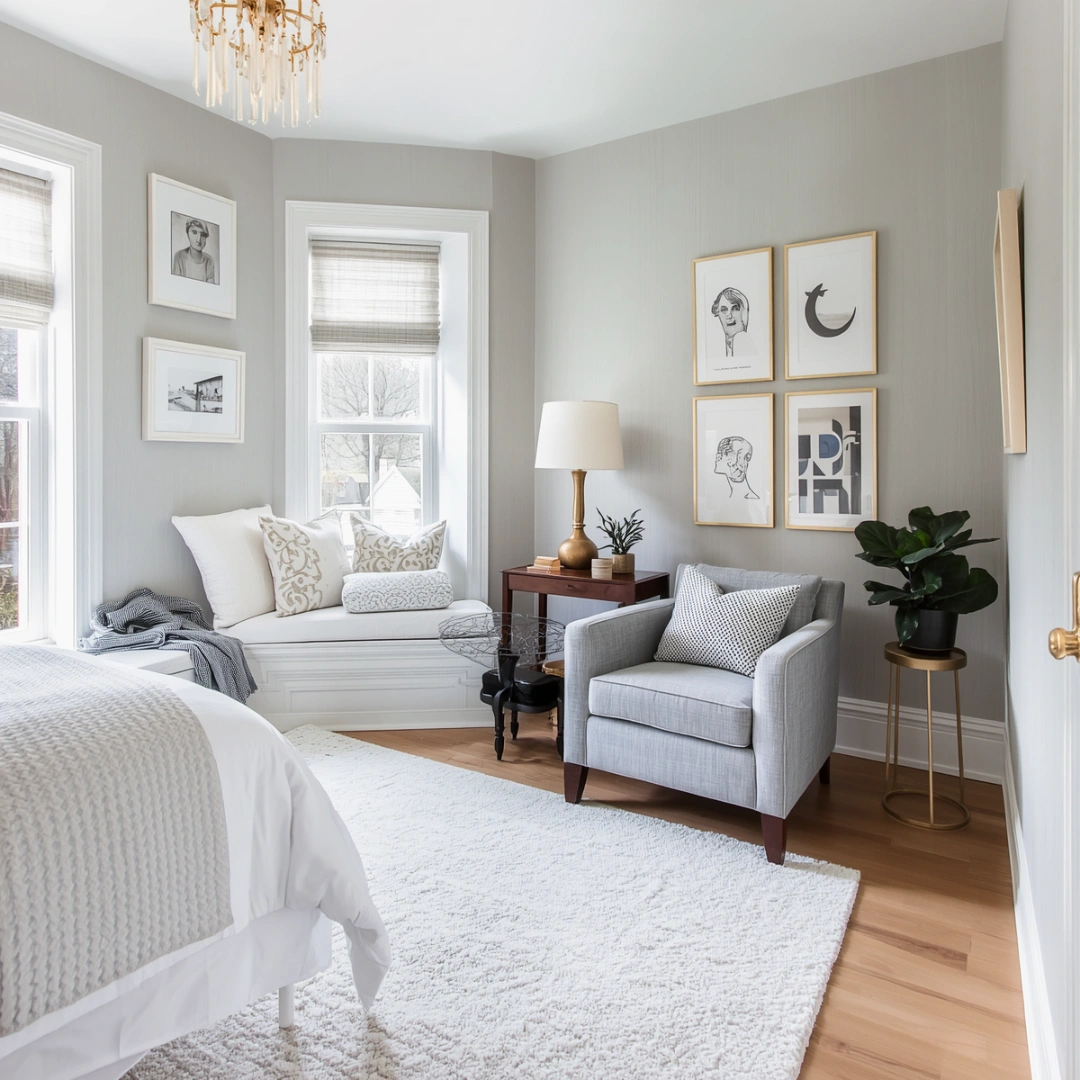
One of the sweetest things you can do for your half of a shared bedroom is carve out a tiny personal retreat — a little nook that’s just for you. Even a corner with a comfy chair, a floor lamp, and a small side table creates a defined personal zone where you can decompress without feeling like you’re sharing every square inch.
If there’s a window on your side, even better! A window seat or a reading chair positioned by the window becomes a natural focal point for your zone. Add some cushions, a throw blanket, and you’ve got yourself a little sanctuary.
Speaking of cozy corners, cozy reading nook ideas for small spaces are full of genius ideas for making even the tiniest spot feel like your personal escape. Highly recommend browsing through it!
9. Communication is Still the MVP
Okay, this isn’t technically a decor tip, but it’s the most important one: talk to the person you’re sharing with. Seriously! All the room dividers and curtains in the world won’t help if you and your roommate/sibling/partner haven’t had a basic conversation about needs, boundaries, and expectations.
Things worth discussing:
- Quiet hours and sleep schedules
- What parts of the room are shared vs. personal
- Rules about having people over or using the shared space
- Decorating preferences — especially if you’re hanging things on shared walls
- Pet peeves (lights on, alarm noise, music, etc.)
Once you’ve got a baseline agreement, the physical privacy solutions you put in place will work SO much better. It’s kind of like — the room divider handles the visual stuff, but the conversation handles the vibe. Both are necessary.
Final Thoughts: Your Bedroom, Your Rules
Sharing a bedroom doesn’t mean giving up your sense of personal space — it just means getting a little creative about how you claim it. The right combination of room dividers, curtains, smart furniture placement, and personal zone-defining touches can make a huge difference in how comfortable and happy you feel in a shared space.
The best part? Most of these solutions are affordable, renter-friendly, and genuinely make the room look better. You’re not just solving a problem — you’re creating a more intentional, beautiful space for everyone in it.
Start with whatever feels most manageable for your situation — maybe it’s just rearranging your furniture or adding a curtain around your bed. Small changes add up fast, and once you start feeling that sense of having your own defined zone, you’ll wonder how you ever lived without it.
You deserve a space that feels like yours — even when it technically belongs to two people. Go make it happen!
Frequently Asked Questions
How do I divide a shared bedroom without construction or permanent changes?
- Great news — you don’t need to touch a wall to divide a bedroom! Freestanding room dividers, bookshelf dividers, ceiling curtain tracks (removable!), and strategic furniture placement are all renter-friendly and leave zero damage. Curtains on tension rods are especially popular because they’re easy to install, easy to remove, and look really polished.
What’s the best room divider for a small shared bedroom?
- For small bedrooms, the best options are things that don’t eat into floor space too much. A tall, narrow bookshelf divider or a curtain hung from the ceiling gives you maximum separation with minimal footprint. Avoid bulky folding screens in very small rooms — they can make the space feel cramped.
How can I get privacy in a shared bedroom on a budget?
- Budget-friendly privacy in a shared bedroom is totally doable! Curtains and curtain rods are incredibly affordable (especially from stores like IKEA or thrift shops). A tension rod costs almost nothing. Even repositioning your existing furniture costs zero dollars. Rugs, string lights, and plants are all inexpensive ways to define personal zones without spending much.
How do I deal with a messy roommate ruining my side of the shared bedroom?
- This is where a clear physical divider really helps — it creates an obvious boundary between “your zone” and “their zone.” A bookshelf or curtain divider makes it visually clear that the mess on their side doesn’t have to bleed into yours. Beyond that, a direct (but friendly!) conversation about cleanliness expectations goes a long way.
Can I create privacy in a shared bedroom without my roommate’s cooperation?
- Mostly yes! You can add a curtain or folding screen around your bed area, create your own zone with rugs and lighting, use a bedside caddy to keep your things contained, and use white noise to create auditory privacy — all without the other person needing to change a thing. The more cooperation you have, the better it works, but you can definitely improve your own experience unilaterally.
Is it possible to make a shared bedroom look stylish and not like a college dorm?
- 100%! The key is treating the dividers and separations as actual design elements rather than afterthoughts. A gorgeous curtain, a well-styled bookshelf, intentional lighting — these things elevate the whole room. Choose dividers that match your aesthetic (rattan for boho, clean-lined shelves for minimalist, velvet curtains for a glam look), and your shared bedroom can genuinely look magazine-worthy.