 By
By Buying a mattress online is a massive gamble. You are essentially spending $1,000 on a giant compressed block based on flashy marketing and paid affiliate reviews. Get it wrong, and you face the nightmare of boxing up a 100-pound slab of foam just to return it — assuming the brand even honors the trial.
This guide skips the fluff. It maps a mattress’s internal specifications directly to your sleeping posture and body mechanics, so you know exactly what to look for — and what to ignore — before you spend a dollar.
The Real Reason Most Mattresses Get Returned
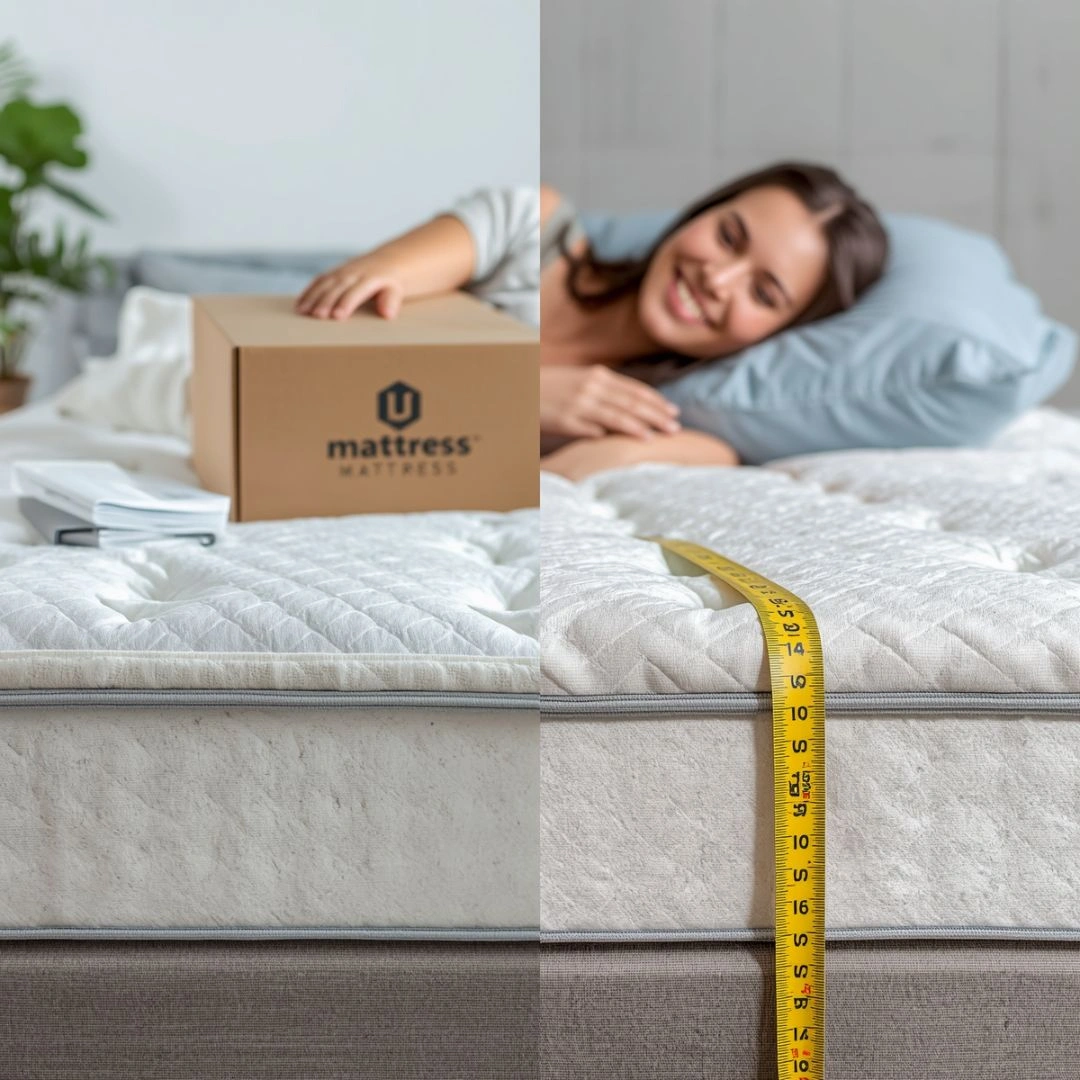
The mattress industry has a return rate problem, and it is not because people are indecisive. It is because most buyers shop based on comfort rather than structural specifications. Walking into a showroom and lying on a display model for two minutes tells you almost nothing about how a mattress will perform at 3 AM, after six months of compression, under your actual body weight and sleep position.
The three most common return triggers, based on consumer complaint patterns across the BBB and Reddit mattress forums:
- Hip sinkage: The mattress felt medium-firm in the store, but the support core is too soft for the buyer’s weight, causing the hips to drop and the lumbar spine to bow.
- Heat retention: All-foam mattresses trap body heat in ways buyers do not anticipate until the first hot night.
- Firmness mismatch: Couples with different sleep positions buying a single firmness level — a problem solved by split firmness or zoned construction.
Understanding these failure modes before you buy is key to choosing a mattress you won’t regret.
The Mattress Firmness Scale — And How to Actually Use It
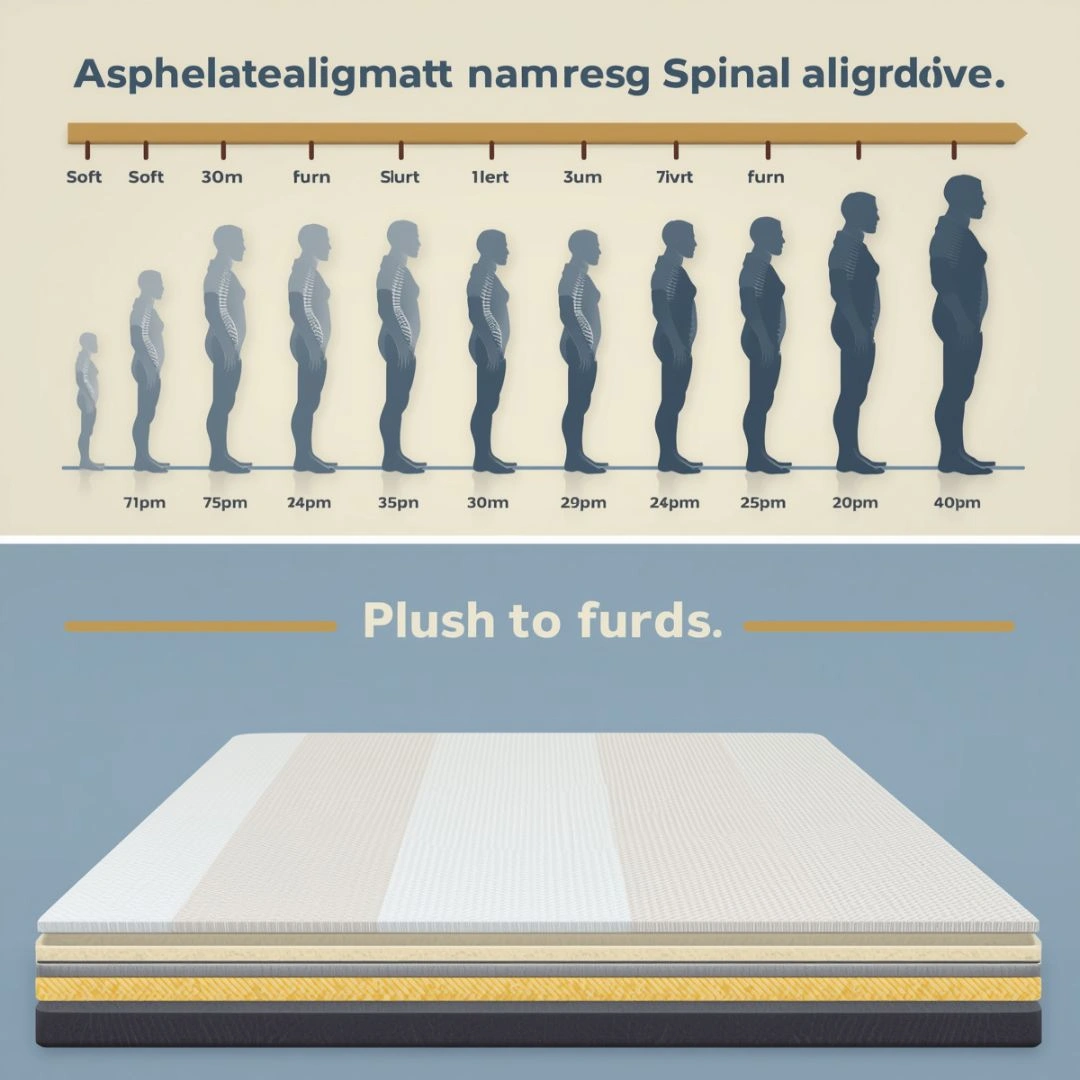
The standard 1–10 firmness scale is a useful shorthand, but it is not standardized across brands. A “6” from Brand A may feel identical to a “7” from Brand B. Use the scale as a starting filter, then cross-reference with owner reviews from people who share your body weight and sleep position.
| Scale | Label | Best Sleep Position | Body Weight Guidance |
| 3 – 4 | Soft | Side sleepers | Under 130 lbs — hip/shoulder sink-in is needed |
| 5 – 6 | Medium / Med-Firm | Side, back, combination | 130–230 lbs — broadest compatibility range |
| 7 – 8 | Firm | Back, stomach | Over 230 lbs or strict back/stomach sleepers |
Critical point: Firmness is not the same as support. A mattress can be soft on top and have excellent lumbar support underneath. What you feel in the first inch or two is the comfort layer. What actually supports your spine is the core beneath it. These are two separate engineering decisions, and conflating them is the most common mistake shoppers make.
BUYING TIP: If you are between two firmness levels, go with the firmer one. Comfort layers soften by 10–15% within the first 60 days of use as the foam breaks in. A “medium” often becomes a “medium-soft” after two months.
Memory Foam vs Hybrid: The Practical Difference
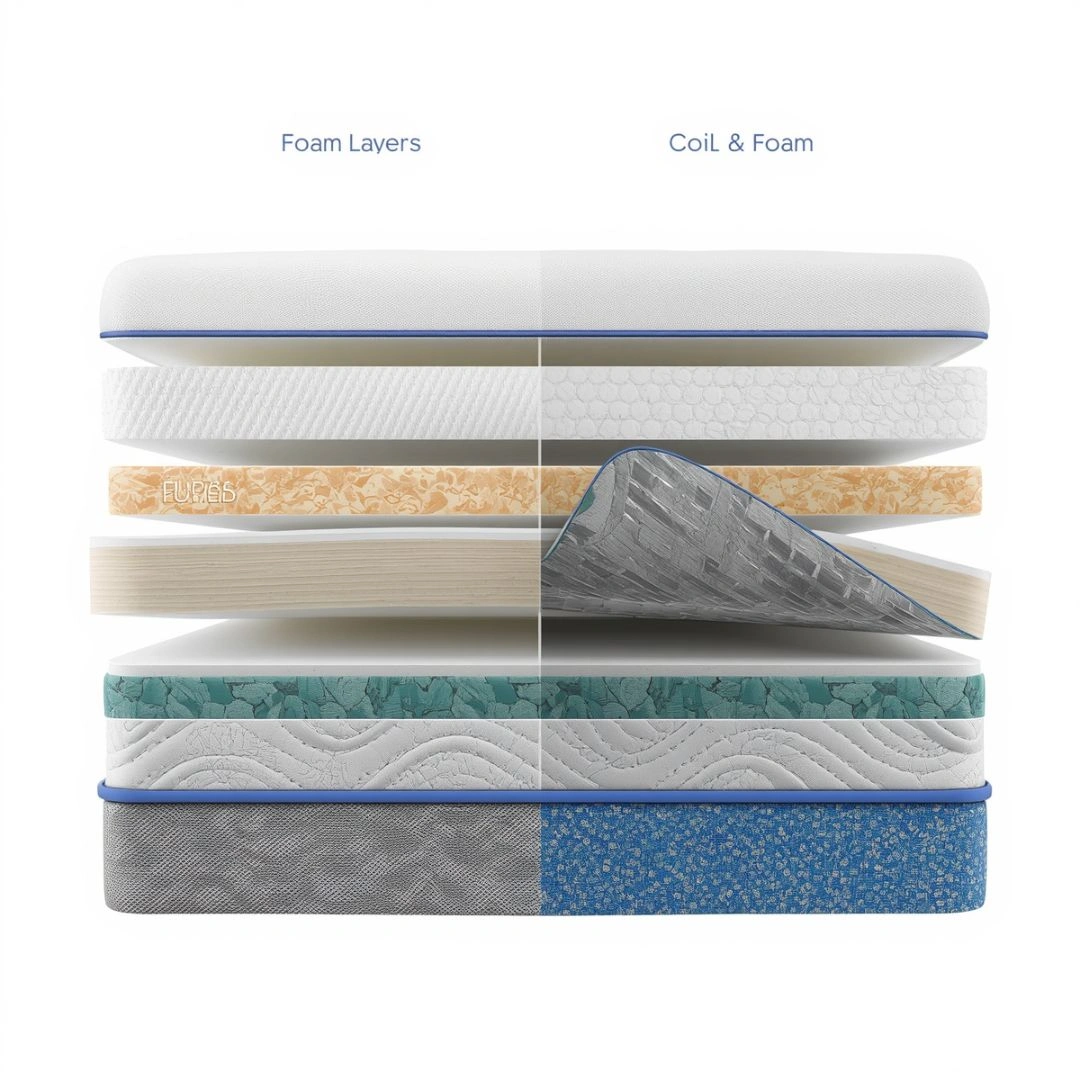
This is the comparison that consumes the most research time — often unnecessarily. Here is the functional breakdown:
| Feature | All-Foam / Memory Foam | Hybrid |
| Motion isolation | Excellent — ideal for couples | Good — coils transmit slightly more motion |
| Temperature | Runs warm unless gel/copper-infused | Cooler — airflow through coil layer |
| Edge support | Weak — perimeter compresses easily | Strong — reinforced perimeter coils |
| Ease of movement | Sluggish — you feel ‘in’ the mattress | Responsive — easier repositioning |
| Durability | 7–9 years average | 8–12 years with quality coils |
| Best for | Light to mid-weight side sleepers, pain relief | Hot sleepers, combination, over 230 lbs |
Bottom line: There is no universally better option. The decision should come down to your body temperature at night and whether you share the bed. Hot sleepers and combination sleepers almost always prefer hybrids. People with shoulder or hip pressure-point issues often get more relief from the closer contouring of high-quality memory foam.
The Best Mattress for Side Sleepers with Back Pain

Side sleeping is the most common sleep position in the US, and it creates a structural problem: the shoulder and hip bear direct load while the waist hovers unsupported. If the mattress is too firm, those pressure points ache. Too soft, and the hip sinks past the shoulder — pulling the lumbar spine into a lateral curve that compounds back pain rather than relieving it.
Here is what to verify in a mattress’s specifications before purchasing — not just what the marketing page says, but what the actual construction data confirms:
The 3-Inch Comfort Layer Threshold
Look for at least 3 inches of top comfort foam (polyfoam, memory foam, or latex) before the support core begins. Anything less, and your hip bone engages the hard support layer beneath, forcing the lower spine to curve downward. Most mattress product pages publish a full layer breakdown — if they don’t, contact support and ask for it directly.
Dynamic Perimeter Support
On hybrid mattresses, ensure the coil layer features alternating or graduated coil gauges—thicker at the perimeter and softer toward the center. Test this during the trial period: sit on the edge of the bed with your full weight and watch for complete collapse. If the edge folds under you, the mattress lacks the lateral structural integrity to keep your hips elevated when you roll onto your side.
The Mirror Test (At-Home Diagnostic)
When testing during your trial period, have someone photograph your spine from behind while you lie on your side in your normal sleep position. Draw a straight line from the base of your neck to your tailbone:
- Line dips at the hips → mattress is too soft.
- Line curves upward at the ribs → mattress is too firm.
- Straight line → correct firmness for your body
This takes two minutes and removes all guesswork.
WEIGHT CALIBRATION: Side sleepers under 130 lbs: target firmness 3–4. Between 130–230 lbs: 5–6 is the most consistently effective range. Over 230 lbs: a medium-firm hybrid (6–7) provides the best combination of pressure relief and hip-elevation support.
What Back and Stomach Sleepers Actually Need
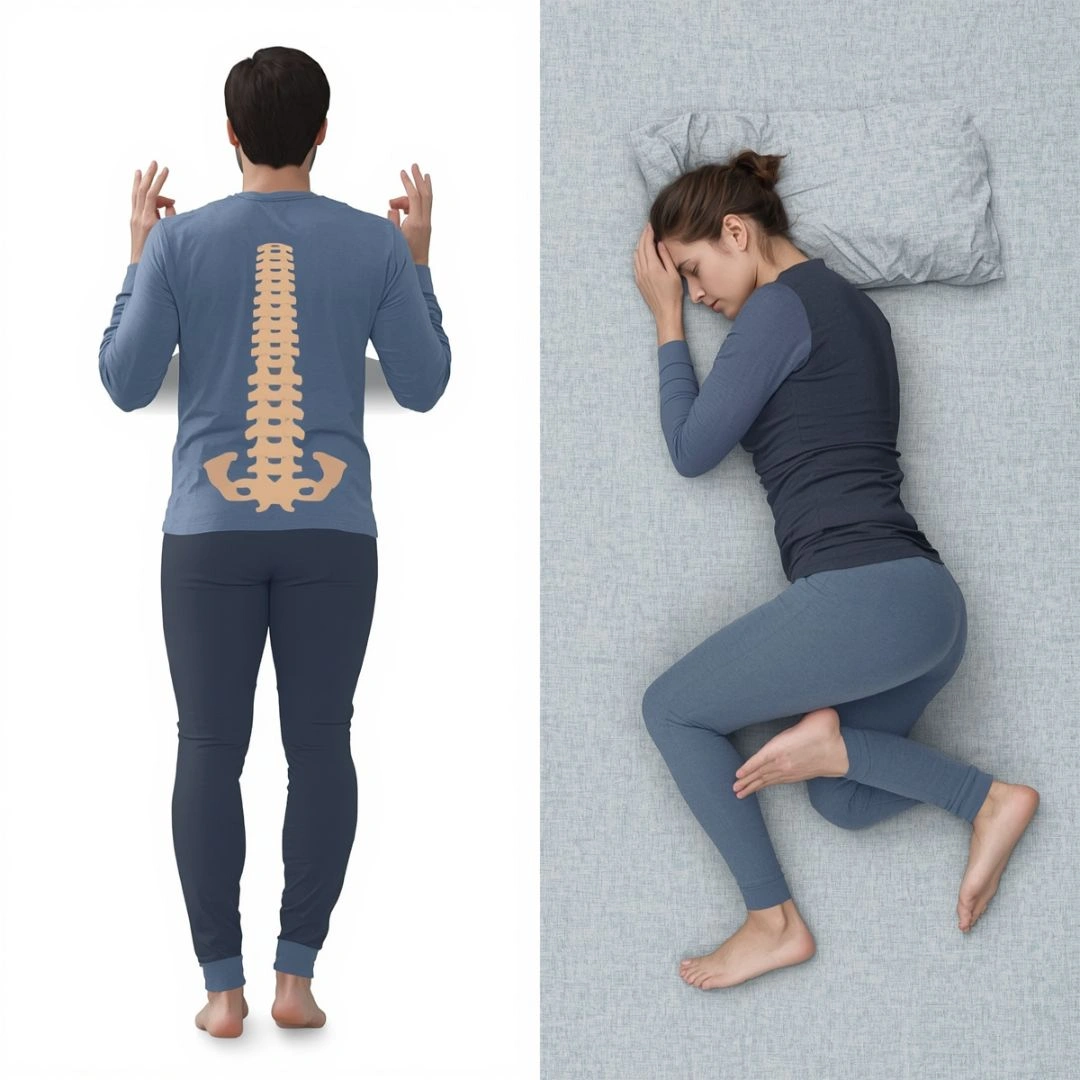
Back sleepers need a mattress that fills the lumbar gap — the natural inward curve of the lower back — without letting the hips sink so far that the curve becomes exaggerated. A medium-firm to firm hybrid (6–7) is the most reliable choice. Latex performs particularly well here because it is zone-responsive: it compresses precisely where weight is applied without bottoming out elsewhere.
Stomach sleepers carry the highest risk of mattress-induced back pain. When the hips sink into a soft surface, the lumbar spine hyperextends — and doing this for 7–8 hours per night compounds over time into chronic pain. Avoid any mattress marketed as ‘plush’ or ‘pillow-top.’ A firm hybrid (7–8) is almost always the right structure for this position.
Combination sleepers shift positions multiple times per night, so the mattress needs to respond responsively. Medium firmness (5–6) with low-resistance surface foam — latex or open-cell polyfoam — allows for easy repositioning without the ‘quicksand’ feeling of dense memory foam at night.
How to Test a Mattress So You Know Before You Buy
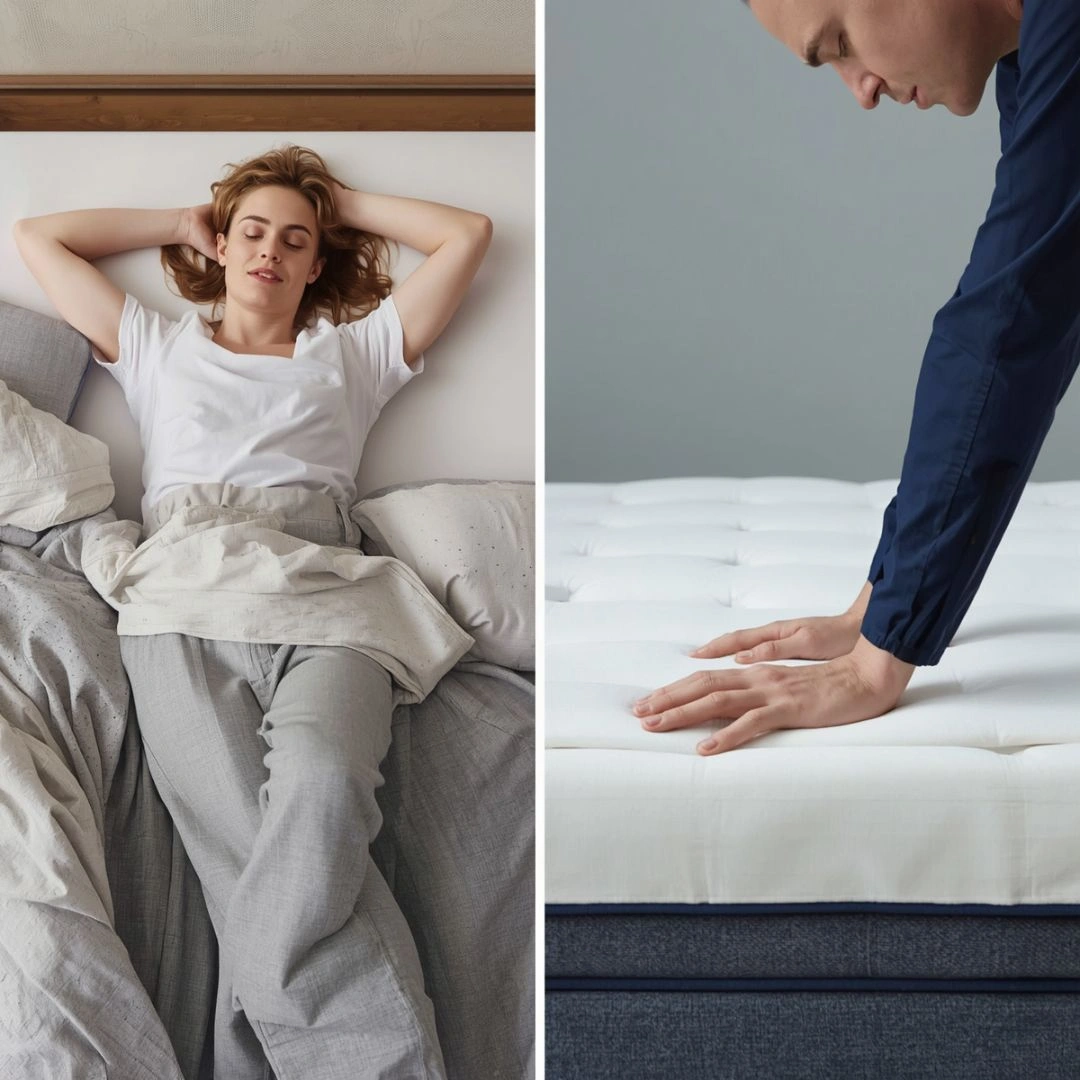
In-store testing is more valuable than most shoppers realize — but only if done correctly. Lying on a mattress for 90 seconds tells you nothing except whether it smells odd. Here is the protocol:
- Commit to 15 minutes minimum in your actual sleep position — not flat on your back if you sleep on your side.
- Test pressure points actively: lie still for five minutes, then pay attention to the shoulder, hip, and lower back. Tingling or aching in any of these zones indicates the wrong firmness.
- Sit on the edge: full body weight on the perimeter. If it collapses more than 2 inches, edge support is weak — this reduces your usable sleeping surface by several inches on each side.
- Test movement: roll from your back to your side and back again. If you feel resistance or have to push up rather than roll naturally, the foam is too dense for combination sleeping.
- For online purchases: insist on a minimum 90-night trial. The mattress feels significantly different after the break-in period (typically 30 days). A 30-night window is insufficient to make an informed judgment.
Trials, Warranties, and the Fine Print That Bites You
Most online mattress brands now offer 100–365-night sleep trials. These are genuinely useful — use them. Return a mattress if it is not right after 30+ days of real use. Do not talk yourself into keeping a mattress that is causing you pain.
On warranties, here is what actually matters:
- Non-prorated coverage is critical. Prorated warranties reduce compensation year over year — in year 8, you might only recover 20% of the purchase price. Non-prorated means full replacement or refund for the life of the warranty.
- Sagging threshold. Most warranties activate at 1–1.5 inches of measured sagging. Keep documentation: photos over time are useful if you ever need to file a claim.
- Void conditions. Almost universally, staining voids the warranty. A $30 waterproof mattress protector installed on day one is the most cost-effective extended warranty you will ever buy.
IMPORTANT: If a brand does not publish its full warranty terms on the product page, request them before purchase. ‘Lifetime warranty’ language is often heavily prorated and worth less than a standard 10-year non-prorated policy.
Budget vs Premium: What the Price Difference Really Buys
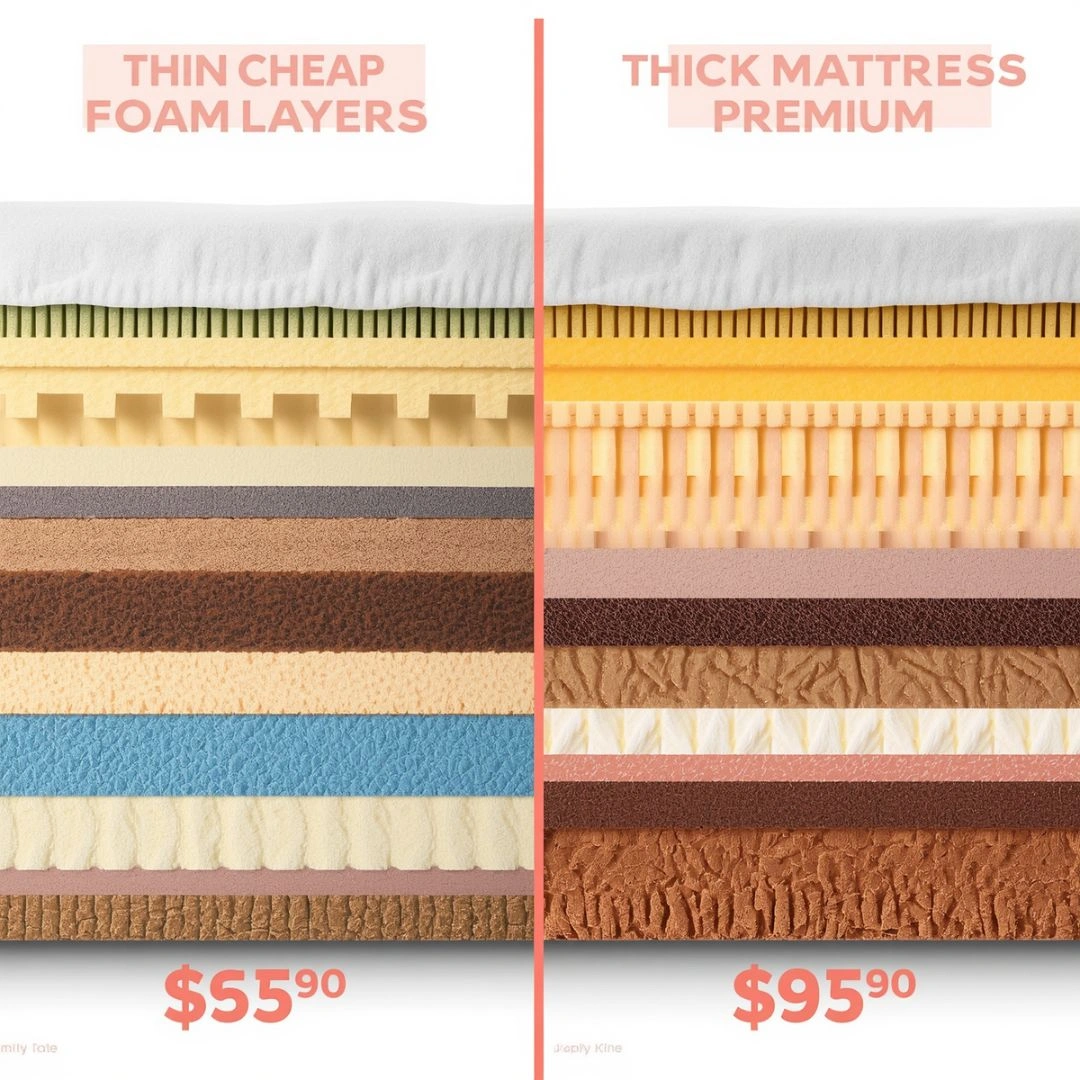
You do not need a $3,000 mattress to sleep well. But there are real structural differences between price tiers — not just branding.
| Budget Range | What You Actually Get |
| Under $500 | Entry-level foams; expect accelerated softening within 2–3 years. Fine for guest rooms or temporary use. |
| $500 – $1,200 | The practical sweet spot. Brands like Saatva, Nectar, and Dream Cloud land here. You get durable coils or quality foam with proper comfort layers. |
| $1,200 – $2,500 | Natural latex, individually pocketed coils, organic cotton covers, better edge reinforcement. Lifespan of 10–12+ years. |
| Over $2,500 | Largely premium brand positioning. Diminishing functional returns unless you have diagnosed orthopedic needs or severe temperature sensitivity. |
For most buyers, the $700–$1,200 range covers all functional needs. The practical approach: buy the best mattress you can afford in that range, add a quality protector, and use the sleep trial aggressively.
Conclusion
Knowing how to choose a mattress is ultimately about one thing: matching the mattress’s internal structure to your body’s geometry during sleep. Sleep position determines the pressure map your body creates. Firmness and comfort layer depth determine how the mattress responds to that map. Everything else — the brand name, the celebrity endorsement, the ‘proprietary foam technology’ — is noise.
Start with your sleep position. Calibrate firmness by weight. Verify comfort layer depth. Test the edge and movement response in-store or during the trial. Use the warranty intelligently.
Do that, and you will not be one of the 82% who return their mattress for a problem that was entirely preventable.
Upgrade Your Entire Sleep Setup
Once you have the right mattress, the rest of the bedroom matters too. Explore our guides on styling a bed like a luxury hotel and properly cleaning a mattress to protect your investment for years to come.
Frequently Asked Questions
How often should I replace my mattress?
- Every 7–10 years as a baseline. High-quality latex and coil-based hybrids often last 10–12 years. The real indicator is waking up with new stiffness or aching that wasn’t present before. If a hotel mattress — even a mediocre one — feels better than yours, that is a clear signal.
Is firmer always better for back pain?
- No, and this is the most persistent myth in the industry. Firmness must match your sleep position and weight. Side sleepers with back pain consistently report more relief on medium-soft mattresses (4–5) than on firm ones, because pressure relief at the hip and shoulder is what allows the lumbar spine to decompress overnight.
Can I use a new mattress on an old box spring?
- Check the manufacturer’s guidance before assuming yes. Most modern foam and hybrid mattresses require a solid platform or a slatted base with gaps no wider than 3 inches. A sagging or incompatible base voids nearly all mattress warranties and will cause premature body impressions.
What’s the difference between latex and memory foam?
- Latex responds and rebounds instantly — you sit on it, it pushes back. Memory foam compresses slowly and returns slowly. Latex sleeps significantly cooler, naturally resists dust mites and mold, and typically has a longer lifespan. Memory foam contours more deeply and absorbs motion more effectively. Natural latex is also the better choice for people sensitive to off-gassing from synthetic materials.
Do mattress toppers work for back pain?
- A quality 2–3 inch topper (natural latex or gel memory foam) can meaningfully adjust the feel of a mattress that is slightly too firm. It cannot structurally repair a mattress whose support core has deteriorated. If your mattress is sagging or more than 8 years old, a topper is a short-term fix, not a solution.
What is the single biggest mistake buyers make?
- Choosing based on the firmness feel alone without checking the comfort layer depth and support core construction. Two mattresses with the same firmness rating can behave completely differently over time depending on the foam density, coil gauge, and layer configuration. Always ask for — or look up — the full internal layer breakdown before buying.