
 By
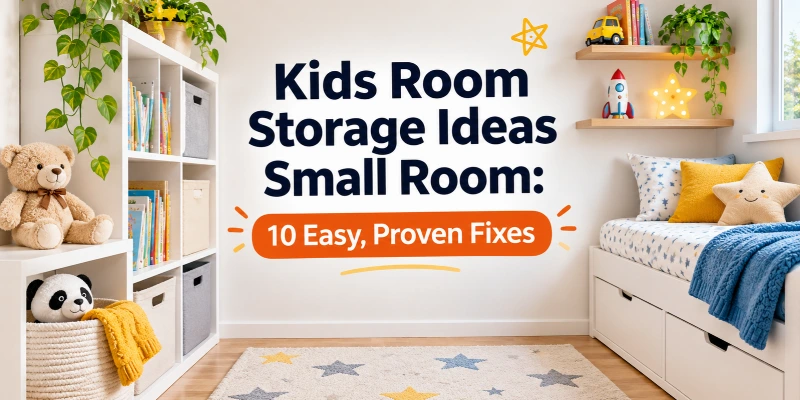
Anyone typing “kids room storage ideas small room” into a search bar is usually standing in a doorway, looking at a floor they can no longer see. The toys are everywhere, the dresser won’t close, and the cute bins you bought last spring sit empty because nobody under four feet tall can reach them. Here is the good news. Small kids’ rooms rarely need more storage. They need storage a child can use alone, set at the right height, with a cleanup that takes minutes. This guide gives you ten fixes, an age-by-age plan and the safety checks that matter most.
Quick answer: The best kids room storage ideas small room parents can maintain put daily items at child height in open, labeled bins, keep only about a third of the toys out at a time, and push everything else up high, under the bed or into the closet. Anchor every tall piece to the wall, skip lidded toy chests, and choose a bed that stores things.
In this guide, “small” means a bedroom of roughly 100 square feet or less, about 10 by 10 feet. If your room is bigger, everything below still works. You just get more breathing room.
Kids Room Storage Ideas Small Room: The Three Rules That Make Them Work
Most storage advice quietly assumes an adult will use it. Kids don’t. A shelf at five feet, a lidded bin that weighs twelve pounds and a closet rod above their head are all your storage, not theirs. The mess lands on the floor instead.
Every idea in this guide follows three rules:
- Reach. If a child can’t reach it, they can’t put it back.
- Two steps. Cleanup should be one step to carry and one to drop. If it needs a lid, a label check, and a sort, it will fail by Wednesday.
- Less out. Fewer toys on view means a faster reset and, as you will see below, often better play.
Our small space storage ideas guide shows where unused space hides in any room: under, over, behind, inside and on. These three rules tell you what to put there when the room belongs to a child.
How to Organize a Small Kids’ Room With Limited Space: A 20-Minute Audit
Do this before you buy a single bin. It saves money, and it shows you what the room actually has to hold.
Step 1: Sort the floor into play types. Pile everything into building, pretend, art, books, soft toys, and “other.” Count the piles. Most rooms have two or three that are far too big.
Step 2: Measure what you have. Write down the wall width, ceiling height, door swing and window position. Then find a clear floor patch, roughly 3 by 3 feet, where a child can sit and play without moving furniture. Treat that patch as protected. No storage goes there.
Step 3: Sort the room into three reach zones.
| Reach zone | Rough height | What lives here |
|---|---|---|
| Kid zone | Floor to about chest height | Daily toys, books, today’s clothes, shoes |
| Parent zone | Above chest height to about 6 feet | Art kits, board games, off-season clothes in labeled bins |
| Deep zone | Top shelf, under the bed, back of the closet | Next-size clothes, toys in rotation, keepsakes |
Step 4: Fill one “outgrown” bag. Pull out broken pieces, duplicates, and anything too young for the child. For school-age kids, let them pick what goes. They keep the habit longer when the choice is theirs.
Kids Room Storage Ideas for Small Spaces, by Age
Storage that fits a two-year-old fails by five. Use this table to match the setup to your child’s stage, and check it again each year.
| Age | What works | What to skip |
|---|---|---|
| Toddler (1–3) | One low shelf, open bins, board books facing out | Lids, small-part toys within reach, any unanchored tall furniture |
| Preschool (3–5) | Picture labels, hooks at their height, a bin per play type | Word-only labels, bins too heavy to lift |
| Early school (6–9) | A lowered closet rod, cube shelves, a homework and art caddy | Hiding daily school gear in the closet |
| Tween (10–12) | A pinboard, closed bins for private things, over-door hooks | Bright toy-bin styling they have outgrown |
Toy Storage Ideas for Small Kids’ Rooms (Ideas 1–4)
Toys take up the most room and cause the most arguments. These four ideas handle most of it.
Idea 1: Rotate toys instead of buying more bins
A 2018 study from the University of Toledo put 36 toddlers, aged 18 to 30 months, in a playroom with either four toys or sixteen. With fewer toys, the children played longer and more creatively. It was a small lab study, so treat it as a useful hint, not a rule. Still, it matches what many parents notice at home.
Here is how to use it:
- Keep about a third of the toys in the kid zone.
- Box the rest and store the box on a closet shelf, out of a child’s reach.
- Swap a few items every couple of weeks, or when interest drops.
Old toys feel new again, and you need less shelf space.
Idea 2: Give each play type one open bin with a picture label
Choose open-top bins on a low shelf or cube unit. Stick a photo or sticker on the front for kids who can’t read yet. Pick a size a child can lift when it is full.
Let the bin set the limit. When it overflows, remove toys instead of buying a bigger bin.
Idea 3: Hang small things on the back of the door
A clear over-the-door shoe organizer holds doll clothes, toy cars, hair clips and art supplies. Give each row one category so the pockets don’t turn into a junk drawer. Check the hook’s door-thickness rating, and make sure the door still closes.
Idea 4: Give tiny pieces a shallow, flat home
Building bricks, puzzle pieces and craft beads disappear in deep bins. Use shallow trays, or a drawstring play mat you can open on the floor and then gather up like a bag. Everything stays in one place, and cleanup takes about a minute.
When the overflow reaches the living room
If toys keep migrating into shared space, give them a defined spot there too, such as one basket beside the sofa.
Space-Saving Storage Ideas for Small Kids’ Bedrooms (Ideas 5–9)
When the floor is spoken for, use the walls, the bed and the closet.
Idea 5: Add a picture ledge above the kid zone
Narrow ledges, about 3 to 4 inches deep, show book covers instead of spines. Children choose books more often when they can see the front. Mount them at child height for daily reads and higher for display pieces.
Keep heavy or breakable items off any shelf above a bed.
Idea 6: Choose a bed that stores
A bed is the biggest piece of furniture in the room, so make it earn its place. Drawer beds, trundles and lofts all turn dead space into storage. A hidden storage furniture piece like this often replaces a dresser.
Two cautions. Drawers can be heavy to pull for small kids, so store light items such as bedding or soft toys. And lofts need caution with age: the CPSC advises that children under six should not use the upper bunk. Check the manufacturer’s ceiling clearance too.
Idea 7: Roll shallow bins under the bed
Wheeled, lidless bins turn the gap under a bed into a toy drawer a child can pull out alone. Measure the lowest clearance first, because frames, slats and center supports often block bins.
Idea 8: Lower the closet rod and add a second level
Standard closet rods sit well above a child’s reach. Add a second rod low enough for your child to hook a hanger without tiptoeing, and keep the top rod for the next size up. A tension rod works for renters, but check its weight limit before loading it.
Add one hook inside the door at child height for tomorrow’s outfit. It removes a daily morning argument.
Idea 9: Anchor a low dresser and give every drawer a job
Top drawer for underwear and socks, next for shirts, then pants and pajamas. Add a picture label on each. Rolling clothes instead of folding them lets a child see everything at once.
Safety matters here. Under the federal STURDY Act standard, clothing storage units made after September 1, 2023, must pass a stability test that uses a 60-pound weight. Older dressers aren’t covered, and no standard replaces a wall anchor. Use the anti-tip kit either way. The CPSC’s Anchor It! campaign explains how.
Budget-Friendly Kids’ Bedroom Storage Ideas Without Remodeling (Idea 10)
Good kids’ storage does not need a big budget, but the order matters. Start free and move down the table only if the problem remains.
| Tier | Examples | Kid-specific tip |
|---|---|---|
| Free | Toy rotation, sorting by play type, shoe boxes as drawer dividers | Let your child choose what gets stored away |
| Low cost | Fabric cubes, over-door pockets, tension rods, baskets | Match every hook and rod to its weight rating |
| Worth paying for | A bed with storage, a sturdy dresser, solid cube shelving | Spend on whatever a child climbs, pulls or leans on |
Idea 10: Mount hooks at child height
A row of hooks costs very little and teaches kids to hang up coats, bags and costumes. Place them where your child can reach without a stool, about chest height for most preschoolers. Give each hook one job, such as backpack, jacket or pajamas.
Kids room storage ideas small room renters can do in an afternoon
Freestanding cube shelves, over-door organizers, tension rods and under-bed bins all leave no trace. Adhesive hooks work well on smooth, clean walls if you stay under the weight rating on the package. Never hang anything heavy over a bed.
Kids’ Room Storage Safety Checklist
Children climb, pull and hide. Check these before you finish.
- Anchor tall furniture. Dressers, bookcases and shelving units need wall anchors, even in a rental with permission from the landlord.
- Avoid lidded chests. The CPSC reports at least 34 deaths since 1996 among children younger than 18 involving chests and trunks. Those include toy chests and storage benches. If you keep one, choose a lid support that holds the lid open in any position and make sure ventilation holes aren’t blocked. Open bins avoid the issue entirely.
- Watch small parts. For children under three, a commonly used rule of thumb is that anything that fits inside a toilet paper tube is a choking risk. Keep those toys in a separate, higher bin, and check the age label.
- Keep climbable storage away from windows. Stacked bins, low shelves and toy boxes give a child a boost.
- Keep paths clear. The door must swing fully and the window must stay reachable.
Three Small-Room Setups You Can Copy
These kids room storage ideas small room plans are illustrative, not measured case studies. Adjust them to your own room.
- A 9 by 10 toddler room: One anchored three-drawer dresser, one low cube shelf with four open bins, an over-door pocket organizer, and a rotation box on the closet shelf. The 3 by 3 foot play patch stays clear.
- A 10 by 10 school-age room: A storage bed, a lowered second closet rod, one picture ledge for books, three hooks at child height and a homework caddy. The kid zone holds everything used daily.
- An 8 by 10 shared room: Use vertical space and bed storage first, and give each child their own color-coded bin and hook.
Keep It Working: The 5-Minute Reset
A system lasts only if the child can run it. Build these habits in:
- Nightly bin run. Set a five-minute timer and have your child return each toy to its labeled bin. Music makes it feel like a game.
- One in, one out. Before birthdays and holidays, do a quick sort, and bring one outgrown item to donation for each new one that arrives.
- Seasonal swap. When the weather changes, rotate clothes bins and recheck rod and hook heights.
- Yearly re-audit. Re-run the 20-minute audit whenever your child moves into a new age band.
Conclusion
You don’t need a new room or a big budget. Tonight, pick one of the kids room storage ideas small room fixes above: empty one pile of toys, sort it by play type, and put one open bin at your child’s height. Once that works, add the next idea. Small changes stack up quickly, and your child will notice the difference before you do.
FAQs
What are the best kids room storage ideas small room parents should try first?
- Start with open, labeled bins at child height, then add toy rotation so only about a third of the toys are out. After that, choose a bed with storage and lower the closet rod. These steps free floor space without any purchase over a few dollars.
How do I organize a small kids’ room with limited space?
- Sort the toys into play types, mark a clear floor patch, and split the room into kid, parent and deep zones. Put daily items in the kid zone, occasional items higher, and rotated or off-season items under the bed or on the closet shelf.
How many toys should a small kids’ room hold?
- There is no official number. A University of Toledo study found toddlers played longer with four toys than with sixteen, though it was a small lab study. A practical limit is whatever fits in your open bins, with about a third in use at a time.
What is the best toy storage for a small room?
- Open bins on a low cube shelf, plus an over-door pocket organizer for small items, work best in most small rooms. Skip lidded toy chests, since children can climb in and lids can fall.
How can I add storage to a kids’ room without drilling?
- Use a freestanding cube shelf, over-the-door organizers, tension rods, wheeled under-bed bins, and adhesive hooks within their weight rating. Anchoring tall furniture is the one case where a small, patchable screw hole is worth asking your landlord about.
Are toy chests safe for small kids’ rooms?
- Open bins are safer. If you use a chest, pick one with a lid support that stays open in any position and ventilation holes that aren’t blocked by a wall or the floor, per CPSC guidance.
Sources
- University of Toledo, “Fewer toys lead to richer play experiences,” Dec. 18, 2017; Dauch, Imwalle, Ocasio & Metz, “The influence of the number of toys in the environment on toddlers’ play,” Infant Behavior and Development, vol. 50 (2018), pp. 78–87. See also Science News’ summary.
- U.S. CPSC, “CPSC Warns Consumers of the Deadly Dangers of Storage and Toy Chests” (March 5, 2014).
- U.S. CPSC, Safety Standard for Clothing Storage Units, 16 CFR Part 1261, 88 FR 28403 (May 4, 2023), adopting ASTM F2057-23; effective September 1, 2023.
- U.S. CPSC, Anchor It!
- Bunk bed fall-related injuries among children, Injury Prevention, citing the CPSC recommendation that children under 6 not use the upper bunk.
What's your reaction?