
 By
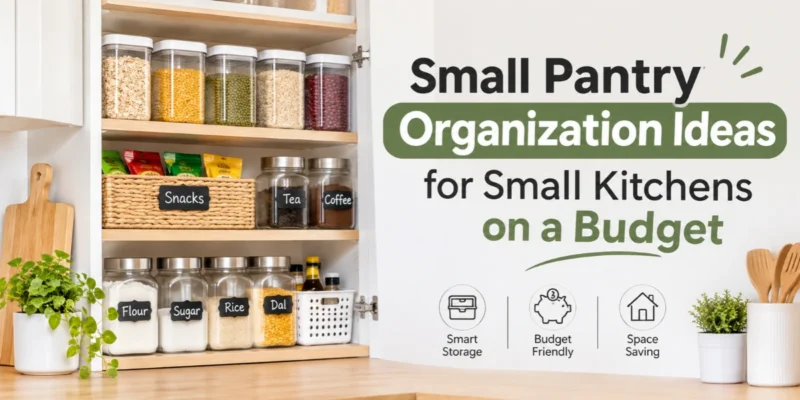
Small pantry organization ideas work best when they fix one problem: you can’t see what you own. In a tight pantry, cans hide behind cereal boxes, open bags slump over, and you buy a third jar of cumin because the first two are lost. You don’t need a remodel or a big budget to fix that. Below are twelve low-cost fixes, plus what to do if your kitchen has no pantry or you rent and can’t drill into anything. Each idea costs little, takes under an hour, and works whether you own or rent. Everything here is sized for real apartment kitchens.
Quick answer: Empty the pantry, group food into zones, and add height with risers and clear bins. Most small pantry setups cost $30 to $60. No pantry? A cabinet, slim rolling cart, or door rack does the same job.
Small Pantry Organization Ideas Start With a 20-Minute Reset
Before you spend a dollar, take everything out. It feels like extra work, but it saves money, because you’ll spot duplicates and expired items you were about to organize anyway.
Wipe the shelves, then sort food into groups: baking, grains and pasta, canned goods, breakfast, snacks, oils and sauces, and backups. Check dates as you go. USDA guidance puts high-acid canned foods like tomatoes at about 12 to 18 months for best quality, so old tomato cans go first.
Next, measure. Note each shelf’s width, depth, and the height between shelves in your phone. Those numbers prevent the most common budget mistake: buying bins that almost fit.
Finally, give every shelf a job. Foods you use weekly go at eye level. Backups and rarely used items go high or low.
A simple map helps: breakfast and snacks low where kids or partners can reach them, baking and cooking staples at eye level, and backups up high. Adjust it to your own routine.
12 Small Pantry Organization Ideas on a Budget
These fixes are ordered by impact per dollar. Start at the top and stop when your pantry works.
1. Add Shelf Risers So Back Rows Stay Visible
Tiered risers, usually $8 to $15, lift back cans so every label shows. They create visible space without using any extra shelf. For more ways to build upward.
2. Turn Clear Bins Into Pull-Out Drawers
Group snacks, baking supplies, or packets in clear bins with handles. Pulling one forward shows everything at once, which beats digging. Dollar stores often sell bins for a few dollars.
3. Decant Only the Foods You Open Fast
Flour, sugar, rice, oats, and pasta are the best candidates. Airtight containers block moisture and pantry pests, and reused pasta sauce or peanut butter jars work fine. Leave snacks and boxed meals in their packaging, and tape a label snippet with the expiration date to each jar.
4. Use a Lazy Susan for Corners and Deep Shelves
A turntable, about $8 to $15, solves the dead-corner problem. Park oils, vinegars, and sauces on it and spin to reach the back. Spices need their own system.
5. Hang an Over-the-Door Rack
A pantry door is free storage. Racks hold foil, snack bags, and seasoning packets. Measure the gap between shelf edge and door first, because a rack that stops the door closing defeats the purpose.
6. Add Under-Shelf Baskets
Clip-on wire baskets, typically $8 to $14, use the empty air above short items. They suit bread, tortillas, and light bags that would otherwise get crushed in a stack.
7. Store Flat Items in Magazine Files
Cheap magazine holders turned on their sides keep foil, parchment, wraps, and gravy packets upright instead of sliding into a messy pile.
8. Clip and Hang Bagged Foods
If you have wire shelving, binder clips and S-hooks can hang chip bags, rice, and noodle packs. It frees shelf space and makes every bag easy to grab.
9. Store Heavy Items Low and Light Items High
Bulk bags, cans, and bottles belong on the bottom shelf, which is safer and easier on your back. Reserve the top for light backups like paper goods.
10. Label Everything Cheaply
Masking tape and a marker work fine. Labels show roommates or partners where things go, so the system survives past the first week.
11. Build a Grab-and-Go Breakfast Basket
Put oatmeal packets, granola bars, and tea in one basket at hand height. It mirrors the landing-zone logic in our apartment entryway organization ideas: the things you grab most should sit where your hand lands first.
12. Keep a “Use First” Bin
Place a small bin at the front for items nearing their dates. It cuts waste, and USDA’s free Food Keeper app lists storage timelines for hundreds of foods if you’re unsure.
Small Pantry Organization Ideas for Apartments With No Pantry
Plenty of apartment kitchens have no pantry at all. You have three workable options. Whichever you choose, label the shelf edges so nothing gets lost in dark corners.
Claim one cabinet. Pick a cabinet away from the oven and dishwasher, since heat and steam shorten shelf life. USDA recommends a cool, dry spot, ideally 85°F or lower. Then use the risers and bins above.
Roll in a slim cart. Carts under 10 inches wide can tuck beside the refrigerator.
Use a freestanding shelf. A narrow bookcase in a hallway or dining nook works, especially with lidded bins or a tension-rod curtain to hide the contents.
If your only spare closet sits beside the washer, split it: food in sealed bins on one side, detergents on the other.
Small Pantry Organization Ideas for Renters
The best small pantry organization ideas for renters leave no trace on walls, shelves, or doors. The safest choices are freestanding, tension-mounted, or hung over a door.
- Skip drilling. Choose over-the-door racks, clip-on baskets, and freestanding shelves.
- Use removable hooks carefully. Check the weight rating and surface requirements first.
- Protect shelves. Non-adhesive shelf liner catches spills and lifts out when you move.
- Choose portable pieces. Bins and carts travel to your next place.
What a Small Pantry Makeover Costs
| Upgrade | Typical cost | Best for |
|---|---|---|
| Shelf risers | $8–$15 | Cans and jars |
| Clear bins (set) | $10–$25 | Snacks, packets |
| Lazy Susan | $8–$15 | Oils, sauces |
| Over-the-door rack | $15–$30 | Light items |
| Slim rolling cart | $25–$50 | No-pantry kitchens |
Prices are typical US retail ranges and vary by store. Most people need only two or three items.
How to Keep a Small Pantry Organized
A system only works if it’s easy to maintain. Spend five minutes on grocery day putting new items behind old ones, a habit called first in, first out. Follow a one-in, one-out rule for duplicates, and reassess every three months.
Conclusion
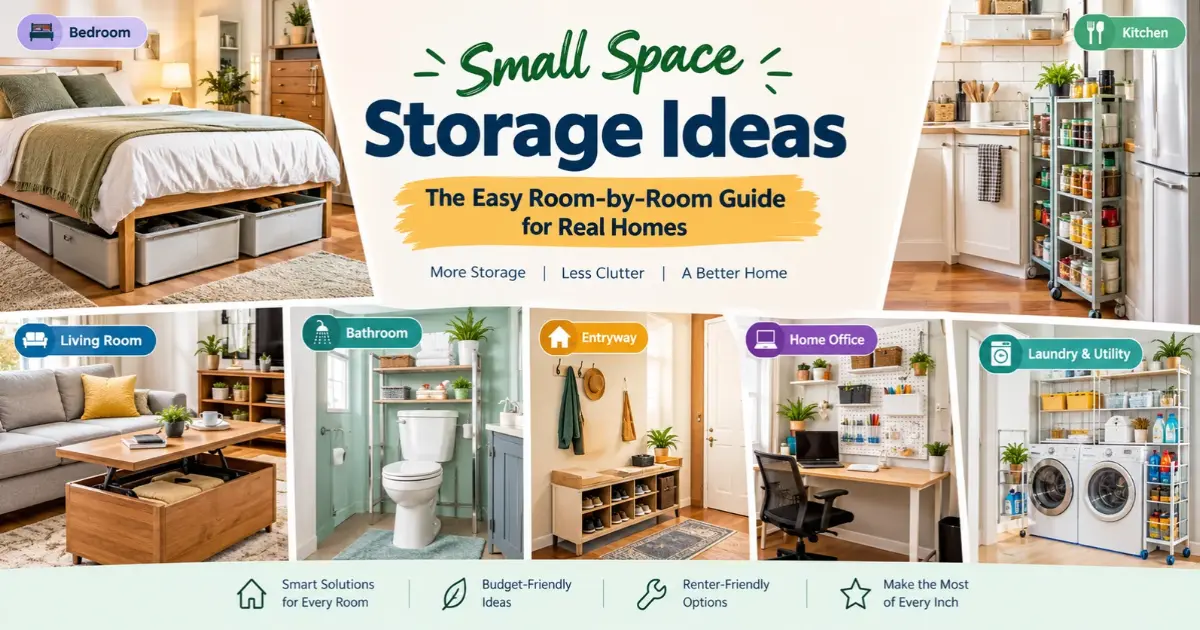
A small pantry doesn’t need to be bigger. It needs to be visible, grouped, and easy to reset. These small pantry organization ideas all follow that principle, so start with the 20-minute reset, add one or two cheap upgrades, and build from there. For the whole home, see our small space storage ideas room-by-room guide.
FAQs
What are the best small pantry organization ideas for tiny spaces?
- Shelf risers, clear bins, and an over-the-door rack deliver the most value. They add visible, reachable storage without using more floor space, and most cost under $15 each.
How do I organize a small pantry on a budget?
- Empty it, sort by category, and measure before buying. Reuse jars, use masking-tape labels, and add one or two basics like risers and bins rather than buying a full set.
How can renters organize a pantry without drilling?
- Use freestanding shelves, rolling carts, clip-on baskets, and over-the-door racks. These need no tools and come with you when you move.
How do I organize food in an apartment with no pantry?
- Dedicate one cabinet away from the oven, or add a slim cart or narrow bookcase. Group foods in labeled bins so everything stays visible.
What's your reaction?