 By
By Finding that dream bed can feel overwhelming. How do you pick the one that’ll leave you waking up refreshed, not achy? There’s no magic formula, but how to choose the right mattress really comes down to matching it with you – your body, your sleep style, and even your room. In this friendly guide, we’ll chat through everything you need: sleep positions, mattress types, firmness, size, budgets, and more. By the end you’ll feel confident about buying a mattress that feels just right.
Sleeping Position: How to Choose the Right Mattress for Your Sleep Style
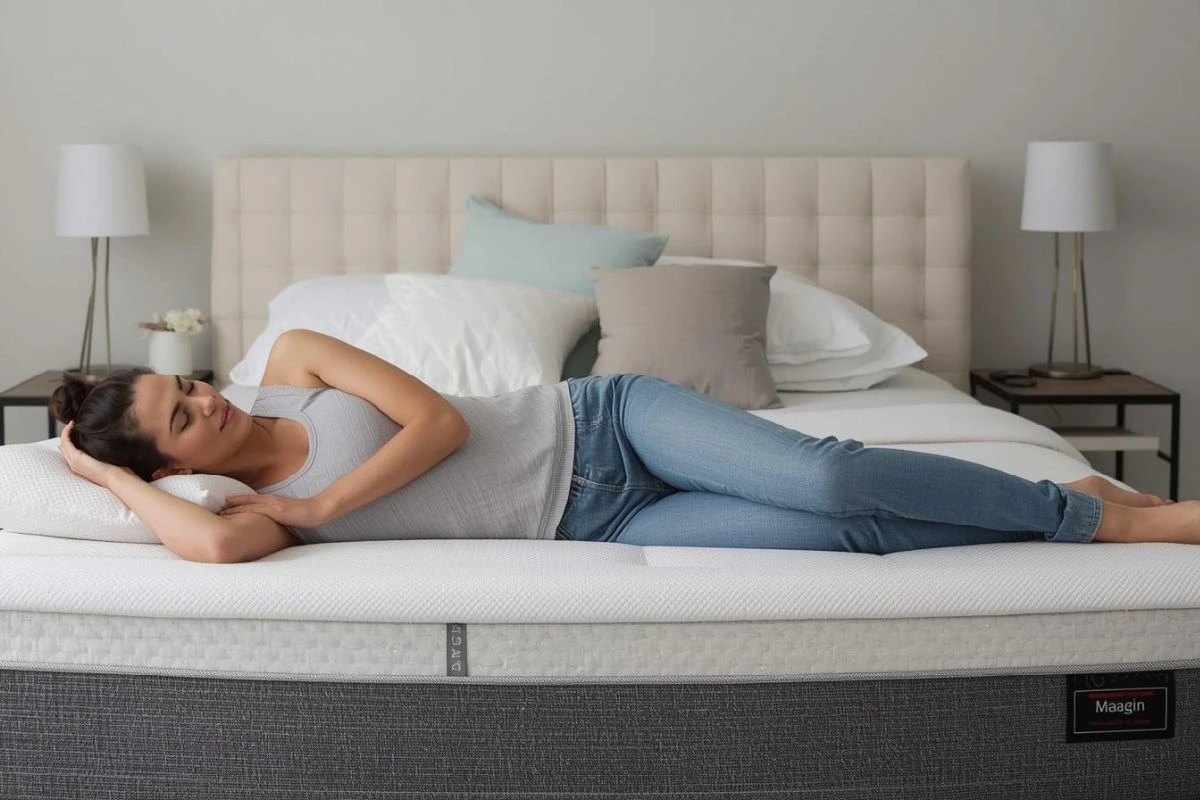
Your favorite way to snooze tells you a lot. If you sleep mostly on your side, you’ll want something that cradles your hips and shoulders. Side sleepers usually need a mattress around medium feel so the mattress cushions pressure points without letting you sink too far. Back sleepers tend to like a medium-firm mattress (about a 6/10) that keeps the lower back supported and spine aligned. Stomach sleepers have the trickiest job: your hips shouldn’t dip too low, so a firmer mattress (7–9 on the scale) is often best.
The key is spinal alignment and avoiding pressure spots. Most people move through a few positions at night, so consider all the ways you sleep. And if you share your bed, remember your partner’s needs, too. You may need to compromise or even look at split-firmness or dual-sided beds so each of you gets the support you need.
Mattress Types: Foam, Innerspring, Hybrid & Beyond
Mattresses come in many flavors. Here’s a quick breakdown of the main types, with a friendly hook to keep going:
- Memory Foam: These beds hug your body. Foam mattresses (often “memory” or polyfoam) contour closely for great pressure relief and motion isolation. They’re perfect if you like a cradling feel and don’t want to feel every move (your restless tossing won’t wake a partner). The tradeoff? Foam can trap heat, so hot sleepers may want extra cooling gel or a breathable cover.
-
Innerspring (Coil): This is the classic springy mattress with coils inside. Innersprings breathe well and give a bouncy, responsive feel. You feel more “on” the bed instead of “in” it. These sleep cooler and can be great if you’re heavier and need sturdy support. Think of the mattresses you grew up on – that’s usually innerspring with a quilted top.
-
Hybrid: Hybrids blend the best of foam and coils. Picture an innerspring core with foam or latex layers on top. You get the support and airflow of coils along with the pressure relief of foam. That balance makes hybrids very popular – they suit many sleep styles and body types.
-
Latex: Latex mattresses use natural or synthetic latex foam. They’re bouncier and springier than memory foam, and sleep cooler. Latex pads gently to your body without the deep sink of memory foam. Bonus: latex is often hypoallergenic and naturally resistant to dust mites and mold, a win if allergies bug you.
- Airbed (Adjustable Air): These aren’t the cheap inflatable guest beds – they have built-in air chambers you can pump up or down. Airbeds let you fine-tune firmness (sometimes even separately on each side). They cost more, but if you like “on-the-fly” adjustability or have specific back/pain issues, they’re worth considering.
Each type has pros and cons. The important thing is finding what feels right for your body, not just chasing the coolest new technology.
If you’re working with limited square footage, choosing the right mattress size becomes even more important, especially in homes where space planning matters, like in many small bedroom storage ideas and compact layouts.
Firmness: Finding Your Goldilocks
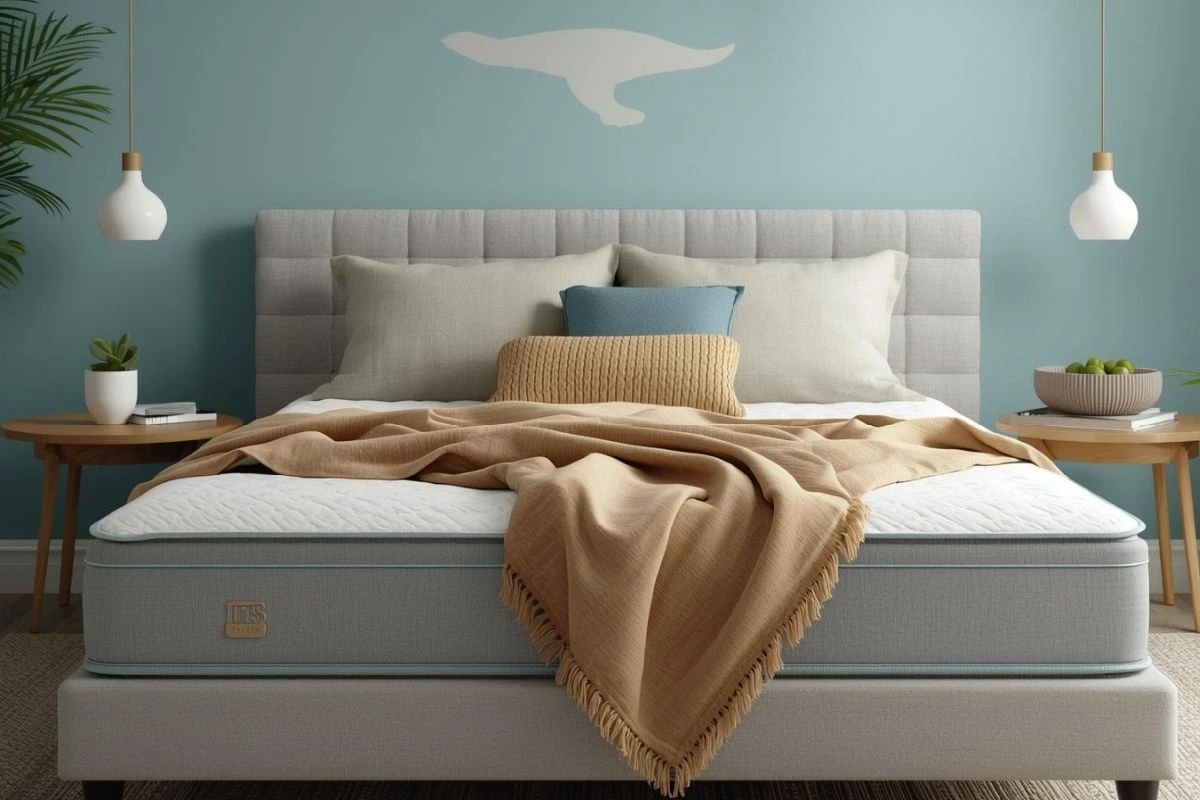
Too soft and you’ll feel like you’re sinking in a hammock; too firm and you’ll end up feeling like you’re sleeping on a plank. Mattress firmness is one of the most personal choices. Sleep Foundation measures firmness on a 1-10 scale, with 1 being ultra-plush and 10 ultra-firm. Most people land around the middle of the road.
The goal is simple: support your spine’s natural curve and relieve pressure points. A medium-firm mattress often hits that sweet spot for many sleepers. Remember Dr. Lulu Guo’s advice: “The right balance supports your spine, relieves pressure points and adapts to your body. It helps prevent waking up with aches or pain.”
Your weight influences how “firm” a mattress feels. A mattress a lightweight person thinks is firm might feel medium-firm to someone heavier. In general, side sleepers tend toward softer to cushion hips/shoulders, back sleepers aim for medium-firm, and stomach sleepers usually want something on the firmer side for hip support
Your Body & Build: Why Weight Matters
Believe it or not, two people can lie on the same bed and have completely different experiences. A larger body compresses a mattress more, so heavier sleepers often need a firmer bed to get the support they need. Lighter sleepers may find that a softer bed works well because they won’t sink as deeply. Lighter sleepers may find that a softer bed works well because they won’t sink as deeply. To simplify, Sleep Foundation gives these rough guidelines:
-
Under ~130 lbs: Soft to medium feel (firmness 3–5). These beds cushion you nicely.
-
130–230 lbs: Medium to medium-firm (5–6). You want support without losing contour.
-
Over ~230 lbs: Firm (7–8). Firmer surfaces keep you up instead of bottoming out.
These aren’t hard rules, just a starting point. You may prefer to go a bit softer or firmer depending on your comfort. Also, heavier sleepers often look for thicker, high-density foams and stronger coils for durability. If you’re on either end of the scale, test beds with those body groups in mind.
Size Matters: Picking the Perfect Fit
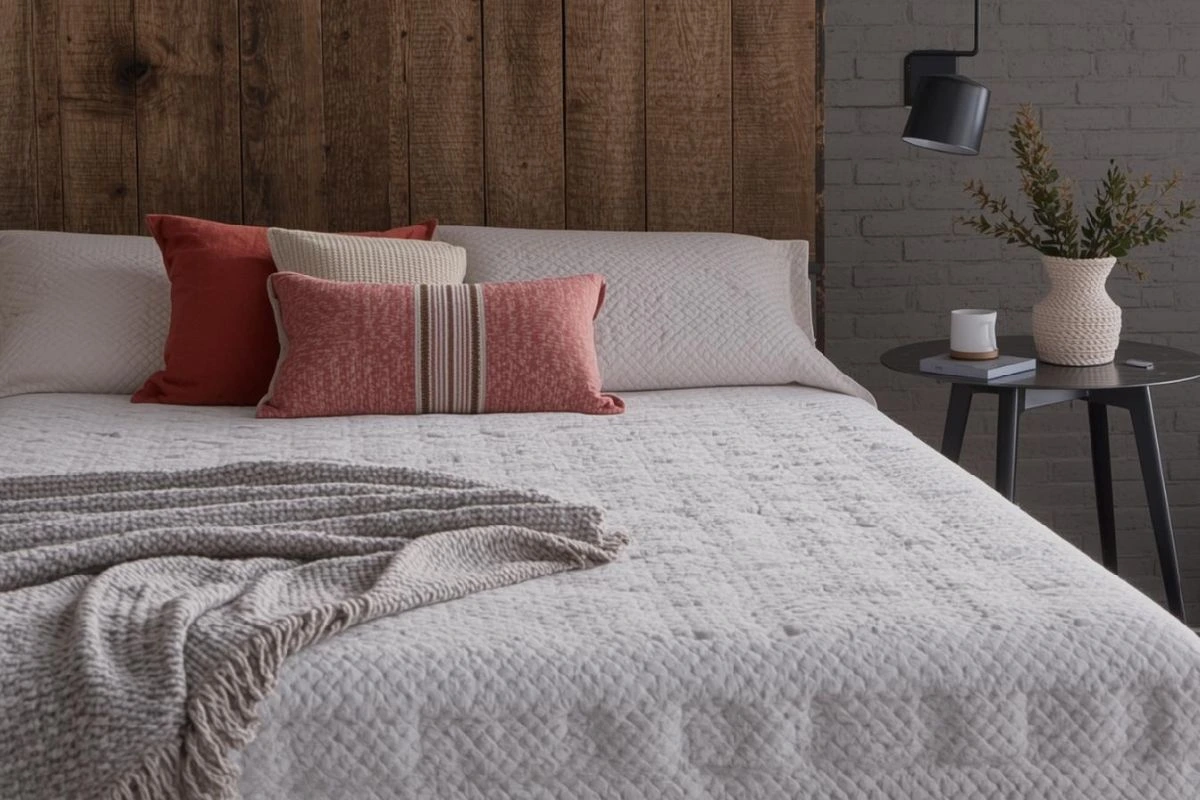
Now for the dimensions: how wide and long do you need? The most popular answer is Queen (60″×80″) – it’s roomy enough for most couples. But your situation could steer you differently:
- Twin (38″×75″): Best for solo sleepers or kids, especially if space is tight.
- Twin XL (38″×80″): Great for tall teens or adults who don’t need two-person size but want extra legroom. Often used in college dorms.
- Full/Double (54″×75″): Roomier than twin; okay for solo sleepers who like extra space or snug couples (but it’s a squeeze).
- Queen (60″×80″): The sweet spot for most adults or couples. We even have a handy mattress size chart on our site to compare all dimensions.
- King (76″×80″): Mega spacious – good for couples who want personal space or have pets/kids joining them.
- California King (72″×84″): Slightly narrower than King but longer, great if you’re very tall.
- Split King (Two Twin XLs): If you and your partner want different feels on each side, a split King (two Twin XL mattresses on one frame) is a clever solution.
Just make sure your bedroom has room for it! A king mattress plus frame can easily eat up space. Also think of pillow and bedding costs – larger beds mean larger sheets. But if you share your bed with a partner or kids/pets, leaning toward a bigger size can be a game changer for comfort and avoiding midnight elbow-jostling.
Test Before You Invest: Trying Out Mattresses
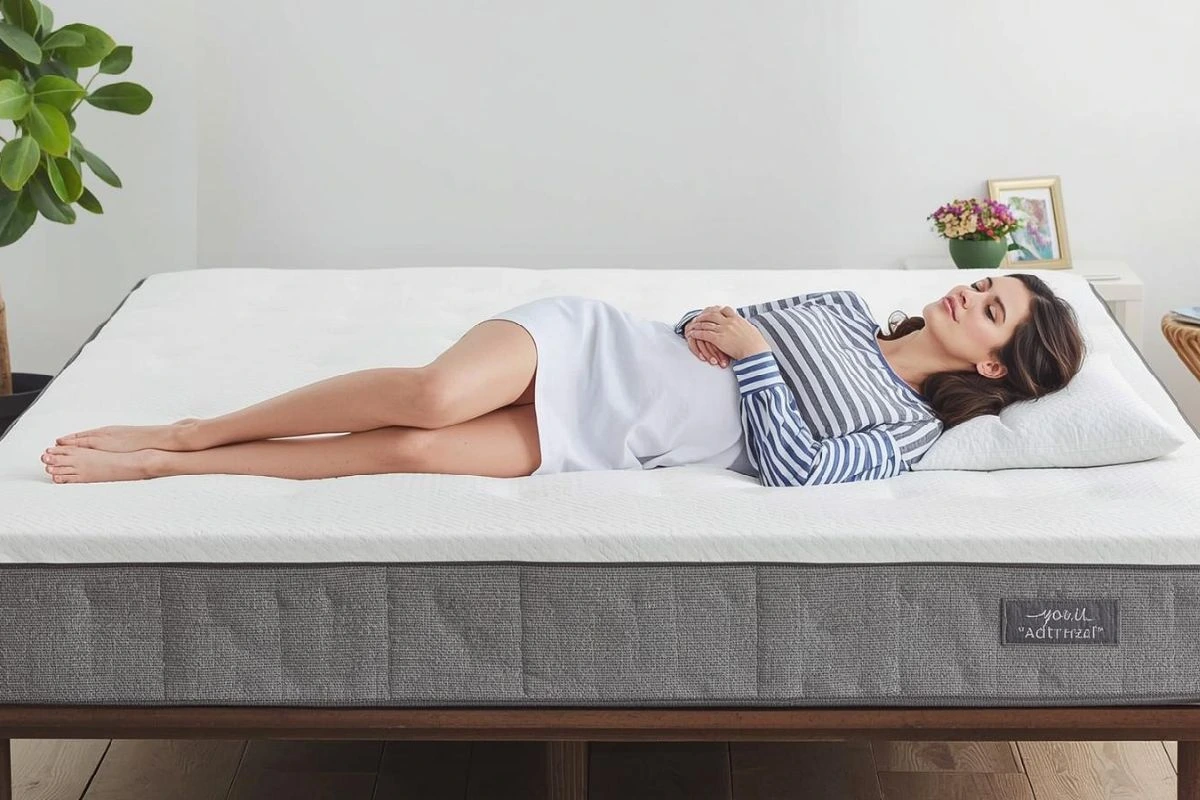
Nothing beats actually lying on a bed. If you can, try the mattress in person before committing. And when you do, follow these tips (and even bring the kids or pets if the store lets you):
- Lie Down in Your Usual Position: Don’t just flop on the edge or sit. Lie down as if you were going to sleep, in your normal sleep posture.
- Give It Time: Spend at least 10–15 minutes on the mattress. It takes a bit for the materials to respond and for you to notice if something feels off.
- Ask Yourself:
- Do I feel aligned, or do my hips/shoulders seem to tilt? You want a straight spine.
- Are my pressure points comfy? Your shoulders (if side-sleeping) and hips shouldn’t feel too much pressure.
- Can I easily roll or switch positions, or do I feel stuck? Being able to move freely is important,
- What would 8 solid hours feel like? Imagine this is your bed for a full night and then morning – would you wake up refreshed or creaky?
- Look for Red Flags: If you immediately feel any pins/needles, strain, or discomfort within a few minutes, it’s probably not the one
- Test at Different Times: Try sitting on the edge, lying on your back, your side, your stomach if you do it. If you sleep with a partner, see if they can come too (or at least tell you how the mattress feels after you leave it under them!).
- Try Everywhere: Use every opportunity – that hotel you’re visiting, a friend’s new bed, even your own guest room – to sample how different mattresses feel. Sometimes that quick overnight can reveal what firmness you really prefer.
The bottom line: don’t rush. Take your time testing. Most people test for only a minute or two and can’t tell what a night of sleep will feel like. Be thorough.
Sleep Trials & Return Policies: Your Safety Net
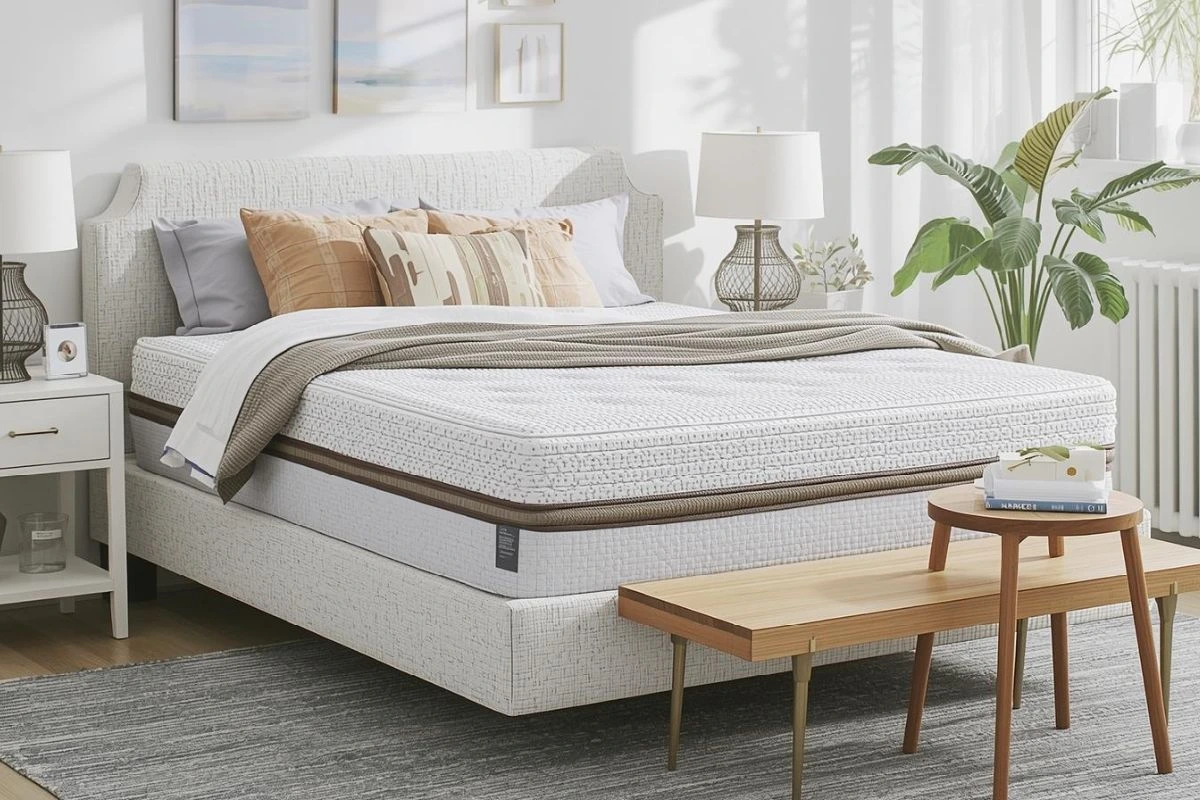
Once you’ve picked a mattress, the shopping isn’t over. Many brands (especially online) offer sleep trials – periods (usually 90–120 nights or more) where you can return the bed if it doesn’t work out. Think of it as a risk-free test drive: you sleep on the mattress at home, and if after a few weeks you’re still waking up sore, you can usually return or swap it.
Before you buy, read the fine print. Some companies require a break-in period (a few weeks of sleeping on it) before returns are allowed. Others might charge a restocking or return shipping fee. But overall, a generous trial means you’re not stuck with a dud. Beyond trials, check the warranty too. Good mattresses often come with 10–25 year warranties that cover sagging or defects. In short, sleep trials and warranties are your safety net – use them wisely. If you see one mattress you like and another nearly as good, lean toward the company with the longer trial so you can be sure.
Budget vs Quality: Balancing Price and Longevity
A common question is how much to spend on a mattress. It can’t hurt to shop smart. For a high-quality queen-sized mattress with good support and durability, many experts suggest roughly $800 to $1500. Under $500 might get you a budget model that works fine for a short time (like in a guest room), but often those wear out faster and may lack long-term support. Think of it this way: you (hopefully) spend 7–10 years on this bed, night after night, so it’s an investment in your comfort and health.
You can often find deals. SleepFoundation notes that the big sales tend to cluster around holidays (Presidents’ Day, Memorial Day, Labor Day, Black Friday). That’s when retailers drop prices and bundle freebies like pillows or frames. Sign up for newsletters or follow favorite brands for flash sales. Even without a holiday, many online mattress companies run promotions year-round. Just beware of pushing too hard for a “bargain” at the expense of quality – a too-cheap mattress may sag quickly, meaning you’ll have to buy another sooner. It’s usually better to spend a bit more now on a well-made mattress than to buy cheap two times in a row.
Special Considerations: Hot Sleepers, Partners, and Pain
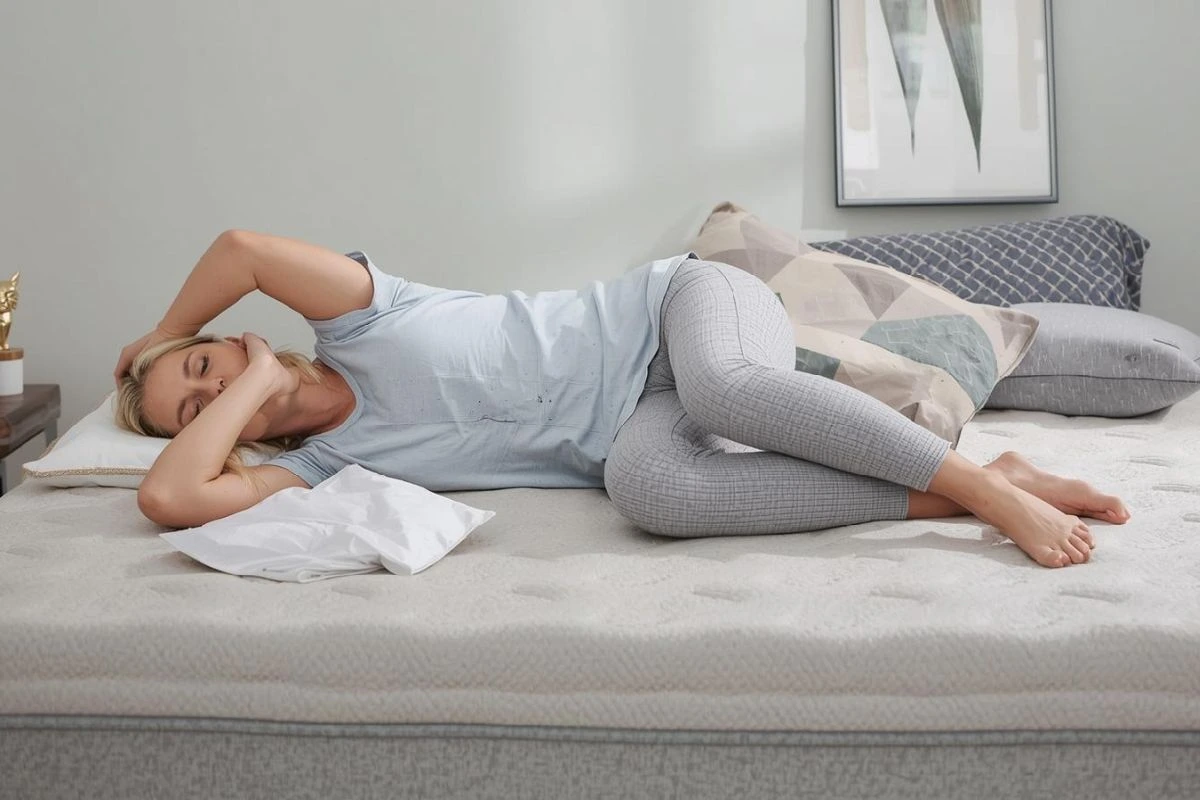
Everyone’s sleep is unique. Here are some extra factors to think about:
-
Hot Sleepers: If you run warm or sweat at night, look for cooling features. Mattresses with gel-infused foams, breathable covers, or coil layers tend to sleep cooler. Hybrids and latex beds usually have more airflow than all-foam models. In short, prioritize temperature regulation – it can make a huge difference in sleep quality if you tend to overheat.
-
Couples (or Pets): Sharing a bed means extra considerations. Look for motion isolation if one of you tosses and turns – memory foam and some hybrids do this well. You might also want a bigger size (queen or king) so you aren’t bumping elbows late at night. Some new mattresses even offer split firmness, so each side feels different. If your partner snores or has different schedules, motion isolation and edge support become even more important to avoid disturbing each other.
-
Aches & Pains: If you wake up with back pain, focus on spine support and pressure relief. A mattress that keeps your hips and shoulders aligned can help. Often that means medium-firm with targeted support zones, or memory foam that cushions hurting joints. Remember: a mattress won’t cure pain, but the right one can reduce strain. Dermatologists and orthopedists often recommend evaluating firmness in light of your main pain points (shoulders/hips for side sleepers; lower back for back sleepers).
-
Mobility Issues: If getting in and out of bed is a chore, look for firmer, more supportive surfaces. Firmer (7–10) mattresses and those with coil or latex cores give you bounce, making it easier to change positions. Also pay attention to edge support: sturdy edges let you sit on the side without sinking, which helps when you swing your legs in or out of bed.
Look for Quality: Materials and Craftsmanship
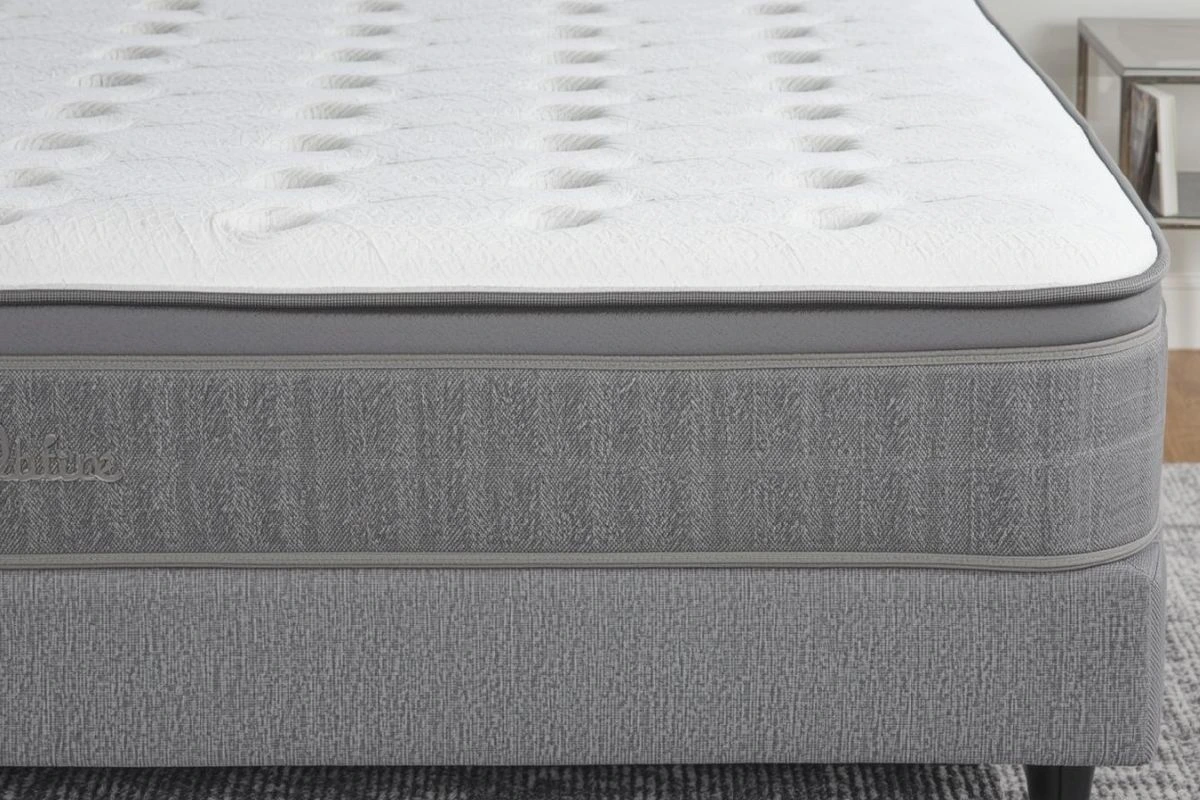
You get what you pay for, and with mattresses, higher-quality materials and construction really matter. A well-made mattress will use honest, high-density foams or natural latex, and will be built to last. For example, mattresses made with care (like local or boutique brands) often use premium foams and sturdy coils that won’t break down quickly. You can often check materials by looking at labels or certifications.
Cheap mattresses might feel plush at first but sag or lump after a couple of years. Rested Pillow explains that mattresses made with integrity match what’s on the label: strong materials inside mean stable support and consistent feel. That translates to your spine staying aligned night after night. Even small things like reinforced edges or quality stitching tell you the manufacturer cared. If you can, peek inside or read reviews about durability. Remember, a mattress is a long-term investment. High-quality craftsmanship and materials can be the difference between a bed that feels great for a decade or one that falls apart in a few years.
Common Mistakes to Avoid
Even with all this info, it’s easy to trip up. Here are some pitfalls to dodge:
-
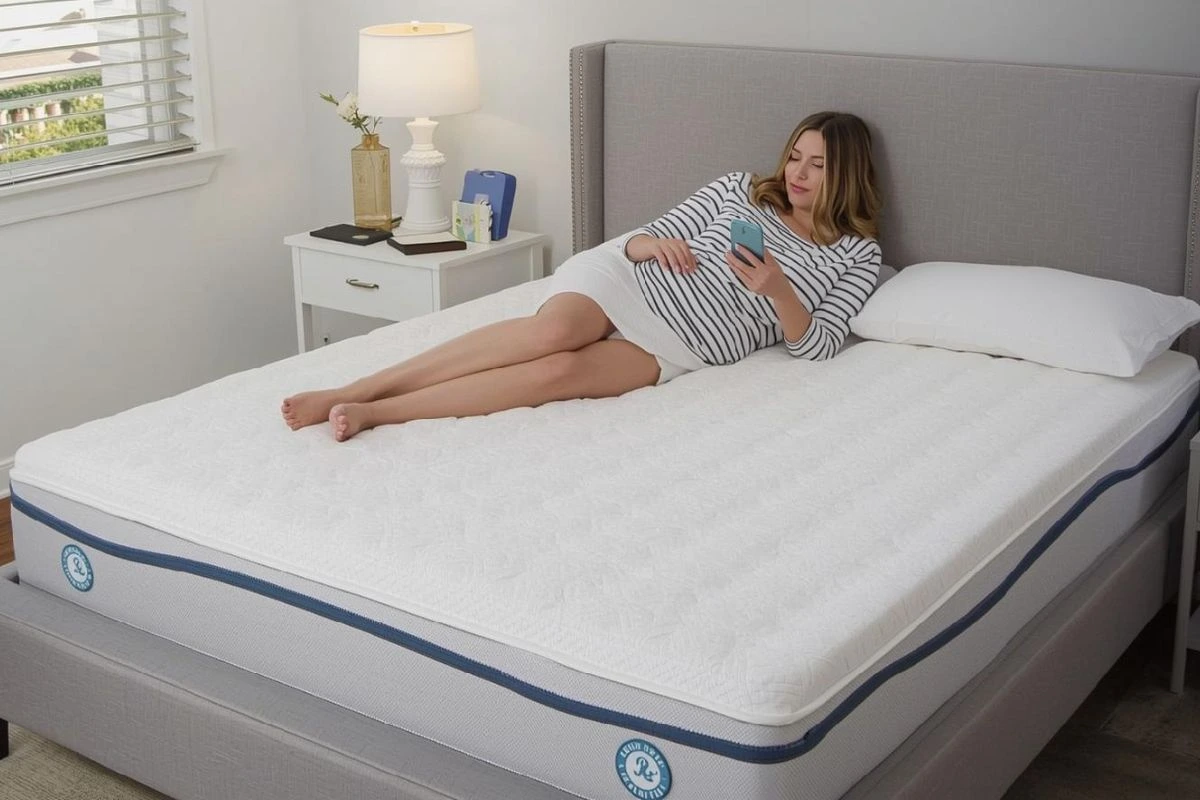
Don’t Assume One Position is Final: Avoid thinking, “Oh, I’m strictly a back sleeper so I only need one type of bed.” Most of us shift in sleep Consider all your positions (and any that might come with pregnancy or age). A mattress should support your spine in all ways you lie.
-
Don’t Ignore Your Partner: If you share your bed, one partner’s setup shouldn’t reign supreme. Both people should try mattresses together. You might end up with a compromise on firmness, or a split-option bed. If one person has very different needs (like one likes soft, one likes firm), look into designs with adjustable sides.
-
Not Just Plushness: A bed that feels ultra-soft when you press on it might lack support long-term. Don’t be seduced by initial “plush feel” alone. Your spine still needs support. Likewise, don’t only chase a “cool” topper while ignoring what’s underneath. Always balance comfort layers with a solid support core.
-
Age Myths or Sales Hype: Just because a mattress salesperson says “everyone loves this,” don’t assume it’s true for you. And don’t default to thinking you should like super-soft just because you’re older, or vice versa. Each body is different. Rested Pillow warns against buying based on sales pitches or assumptions; focus on how it feels to you.
-
Overlooking the Future: Think long-term. A bed might feel okay now, but what if you gain weight, develop back issues, or your sleep habits change? Try to pick something that will still be supportive years from now. For example, Rested Pillow suggests that mattresses with layers you can adjust or replace can adapt as your needs evolve.
By avoiding these mistakes, you’ll be much closer to waking up happy, not regretting the purchase. (For instance, always check return policies and sleep trials before you buy – that way, you have an escape hatch if you do make a mistake.)
Bringing It All Together
There’s a lot of info here, but remember: choosing the right mattress is all about what keeps you comfortable and supported. Think about your sleep position, body type, and any special needs (like staying cool or sharing a bed). Match those to a mattress type and firmness that fits. Try before you buy if you can, and take advantage of sleep trials. Shop savvy during sales, but don’t scrimp on quality.
At the end of the day, how to choose the right mattress boils down to listening to your body and doing a little homework. Test different feels, read reviews from people with similar needs, and use that trial period to be sure. Do that, and you’ll be well on your way to waking up rested and ready for the day. Sweet dreams and happy shopping!
Frequently Asked Questions
Q: What mattress firmness is best for someone with lower back pain?
- For lower back pain, most experts suggest medium-firm – around a 6 or so on the 10-point scale. That firmness helps keep your hips from sinking too much, so your spine stays aligned. Back sleepers especially do well with this feel to support the lumbar area. If you sleep on your side and have back pain, a medium mattress that cushions your hips can also work. In any case, look for good lumbar support or zoned construction. A firmer surface (especially with pocketed coils) often helps the lower back while still giving some cushion.
Q: Is memory foam better than latex, or vice versa?
- It depends on your preferences. Memory foam feels like it hugs you – it molds closely to your body, which relieves pressure on shoulders and hips. That’s why side sleepers often love it. The drawback can be heat retention (unless it’s gel-infused or ventilated). Latex feels bouncier and more responsive. It contours a bit but won’t trap you as deep, and it naturally sleeps cooler. Latex is also a good choice if you want natural materials or are allergy-prone (it resists dust mites). In short, choose foam for that cradling feel; choose latex for bounce, coolness, and a more “springy” support.
I run hot and sweat at night – what should I look for in a mattress?
- If you’re a hot sleeper, you’ll want materials that sleep cool. Look for hybrid or innerspring mattresses, which have coils that allow air to flow. Gel-infused memory foam or open-cell foam layers can also help draw heat away. Breathable covers (like those made from cotton or special cool-weave fabrics) and cooling technologies (phase-change materials, gel) are great too. As Sleep Foundation notes, beds with coil systems or latex tend to stay cooler than all-foam beds. The key is to keep air circulating through the mattress so you don’t overheat.
Does the brand name of a mattress really matter?
- Not as much as you’d think. Brand names might hint at quality, but your comfort comes first. Sleep Foundation points out that brand reputation and build quality can matter, but ultimately “it comes down to you”. In other words, a famous brand doesn’t guarantee it’s right for your back or that you’ll sleep well. Focus on what works for your body rather than just the name on the box. Trying mattresses personally (and using sleep trials) helps you find the right fit, brand aside.
How much should I expect to spend on a good mattress?
- Think of a mattress as an investment in your sleep. For a good queen-size bed that will last many years, most people fall into the $800–$1,500 range. In that bracket you’ll find many high-quality models with durable foam or coils. Yes, you can find less expensive ones, but often they don’t last as long or offer the same support. Of course, watch for deals: holidays like Memorial Day and Black Friday often have big discounts. Just remember the age-old advice – buy quality over and over buying cheap. A slightly higher price today can mean sleeping well for years without needing a replacement.