 By
By Isn’t it funny how the smallest room in your home can feel like the biggest design challenge? If your living room is on the cozy side — or let’s be honest, snug — figuring out how to arrange furniture in a small living room can feel overwhelming. But don’t worry, friend — I’ve got your back!
I’ve helped tons of people just like you turn awkward little spaces into comfy, inviting hangout spots, and I can’t wait to walk you through it step by step. This isn’t fancy designer jargon — just real talk with practical, friendly advice you can actually use.
Let’s dive in!
Why Furniture Arrangement Matters (Especially in Small Living Rooms)
Before we jump into the how, let’s chat about the why.
When it comes to a small space, the way you arrange furniture isn’t just about looks — it’s about comfort, flow, and function. With the right setup:
- your space feels larger
- traffic flows naturally
- unwelcome clutter melts away
- and even everyday tasks (like watching TV or hosting guests) feel a whole lot easier
All of this starts with layout — which is exactly why learning how to arrange furniture in a small living room is a total game-changer.
Top Principles to Keep in Mind
Here are a few design truths that’ll make everything easier:
Think About Function First
Are you watching movies? Hosting guests? Working from home? Your layout should support what you actually do in the room.
Less Is More
We tend to want to cram everything we own into every nook. In small living rooms, less furniture + smarter pieces = more breathing room.
Visual Trickery Helps
Light colors, strategic placement, and clever angles can make even tight spaces feel open and cozy — not cramped.
Step-by-Step Guide: How to Arrange Furniture in a Small Living Room
Let’s get practical — here’s a friendly, real-world approach to tackling your layout.
1. Start With a Focal Point
Every great room has one. It could be:
- the TV
- a fireplace
- a big window
- a piece of art
Once you pick that focal point, you can build around it. Arrange seating so that you and your guests can see and enjoy that main feature.
2. Anchor the Space With a Rug
Never underestimate what a rug can do! Even in a small living room, a well-chosen rug:
✅ defines the seating zone
✅ brings everything together visually
✅ makes your layout feel purposeful
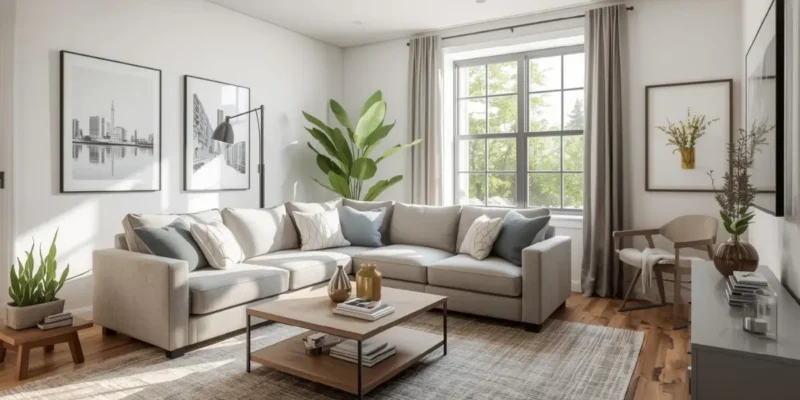
Choose a rug that’s big enough so at least the front legs of your sofa and chairs sit on it.
3. Float Furniture Instead of Pushing Against Walls
Cute as it sounds to shove everything against the walls, designers (and real homeowners) agree — leaving a little breathing room looks better. Pull your sofa a few inches away from the walls to make the room feel cozier and more intentional.
4. Choose Multi-Functional Pieces
Multifunctional furniture is a massive help in tight spaces. Think ottomans with storage, coffee tables that lift into desks, or benches that double as seating + storage.
These pieces do extra work without making your small living room feel cluttered.
5. Keep Sight Lines Open
Avoid tall or bulky furniture that blocks the eye. Low-profile sofas, slim tables, and furniture with legs help keep your space airy and open — especially important when you’re thinking about how to arrange furniture in a small living room.
6. Use Vertical Space for Storage
Think shelves, wall-mounted storage, and tall bookcases. This keeps storage off the floor and draws the eye upward — an easy way to make a space feel bigger.
For example, floating shelves above your sofa or next to your TV keep the floor free while adding personality.
(Pro tip: Pair vertical storage with good lighting so it feels airy, not crowded.)
7. Don’t Forget Traffic Flow
A room setup can be gorgeous, but if people keep tripping over stuff, it’s not working.
Plan for clear walkways — at least a couple of feet of space between furniture — so your living room feels effortless to move through.
8. Maximize Seating Without Overcrowding
This is where creative thinking earns its keep!
- Swap out bulky sofas for loveseats or chairs
- Add stools or poufs that tuck away
- Use benches that slide under tables when not in use
Each choice gives you extra seating without weighing down your small living room layout.
9. Use Light Colors + Mirrors
Light walls and furniture reflect light and make your space feel bigger. Mirrors do the same by bouncing light around the room.
Pair these with streamlined furniture to really open up your floor plan.
10. Don’t Forget Cozy Touches
Here’s the secret sauce: your space should feel good, too. Throw blankets, textured pillows, plants, and layered lighting make a room feel welcoming rather than just functional.
Real Ideas That Make Small Living Rooms Shine
Before we go deeper, let me share a couple of real ideas that others have found helpful.
👉 For simple space-maximizing tips and layout visuals, check out 13 Small Apartment Living Room Ideas for More Space. It’s a great next stop after you’re done here — especially for seating tricks and smart accessories.
Mistakes to Avoid (Seriously Helpful!)
Even with great ideas, a few common missteps can undo all your hard work:
❌ Too many pieces — Cramming furniture just because you have it eats up visual space.
❌ Oversized items — Big sofas or chunky tables can dwarf a small room.
❌ Clutter everywhere — Even functional pieces look messy if not organized.
When in doubt, step back and ask: Does this help the space breathe? If not, rethink it!
How to Arrange Furniture in a Small Living Room for Different Scenarios
Let’s break it down depending on how you use your space.
A. Living Room for Relaxing + TV Time
- Place the sofa facing the TV or focal point
- Use slim side tables instead of bulky ones
- Put extra seating at angles to encourage conversation
This avoids crowding the center and keeps everything comfy.
B. Living Room That Doubles as an Office
- Floating desk along a wall
- Sofa on the opposite side
- Use storage ottomans for office supplies
Here, clever multifunctional pieces are your best friend.
C. Living Room for Entertaining
- Modular seating that you can rearrange
- Poufs and stools that tuck away
- Storage benches that open up when guests arrive
This keeps things flexible and fun!
FAQs — Answers That Actually Help
What’s the best furniture layout for a small living room?
- A layout that centers around a focal point (like a TV or window), keeps seating close enough for conversation, and leaves clear traffic paths works best. Always pick furniture with a scale that feels proportionate to your room.
How can I make my room look bigger with furniture arrangement?
- Use light–colored furniture, leave some floor exposed, hang shelves instead of bulky cabinets, and use mirrors. Floating your pieces slightly away from walls and choosing leggy furniture helps the space feel more open, too.
Is it better to push furniture against walls?
- Not always! Pushing everything to the wall can sometimes make a small room feel boxed in. Giving furniture a touch of space around it — even just a few inches — can open things up visually.
How do I add storage without crowding the room?
- Think vertical: wall shelves, tall units, and storage ottomans keep your floors clear. Multipurpose furniture — like benches with hidden storage — gives you flexibility without clutter.
What furniture should I avoid in a small living room?
- Oversized sectionals, chunky coffee tables, and low-profile bulky pieces should be avoided if possible. Go for scale-appropriate and visually light designs.
Can decor affect how the room feels?
- Absolutely! Strategic lighting, mirrors, cohesive color palettes, and minimal accents help make your small living room feel larger and more welcoming.
Wrap-Up: Your Small Living Room, Big Potential
Learning how to arrange furniture in a small living room isn’t about perfect grids or expensive pieces. It’s about smart decisions, thoughtful flow, and creating a space that feels good every time you walk in.
Your small living room isn’t a limitation — it’s a chance to get creative, cozy, and downright clever. With a few simple swaps and a thoughtful layout, you can turn even the tiniest space into your favorite place to be.