 By
By Spaces Feel Big, Bright, and Beautiful
Let’s start with the truth.
Most small kitchens don’t feel bad because they’re small.
They feel bad because the lighting is wrong.
Too dark.
Too yellow.
Too harsh.
Or weird shadows in all the wrong places.
You can have:
- New cabinets
- Nice countertops
- Clean floors
And still hate your kitchen…
because the lighting makes everything feel cramped and gloomy.
The good news?
Lighting is one of the most powerful and affordable upgrades you can make.
This guide covers the Best Lighting Ideas for Small Kitchens, written for real U.S. homes — apartments, condos, older houses, rentals, and small suburban kitchens.
No design jargon.
No unrealistic setups.
Just clear, practical lighting advice you can actually use.
Why Lighting Matters More in Small Kitchens Than Anywhere Else
In large kitchens, bad lighting is annoying.
In small kitchens, bad lighting is debilitating.
Here’s why lighting matters so much more in tight spaces:
- Light controls how big a space feels
- Shadows instantly shrink rooms
- Dark corners create visual clutter
- Poor lighting makes kitchens feel dirty
- Harsh lighting kills comfort
- Dim lighting makes cooking unsafe
Lighting doesn’t just help you see —
it controls mood, comfort, and perception.
In small kitchens, lighting is the design.
The #1 Lighting Mistake Almost Every Small Kitchen Makes
One ceiling light.
That’s it.
One sad overhead fixture trying to:
- Light counters
- Light the sink
- Light the stove
- Light corners
- Light cabinets
It never works.
This single mistake is why so many kitchens feel dark even when the light is “on.”
The Fix: Layered Lighting
Every great kitchen uses layers of light, especially small ones.
The 3 Lighting Layers Every Small Kitchen Needs
If you remember one thing from this entire guide, remember this:
One light is never enough.
1. Ambient Lighting (Overall Light)
This is your base layer.
It lights the entire room.
Examples:
- Recessed ceiling lights
- Flush-mount ceiling fixtures
- Semi-flush fixtures
2. Task Lighting (Work Light)
This lights where you actually work.
Examples:
- Under-cabinet lighting
- Sink lighting
- Stove lighting
This is the most important layer for small kitchens.
3. Accent Lighting (Mood & Depth)
This adds warmth and dimension.
Examples:
- Toe-kick lighting
- Cabinet interior lighting
- Shelf lighting
Most small kitchens completely skip this layer — and it shows.
Ambient Lighting: Creating a Bright Base Without Overdoing It
Ambient lighting is your foundation.
In small kitchens, it should feel:
- Even
- Soft
- Bright (but not blinding)
Recessed Lighting: The Gold Standard
Recessed lights are the most popular choice in U.S. homes for a reason.
They:
- Don’t take up visual space
- Make ceilings feel higher
- Spread light evenly
- Work in almost any layout
Best Practices for Small Kitchens
- Use multiple smaller recessed lights
- Space them evenly
- Avoid placing lights directly behind where you stand
- Use warm white bulbs (2700K–3000K)
Avoid “spotlight kitchens.”
Even light = bigger feel.
Flush-Mount & Semi-Flush Lighting
If recessed lighting isn’t possible, flush-mount fixtures are excellent.
They work especially well in:
- Apartments
- Older homes
- Kitchens with low ceilings
Semi-flush lights add style without hanging too low.
Avoid:
- Oversized fixtures
- Heavy chandeliers
- Anything that visually drops the ceiling
Task Lighting: Where Small Kitchens Win or Lose
Task lighting is the make-or-break element.
If your kitchen feels dark even during the day, task lighting is missing.
Under-Cabinet Lighting: The Most Important Upgrade
This deserves special attention.
Under-cabinet lighting:
- Eliminates counter shadows
- Makes prep safer
- Makes kitchens feel cleaner
- Adds instant modern appeal
It is one of the best lighting ideas for small kitchens — no contest.
Best Under-Cabinet Options
- LED strip lights (most popular)
- LED puck lights
- Hardwired or plug-in versions
Color Temperature Matters
- Warm white (2700K–3000K)
- Avoid blue or daylight bulbs
Cool light makes kitchens feel sterile and smaller.
Sink Lighting: Fixing the Darkest Spot
In many small kitchens, the sink is poorly lit.
Common problems:
- Ceiling light behind you
- Shadow blocking your view
- No direct lighting
Easy fixes:
- Add a recessed light above the sink
- Install a small pendant
- Extend under-cabinet lighting
Good sink lighting makes cleaning easier and improves the whole room.
Stove & Cooktop Lighting
Most range hoods have weak lighting.
Upgrade ideas:
- Replace hood bulbs with brighter LEDs
- Add a recessed light above the stove
- Use reflective backsplash materials
You should clearly see what you’re cooking — without glare.
Accent Lighting: Making Small Kitchens Feel High-End
Accent lighting isn’t required — but it’s powerful.
It adds:
- Depth
- Warmth
- Visual interest
And it makes kitchens feel thoughtfully designed.
Toe-Kick Lighting
Installed under base cabinets, toe-kick lighting:
- Creates a floating effect
- Makes kitchens feel larger
- Works as night lighting
This is especially useful in:
- Narrow kitchens
- Galley kitchens
- Homes with kids or older adults
Inside-Cabinet Lighting
Glass-front cabinets look incredible with interior lighting.
Benefits:
- Adds glow
- Highlights dishware
- Breaks up flat surfaces
Even one or two lit cabinets can change the entire feel.
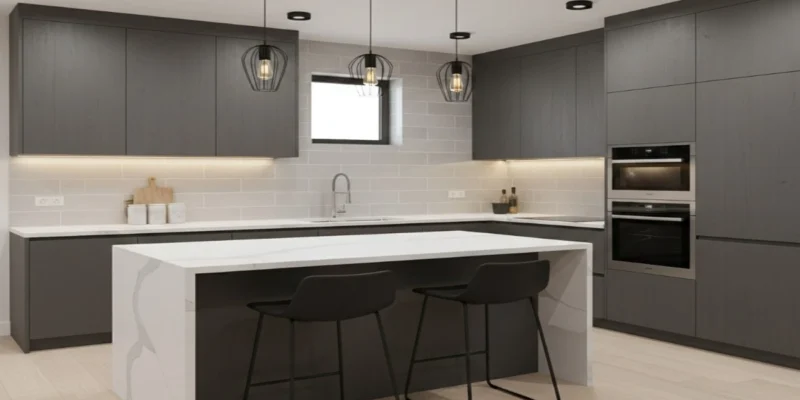
Pendant Lighting in Small Kitchens (Yes, It Works)
Pendant lights aren’t just for big kitchens.
They can work beautifully in small spaces — when used carefully.
Best Places for Pendants
- Over a small island
- Over a peninsula
- Over the sink (single pendant)
Pendant Rules for Small Kitchens
- Keep them small
- Choose simple shapes
- Avoid bulky designs
- Use warm bulbs
- Limit the number
One or two pendants = stylish
Five pendants = chaos
Lighting Layout Tips That Make Kitchens Look Bigger
Lighting placement matters as much as fixtures.
Light the Edges
Bright corners make rooms feel larger.
Light the Walls
Walls reflect light — especially light-colored ones.
Avoid Backlighting Yourself
Lights behind you create shadows where you work.
Lighting should follow your movement, not fight it.
Choosing the Right Bulbs (This Is Huge)
Even great fixtures fail with bad bulbs.
Best Color Temperature
- 2700K–3000K (warm white)
- Avoid 5000K+ (daylight)
Best Bulb Type
- LED (energy efficient, long life)
Dimmable Bulbs
Dimmers let you:
- Brighten for cooking
- Soften for evenings
- Adjust mood easily
Lighting for Apartments & Rentals
Renters have options too.
Easy upgrades:
- Plug-in under-cabinet LED strips
- Battery-powered puck lights
- Brighter warm bulbs
- Floor lamps nearby for ambient glow
No wiring required.
Lighting for Older U.S. Homes
Older homes often struggle with:
- Dark cabinetry
- Poor wiring layouts
- Low ceilings
Best improvements:
- Add recessed lights where possible
- Upgrade fixtures
- Add under-cabinet lighting
- Improve bulb quality
Lighting alone can modernize an old kitchen.
Lighting for Galley Kitchens
Galley kitchens are long, narrow, and shadow-prone.
Best solutions:
- Recessed lights down the center
- Under-cabinet lighting on both sides
- Bright but warm bulbs
Avoid hanging fixtures — they crowd the space.
Lighting for Open-Concept Small Kitchens
Open kitchens need balance.
Tips:
- Match lighting style with living spaces
- Use pendants to define the kitchen zone
- Layer lighting for flexibility
This keeps the kitchen connected without disappearing.
Budget-Friendly Lighting Improvements
Lighting doesn’t have to be expensive.
Affordable upgrades:
- Replace outdated fixtures
- Add LED strip lighting
- Swap bulbs
- Add dimmers
Lighting gives one of the highest returns on investment in small kitchens.
Smart Lighting for Small Kitchens
Smart lighting is growing fast in U.S. homes.
Benefits:
- Voice control
- Scheduling
- Dimming
- Color temperature adjustment
- Energy savings
Smart bulbs are an easy entry point.
Safety & Comfort Benefits of Good Lighting
Good lighting isn’t just about looks.
It:
- Reduces accidents
- Improves visibility
- Helps aging homeowners
- Makes kitchens safer for kids
In small kitchens, safety matters more.
Lighting + Color + Surfaces = Magic
Lighting works best when paired with:
- Light cabinet colors
- Glossy or reflective surfaces
- Organized counters
For small-space inspiration:👉 12 Small Kitchen Ideas on a Budget
Common Small Kitchen Lighting Mistakes
Avoid these:
- One single ceiling light
- Cool blue bulbs
- Oversized fixtures
- Ignoring task lighting
- Overdecorating with lights
Simple, layered lighting always wins.
FAQs:
How many lights should a small kitchen have?
- Enough to eliminate shadows — usually multiple sources.
Is under-cabinet lighting worth it?
- Yes. It’s the single best upgrade.
What color lighting is best?
- Warm white (2700K–3000K).
Are pendant lights okay in small kitchens?
- Yes — if kept minimal.
Can lighting really make a kitchen feel bigger?
- Absolutely. Lighting changes perception more than layout.
Final Thoughts
Lighting can completely transform a small kitchen.
It can make it:
- Feel larger
- Look cleaner
- Feel warmer
- Work better
With the right Best Lighting Ideas for Small Kitchens, you don’t need to knock down walls or spend a fortune.
Light where you work.
Warm where you relax.
Balanced everywhere else.
That’s how small kitchens shine