 By
By Layering rugs might look effortless in photos, but in real life, it can feel a little intimidating.
You place one rug down, then another… and suddenly the room feels busy, awkward, or just “off.” If you’ve ever wondered why layered rugs look amazing in magazines but confusing in your own living room, you’re not alone.
The truth is, rug layering isn’t about following strict design rules. It’s about balance, proportion, and a little trial and error. Once you understand the basics, it becomes one of the easiest ways to add warmth, texture, and personality to your space.
This guide breaks down How to Layer Rugs in a Living Room in a simple, real-life way—no design jargon, no pressure, just practical tips you can actually use.
Why Layering Rugs Works So Well in Living Rooms
Layering rugs instantly makes a living room feel more lived-in and thoughtfully designed.
It adds:
- Visual depth
- Softness and comfort
- Texture and contrast
- A cozy, collected feel
Instead of relying on one large rug to do all the work, layering lets you mix styles and adjust the look over time. It’s especially helpful if you love your current rug but want to refresh the room without replacing everything.
When Rug Layering Makes the Most Sense
Layering rugs isn’t just for big designer homes—it works beautifully in everyday spaces too.
It’s especially useful when:
- Your rug is too small for the space
- You want to protect a natural fiber rug
- You’re renting and can’t change flooring
- You want to add warmth to hardwood floors
- You like switching décor seasonally
Once you understand How to Layer Rugs in a Living Room, you’ll start seeing opportunities for it everywhere.
Start With the Right Base Rug
The base rug is the foundation of your layered look, so it needs to be simple and practical.
Best Base Rug Options
- Jute or sisal
- Flatwoven rugs
- Neutral wool rugs
- Low-pile synthetic rugs
These rugs create a calm backdrop and keep the room from feeling too busy. They also anchor furniture and define the seating area clearly.
Size Matters More Than Style
Your base rug should be large enough to:
- Fit under the front legs of sofas and chairs
- Extend beyond the coffee table
- Visually ground the seating area
If rug sizing feels confusing, this guide helps a lot: 👉 How to Arrange Furniture in a Small Living Room
Choosing the Top Rug (This Is Where Personality Comes In)
The top rug is where you can have fun.
This is the rug that adds:
- Color
- Pattern
- Texture
- Personality
Popular Top Rug Choices
- Vintage or Persian-style rugs
- Patterned wool rugs
- Faux hide rugs
- Plush or shag rugs
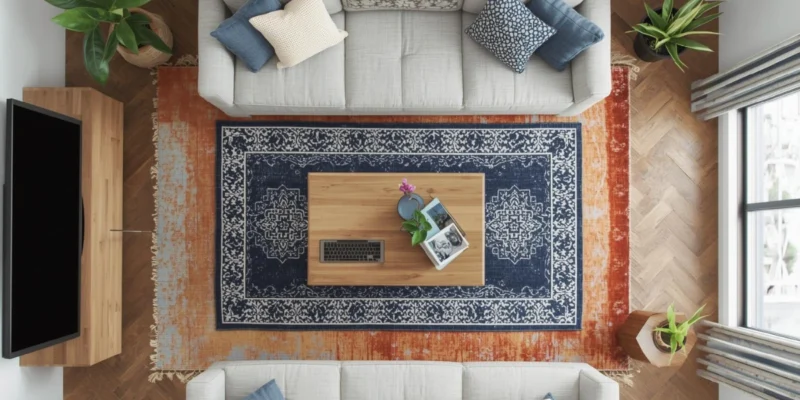
The top rug should be noticeably smaller than the base rug and placed centrally—usually under the coffee table or slightly overlapping seating.
How to Layer Rugs in a Living Room Without Guesswork
Understanding How to Layer Rugs in a Living Room becomes much easier when you think in layers instead of matching sets. The goal isn’t perfection—it’s balance.
Start with a neutral base rug that grounds the room. Then add a top rug that brings contrast through color, pattern, or texture. As long as one rug is calm and the other adds interest, the combination usually works.
If something feels off, adjust placement before swapping rugs. Small shifts make a big difference.
Rug Size Combinations That Actually Work
This is one of the most common questions—and mistakes—people make.
Safe Rug Size Pairings
- 8×10 base + 5×7 top rug
- 9×12 base + 6×9 top rug
- Large jute rug + medium accent rug
The base rug should always feel intentional, not like an afterthought. The top rug should sit comfortably within it, not hang off awkwardly.
Color and Pattern Pairing Made Simple
You don’t need a design degree to mix rugs successfully.
Easy Color Rules
- Neutral base + patterned top = safe and stylish
- Match one color from the top rug to your pillows or throws
- Avoid two bold patterns competing for attention
If your furniture and walls are neutral, layered rugs are a great way to add interest without overwhelming the room.
Layering Rugs in Small Living Rooms
Yes—layering rugs works in small spaces too.
The key is restraint.
- Stick to lighter colors
- Choose low-profile rugs
- Keep patterns subtle
- Avoid heavy textures
If your space already feels tight, layering adds warmth without clutter when done thoughtfully.
Layering Rugs in Large Living Rooms
In larger spaces, layered rugs help prevent the room from feeling empty or cold.
They’re great for:
- Defining seating areas
- Breaking up open-concept layouts
- Adding coziness to oversized rooms
Large rooms can handle bolder patterns, deeper colors, and thicker textures without feeling crowded.
Common Rug Layering Mistakes to Avoid
Layered rugs should feel effortless—not chaotic.
Mistakes to Watch Out For
- Choosing rugs that are too similar in size
- Using two busy patterns together
- Ignoring furniture placement
- Letting top rugs curl or slide
Avoiding these mistakes makes How to Layer Rugs in a Living Room feel far more intuitive and less stressful.
How to Keep Layered Rugs From Sliding
One practical detail people forget: grip.
Use:
- Rug pads under the base rug
- Thin non-slip mats between layers
- Double-sided rug tape if needed
This keeps everything in place and prevents tripping hazards.
Seasonal Rug Layering Tips
One of the best things about layered rugs is flexibility.
- Swap lighter rugs in summer
- Add plush textures in winter
- Rotate accent rugs for a refresh
It’s an easy way to update your living room without a full redesign.
Making Layered Rugs Work With Your Furniture
Your rugs should work with your furniture—not fight it.
Keep these tips in mind:
- Center rugs around the coffee table
- Avoid cutting rugs awkwardly at furniture edges
- Let furniture anchor the layers
If your space feels cluttered, these guides can help rebalance things:
Layered Rugs and Overall Interior Style
Layering works with almost any style:
- Modern
- Boho
- Traditional
- Farmhouse
- Transitional
If you’re updating your living room style, this guide is great inspiration:
Budget Tips for Layering Rugs
You don’t need two expensive rugs.
Smart strategy:
- Invest in a durable base rug
- Use a smaller accent rug for personality
- Shop vintage or second-hand for top rugs
Layering actually helps stretch your budget further.
Final Thoughts
At the end of the day, How to Layer Rugs in a Living Room isn’t about rules—it’s about comfort, balance, and personality.
If your rugs feel good underfoot and the room feels warm and inviting, you’re doing it right. Start simple, adjust as you go, and trust your instincts. Layered rugs should make your living room feel like home—not like a design puzzle.
FAQs
Can you layer rugs on carpet?
- Yes, layering rugs over carpet works well, especially to define seating areas. Use low-pile rugs and add a rug pad to keep things from shifting. This approach adds texture and helps break up large carpeted spaces.
Do layered rugs have to match?
- Not at all. They should complement each other, not match exactly. Keeping one rug neutral and letting the other add color or pattern usually creates the best balance.
What’s the best rug shape for layering?
- Rectangular rugs are the easiest to layer, but round or hide rugs work beautifully as top layers. The key is contrast in shape or texture.
How many rugs should you layer?
- Two rugs are ideal for most living rooms. More than that can feel cluttered unless the space is very large and carefully styled.